The Versatile Finish That Held the Ondol Room Together: A Study of the Multiple Uses of 1960s Border Wallpaper
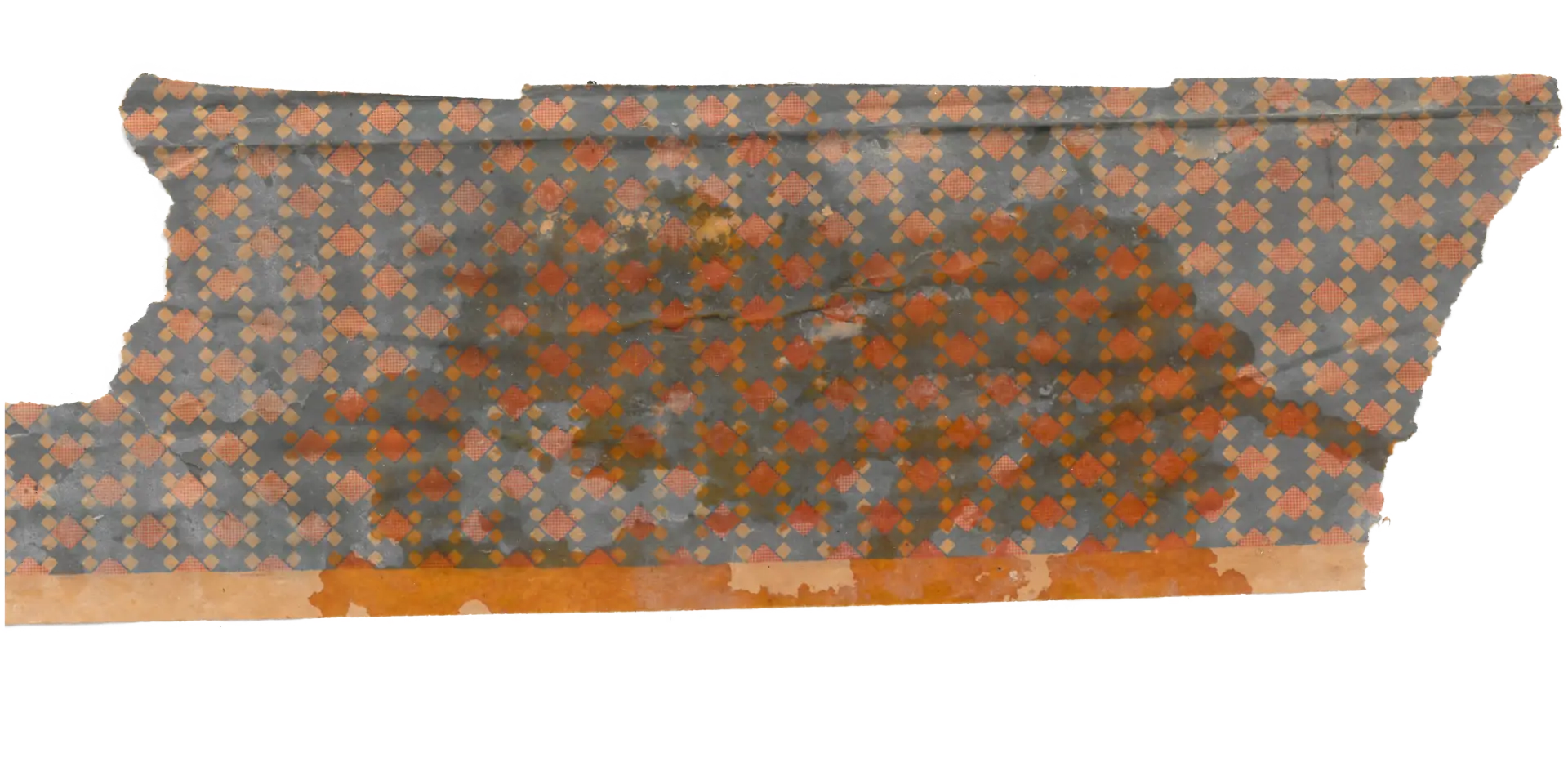
1. Visual Density and Simulated Texture: The 'Paper Fabric' Created by a Diamond Grid At the center of the pattern sits a large diamond filled with fine hatching in a mesh formation, flanked on…
1. Visual Density and Simulated Texture: The 'Paper Fabric' Created by a Diamond Grid
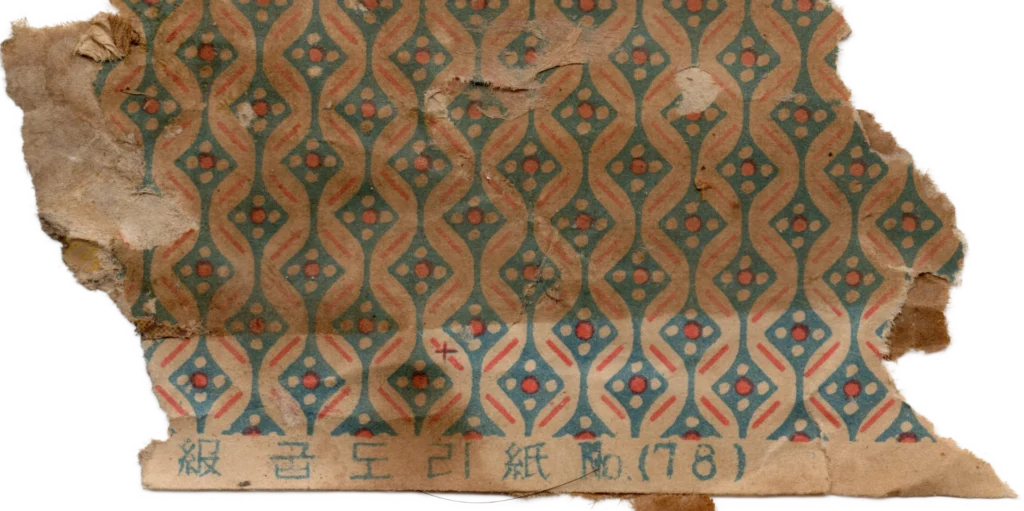
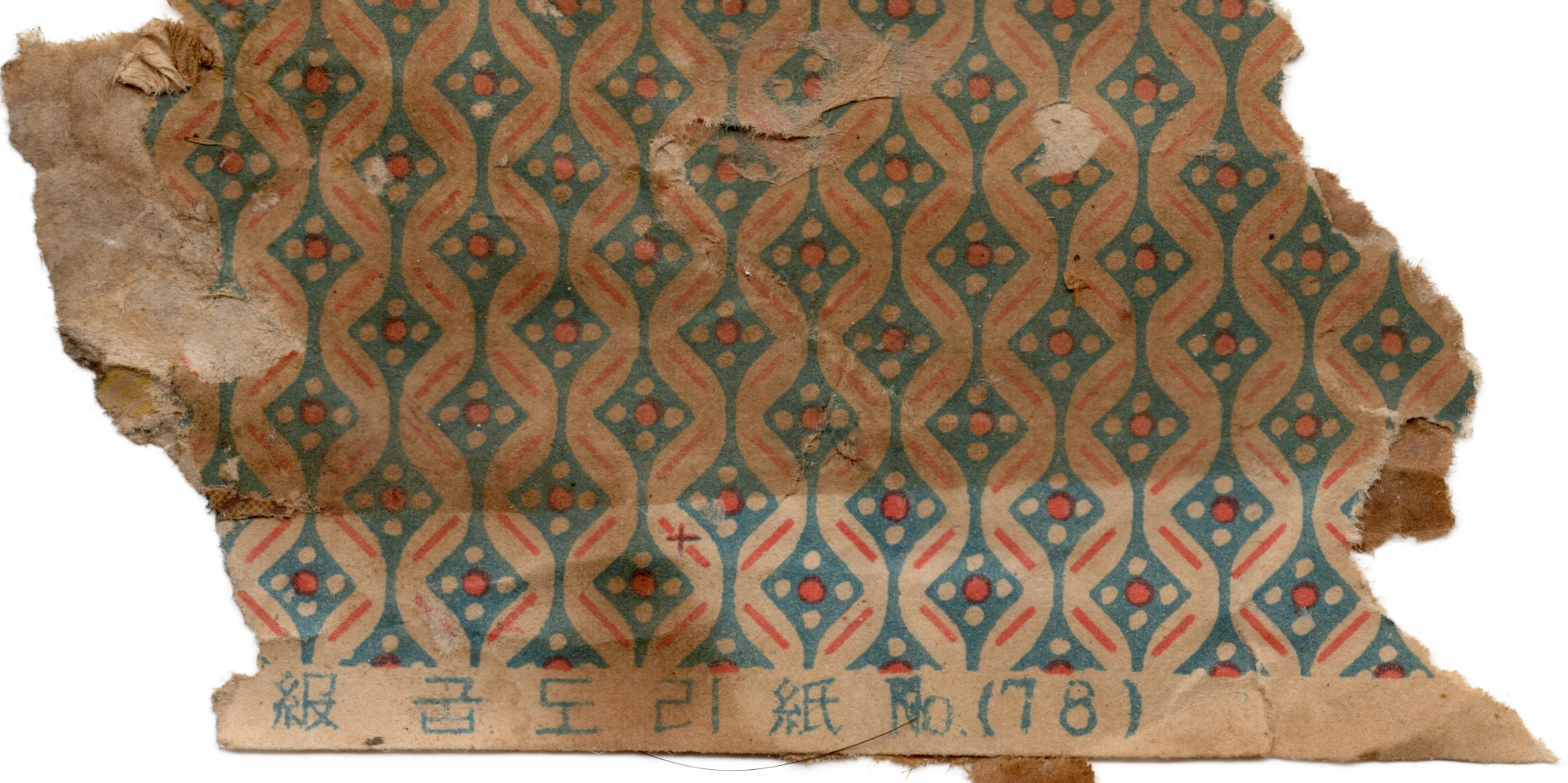
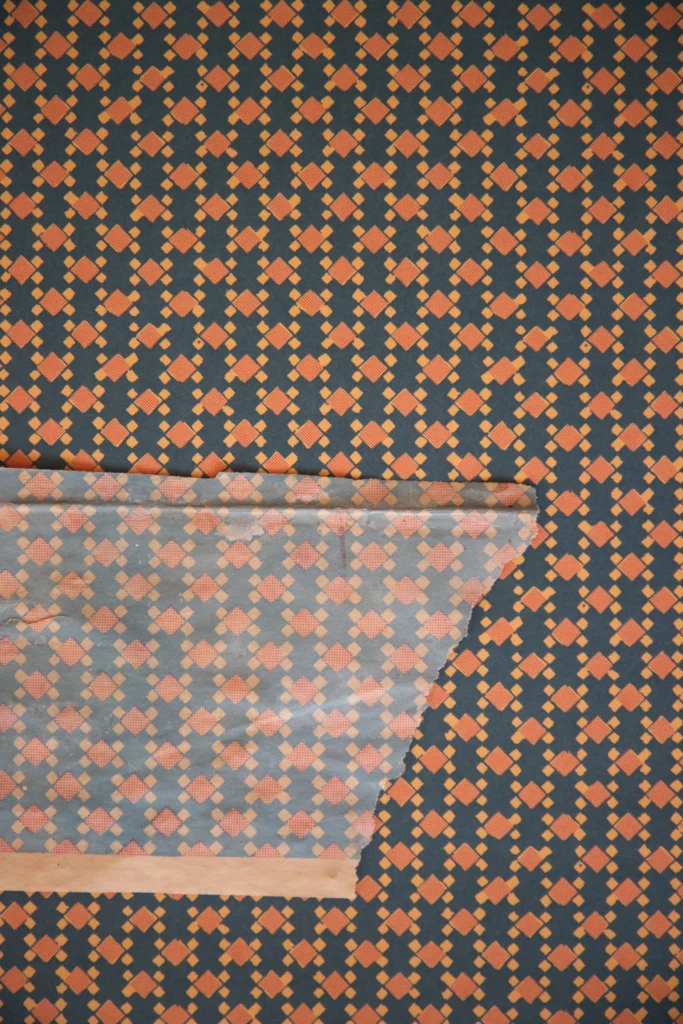
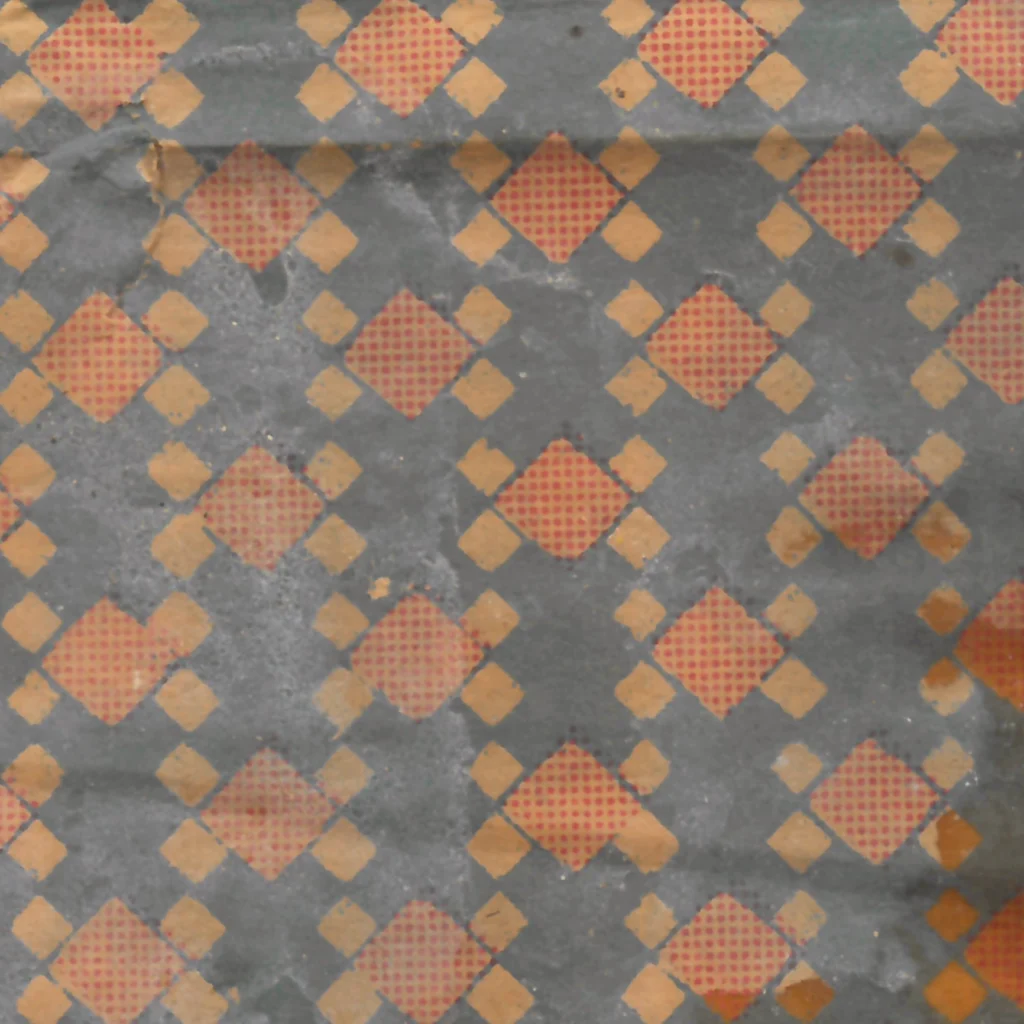
At the center of the pattern sits a large diamond filled with fine hatching in a mesh formation, flanked on all sides by four small square dots that frame it in a sturdy X-shaped grid structure. This composition takes the form of a classic diaper pattern, minimizing the negative space between motifs so that the entire wall surface reads as a single woven texture.
(Photo by Gosate, 2025)
What makes this pattern particularly intriguing is the layered grid within the diamond itself. A large square diaper grid is overlaid with small elongated yellow rectangles, creating visual depth and a sense of material thickness. Within the larger squares, tiny red dots are scattered at even intervals — and through this accumulation of overlapping patterns, the flat paper achieves the tactile impression of a thick cloth or coarsely woven fabric draped across the wall. In a floor-sitting culture where the lower portion of walls was routinely exposed to mopping and the grime of hands and feet, the dense geometry also provided a practical camouflage effect, naturally absorbing the marks of everyday life in a way that larger-scale patterns simply could not.
(Source: Collection of Gosate)
2. The Crossing of Three Lineages: The West, Japan, and the Memory of Joseon
Viewed through the lens of design history, the red diamond motif of this wallpaper represents a remarkable hybrid — a fusion of Western modernist rationality and Eastern traditional sensibility. The structural logic of repeating diamonds to fill a surface appears to derive from European domino wallpapers of the 18th and 19th centuries or the Japanese sarasa (更紗) printed textiles — a geometric grammar optimized for carving onto woodblocks or copper rollers for mass production, which presumably flowed into Korean factories on the tide of modernization.
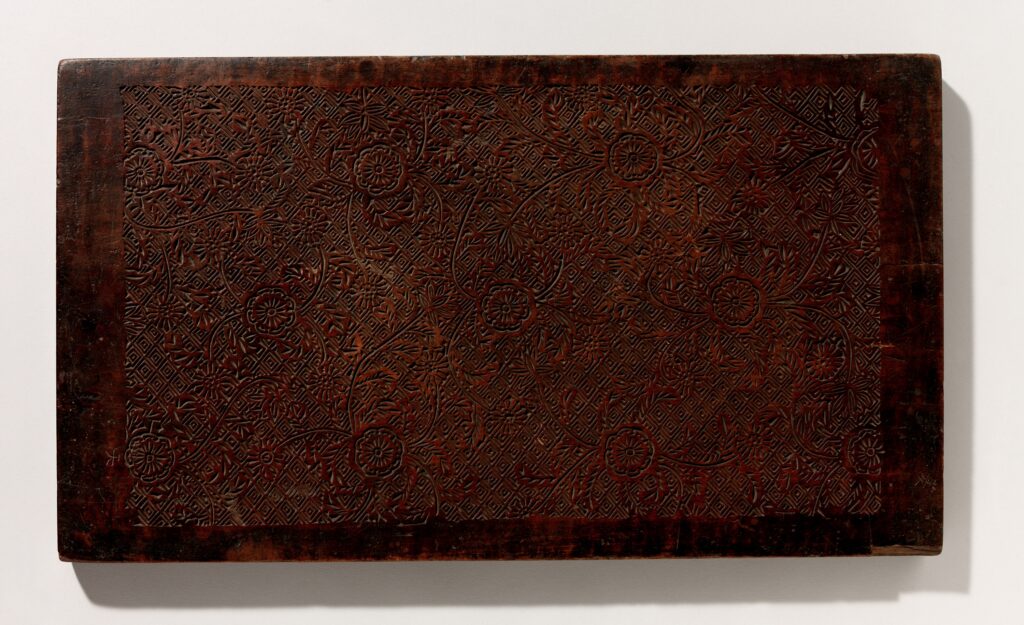
Yet the reason this wallpaper could feel so immediately familiar to Korean eyes likely lies in a design sensibility already present within the culture: the neunghwa-pan (菱花板) — the traditional Joseon diamond-patterned printing board — and the broader Korean affinity for delicate, geometric ornamentation. The diamond-shaped motifs of the neunghwa-pan, used to decorate book covers and wall surfaces in the Joseon period, share a striking formal kinship with the visual language of this border wallpaper. It is plausible that Korean artisans, working from the roller designs left behind by Japanese manufacturers (themselves Western-Japanese sarasa derivatives), projected the sensibility of the neunghwamun— a pattern grammar deeply familiar to the Korean populace — into the rhythm and brushwork that filled those forms.
(Source: National Museum of Korea, Ref. 본관893, Public Domain Type 1)
3. Survival and Custom Beyond Decoration: The Many Uses of Small Patterned Paper
From the enlightenment period through the 1960s, small-patterned wallpaper of this kind was far more than a decorative fill for a section of wall — it was an all-purpose finishing material that patched the gaps of domestic space and protected household objects. Three factors explain why these small checkered papers were able to penetrate so many corners of everyday life.
Gubdoriji in the Ondol Room: Protecting the Lower Wall and Door Frame In Korea's floor-sitting ondol culture, the lower portion of a wall was the most vulnerable zone — scraped by furniture, brushed by feet, and subjected to daily mopping. Small-patterned wallpaper of this type was applied as gubdoriji — a horizontal band running from the floor to a set height — to block dirt and wrapped around door frames (inbang) to prevent grime from repeated passage. The density of the geometric motif meant that the traces of time and staining were far less visible than they would have been on a wallpaper with a larger pattern.
Janghwang (裝潢) and the Inheritance of Printing Culture Perhaps the most significant point is that border wallpapers of this type were widely used in janghwang — the mounting of paintings and calligraphy, and the binding of books — as decorative paper. This supports the interpretation that these wallpapers represent a modern transformation that directly inherits both the iconographic tradition and the practical context of the Joseon-era neunghwa-pan printing practice. Just as paper printed with the neunghwa-pan elevated the status of a book cover, geometrically patterned border wallpaper wrapped around paintings and frames, serving as a bridge that transferred a pre-modern aesthetic sensibility into a modern print medium.
Furniture Lining and Covering The uses of border wallpaper extended beyond flat wall surfaces into the three-dimensional interior of furniture. The practice of lining the inside of wardrobes and drawers, or recovering worn paper boxes (jihaam), with fresh border wallpaper was both a hygienic finish and a reflection of a distinctly Korean domestic sensibility — the impulse to decorate even what is hidden from view. The custom of using these papers when repairing old furniture or constructing boxes reveals that border wallpaper had penetrated deep into daily life as a kind of universal repair paper and decorative lining material, far exceeding the role of a mere consumable.
Conclusion: A Domestic Landscape Woven from Practicality and Tradition
Ultimately, this small checkered border wallpaper wears the exterior of Western layout and printing technology, but its uses and essential nature are rooted in Korean domestic custom and the printing culture of Joseon. From the practical gubdoriji guarding the lower wall to its decorative role in books and furniture, small-scale patterned papers of this kind are a valuable historical source for understanding how Koreans of the 1960s related to the spaces they inhabited. These patterns — born from Joseon's patterned papers yet recast through the modern printing roller — are a precious cultural heritage, testifying to how Korea modernized and carried forward its traditional legacy through the transformations of the modern era.
Copyright © 2026 Gosate Archive.
All Rights Reserved.
- All text and scholarly analysis are the intellectual property of the author.
- All photographs marked "Gosate Collection" or "Photo by Gosate" are the copyright of GOSATE. Reproduction, copying, or distribution without prior consent is strictly prohibited.
- Historical images cited from external sources are subject to their respective copyright holders or public domain provisions.
Inquiries: contact@gosate.kr
More from this era