
The Flower of India and the Neunghwa-pan of Joseon: Two Bloodlines Running Through the Border Wallpaper
The First Fashion to Conquer the World: From Chintz to the Neunghwa-pan What we casually call a "floral pattern" today — and the ancestor of that humble border wallpaper that once graced a corner…
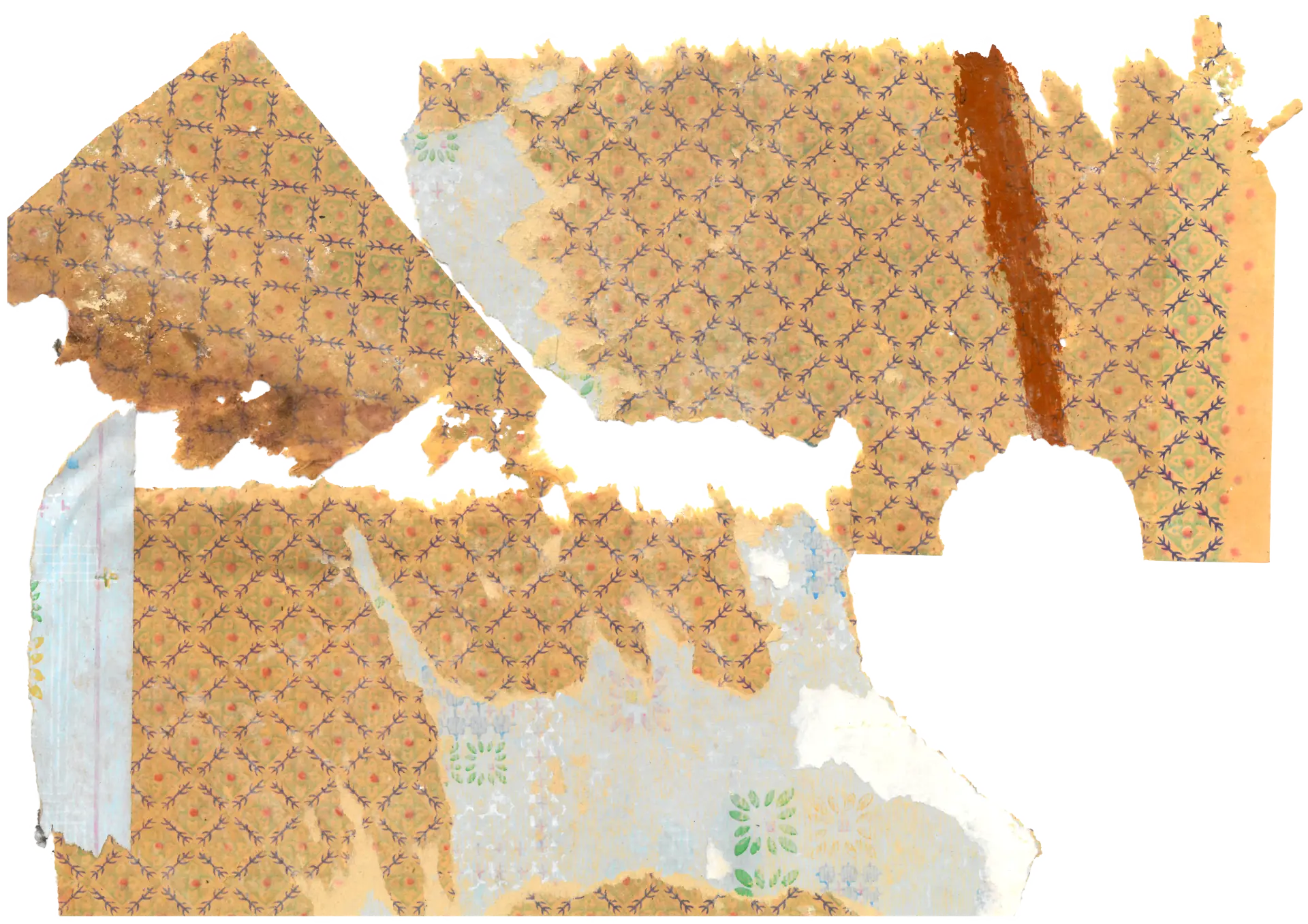
The First Fashion to Conquer the World: From Chintz to the Neunghwa-pan
What we casually call a “floral pattern” today — and the ancestor of that humble border wallpaper that once graced a corner of a 1950s Korean ondol room — was born, in fact, beneath the blazing sun of India. Its name is Chintz, or in Japanese, Sarasa (更紗). We may regard it today as a commonplace printed pattern, but to the people of the 17th-century Age of Sail, chintz was nothing short of a revolution. To a Eurasian continent that knew only dull woolen cloth and expensive silk, this fabric — lightweight, soft cotton blooming with vivid flowers that would never wash out — was something close to magic. The flowers conjured by anonymous Indian artisans sailed westward on the ships of the East India Company to France and Britain, and eastward to Japan. Then, crossing three hundred years, through colonization and war, they arrived on the wallpaper of a small ondol room in Korea.
Birth: The Alchemy of the Coromandel Coast
The origins of chintz stretch back to antiquity, but its emergence as a world-historical commodity belongs to the 16th and 17th centuries, on the Coromandel Coast of southeastern India. Derived from the Hindi word chint, meaning “spotted” or “colored,” the essence of this fabric lay not in its pattern but in its chemistry.
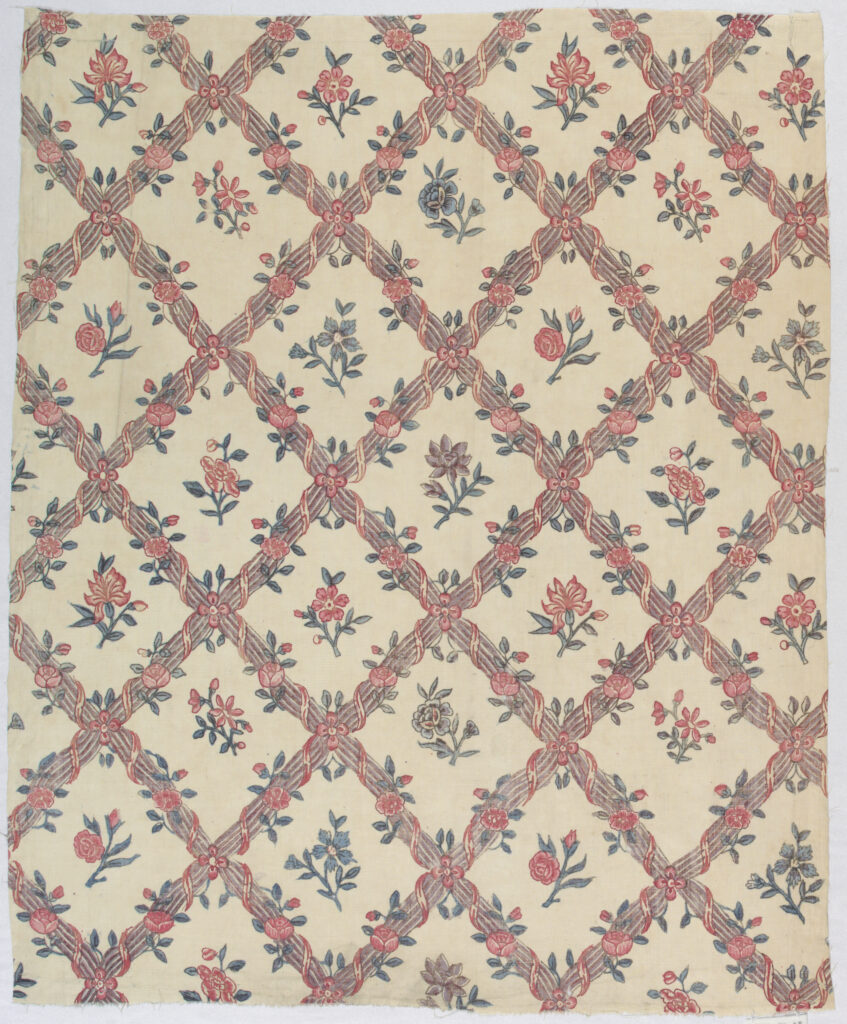
By the dyeing techniques then available in Europe or East Asia, fixing vivid color onto cotton — a plant-based fiber — was nearly impossible. Dyes either faded quickly or turned muddy. But Indian artisans possessed a secret: the technology of the mordant. They drew an underdrawing with a brush or pen (kalam) dipped in a mordant solution containing iron and aluminum compounds, then boiled the cloth in a bath of madder root. The dye fixed itself permanently and vividly — but only where the mordant had been applied. This is the Kalamkari technique. The images these artisans created carried elaborate Trees of Life and exotic blooms. This brilliantly colored cotton — whose flowers could not be washed away — soon captivated merchants across the world.
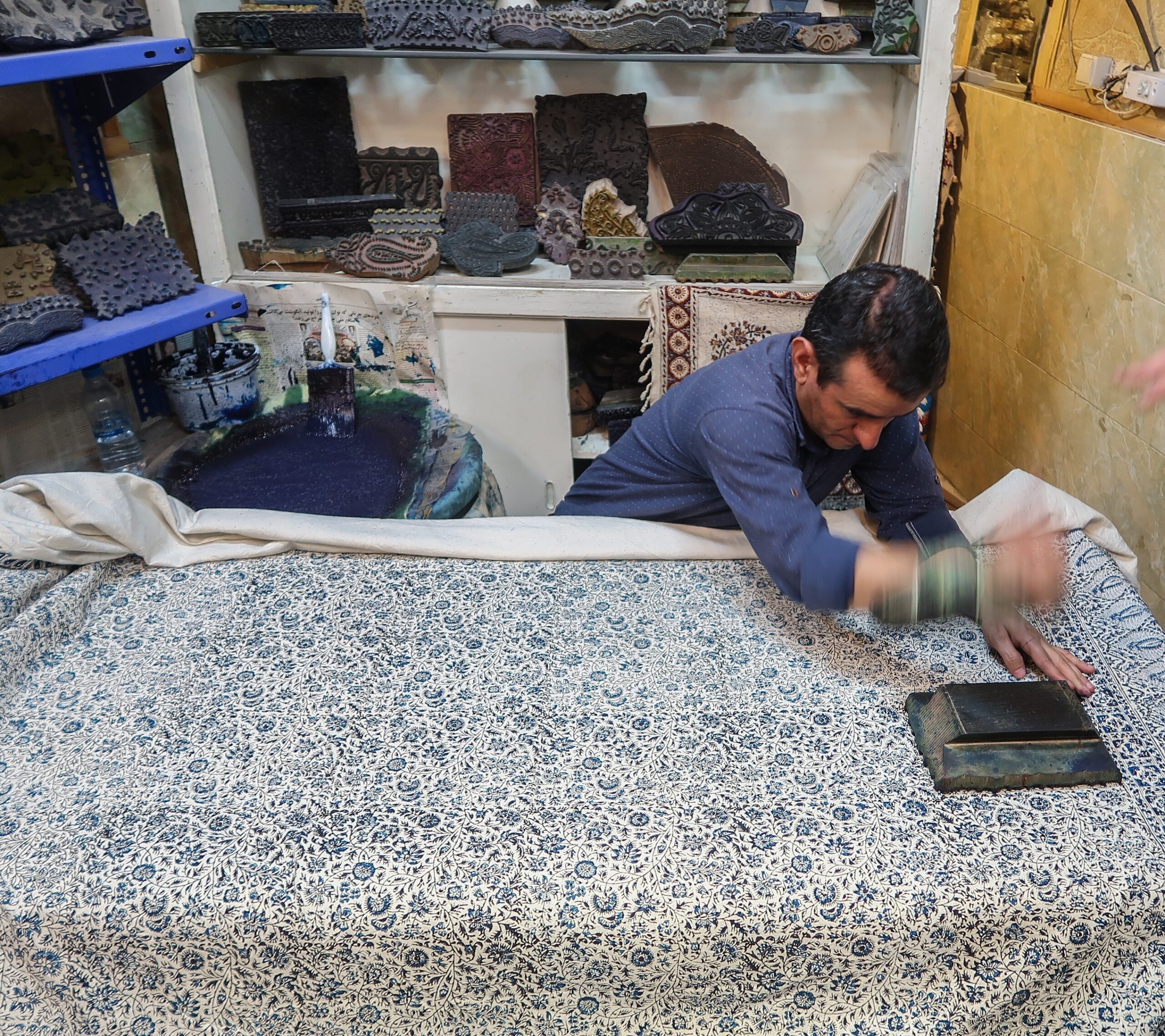
Persian kalamkari printer” by Amirhsh68 via Wikimedia Commons is licensed under CC BY-SA 4.0.
The Flower Goes West: Europe’s ‘Chintz Craze’ and the Birth of Domino Wallpaper
In the late 17th century, chintz arrived in Europe via the East India Companies and sent everyone — from aristocrats to housemaids — into raptures. In France it was called Indienne, meaning “something from India.” The English writer Daniel Defoe lamented that “chintz had invaded the bedchambers, the curtains, the chairs, and even the ladies’ undergarments.” When the domestic wool industries began to suffer, the British and French governments imposed bans on chintz imports in the early 18th century — but desire, as ever, only burns brighter when forbidden. European artisans began producing so-called “imitation chintz” at home in place of the banned Indian originals.
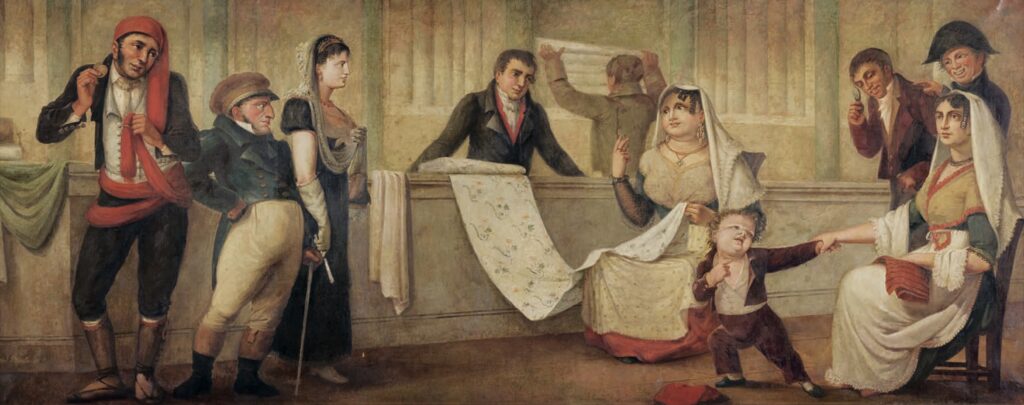
Barcelona chintz shop, c. 1824. Painting attributed to Gabriel Planella i Conxello. Museum of the History of Barcelona.
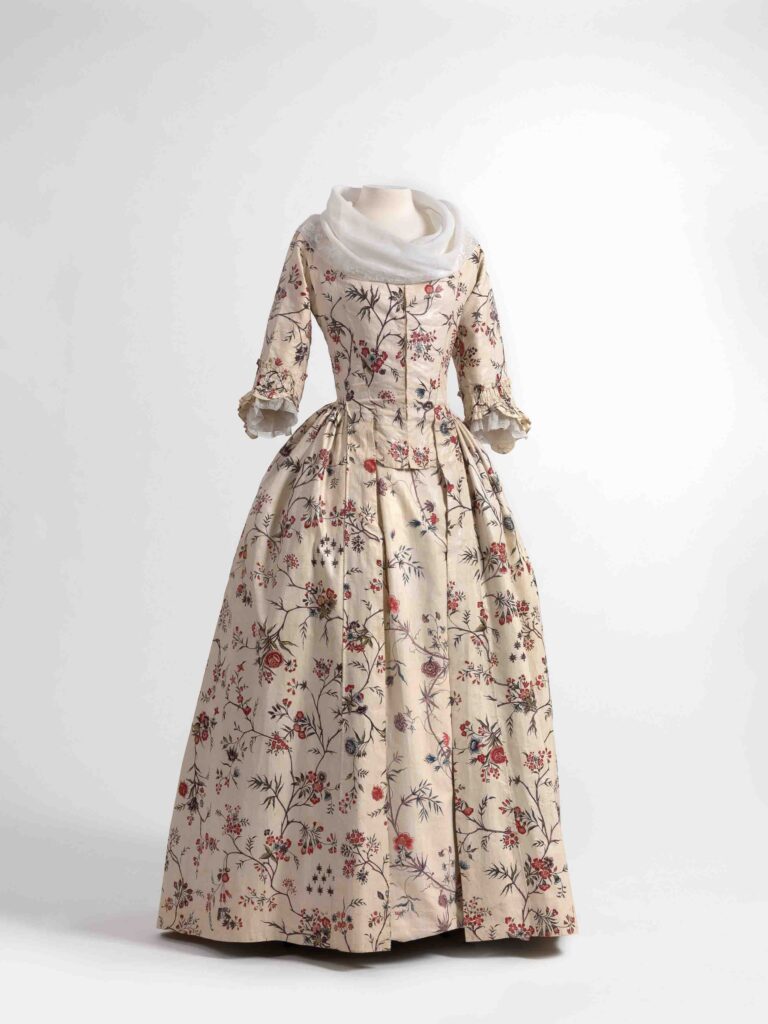
Here, an important transformation in design occurred. The fluid, complex curves that Indian artisans had drawn by hand were replaced by European craftsmen with woodblock printing for mass production. Carving patterns into wood required simplified lines, and motifs were organized into repeating structures — the trellis and the diaper grid — that could be easily reproduced. This history of imitation soon extended to wallpaper. Common people longed to drape their walls in the same luxurious chintz as the nobility, and the affordable alternative that emerged in France was the Papier Dominoté— the domino wallpaper. Small sheets of paper printed with chintz-style geometric patterns, these were called “the tapestry of the poor.” The fact that they were produced by the sheet rather than the roll, and the nature of their patterns, gives them a curious kinship with Korea’s own munyangi (patterned paper).
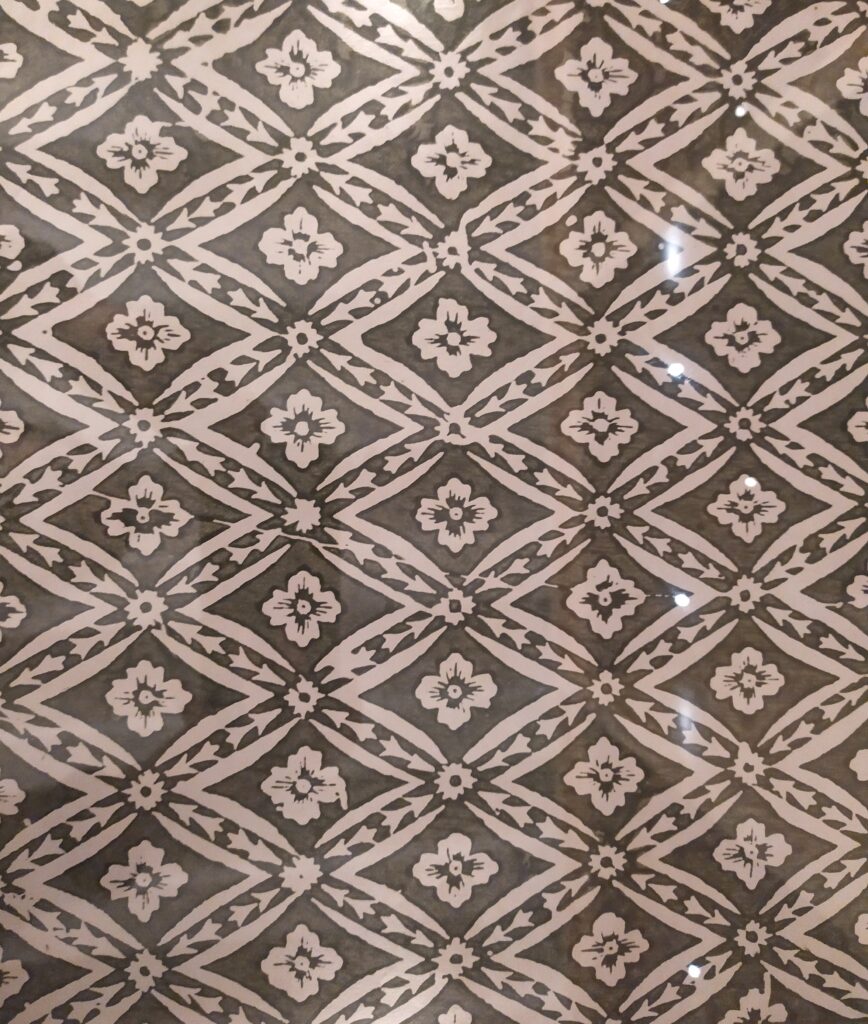
Dominoté Musee Remondini 17″ by Sailko via Wikimedia Commons is licensed under CC BY-SA 4.0.
The Flower Goes East: Japan’s ‘Wa-Sarasa’ and the Completion of the Geometric Language
While the Indienne craze swept the West, the same goods arrived in Japan from the east via Dutch merchants. The Japanese called it sarasa (更紗). Tea ceremony devotees treasured this exotic cloth as precious, fashioning it into tea pouches — and soon gave birth to a Japanese variation: wa-sarasa (和更紗, Japanese sarasa). The Japanese solution differed from the European woodblock. They employed their traditional dyeing technique: Ise Katagami (伊勢型紙) — paper stencil printing.
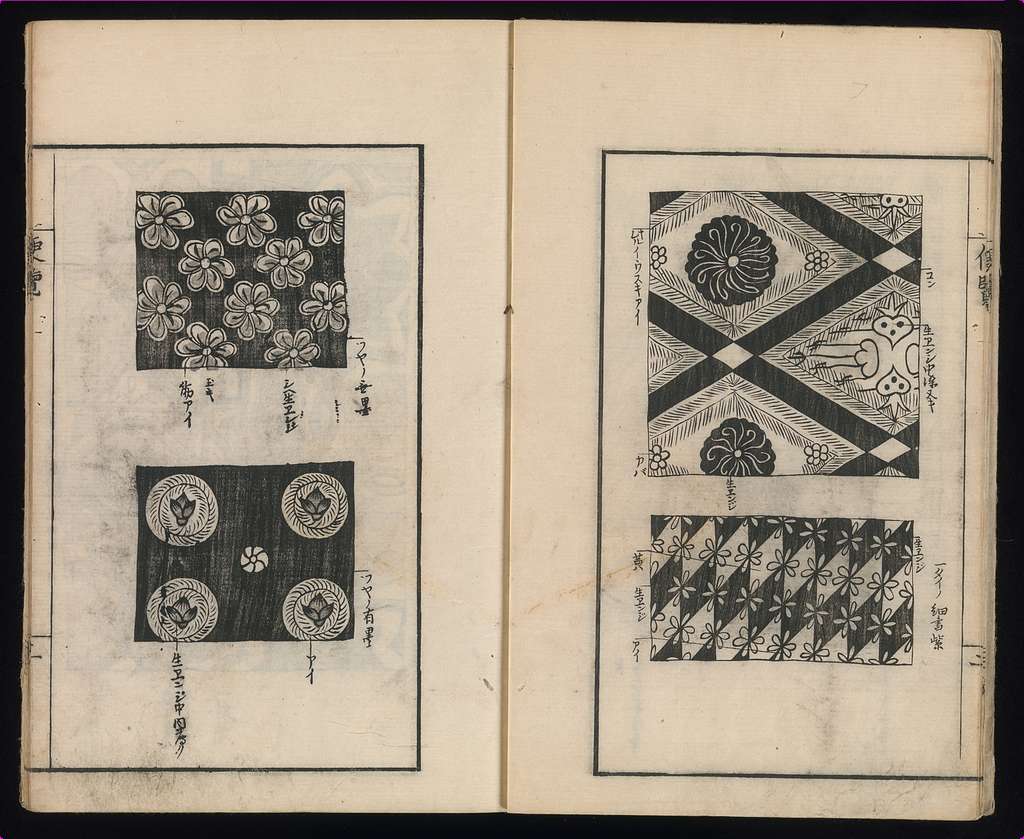
via GetArchive, Public Domain.
This technique, which required cutting patterns into tough paper with a knife, left a distinctive aesthetic imprint. To prevent the paper from tearing, bridges connecting the motifs had to be preserved, and curves had to be refined into forms amenable to the blade. As a result, the organic, flowing vines of India were transformed at the tip of the Japanese artisan’s knife into interrupted lines and flattened geometric forms. Entering the 20th century, Japan industrialized these sarasa patterns, engraving them onto copper rollers to print wallpapers for export to colonial Joseon. It was the moment when “Indian flowers, translated into Japanese” began to bloom on the walls of colonial Korea.
Another Root: The Joseon Neunghwa-pan and the Meeting with a Native Sensibility
Here, an intriguing question arises. Why did the Korean public accept the foreign sarasa patterns with so little resistance? The answer can be found in the neunghwa-pan (菱花板) tradition already living within Korean culture. In the Joseon Dynasty, a refined practice had developed of carving elaborate swastika (manja), lotus, and diamond-shaped neunghwamun (菱花文) patterns into wooden boards, then pressing hanji (Korean paper) against them to create raised relief — used to decorate book covers and high-quality interior wallpaper, shaping the geometric sensibility of the Korean people over centuries.
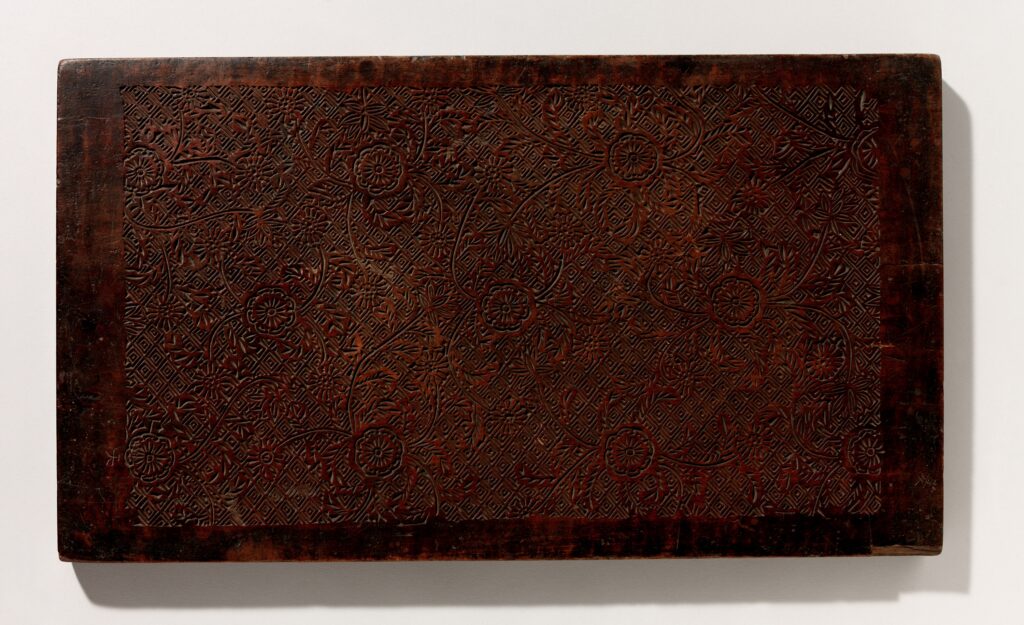
(Source: National Museum of Korea, Ref. 본관893, Public Domain Type 1)
The dense grids and floral motifs of the sarasa wallpaper introduced through Japan were not, therefore, entirely foreign to Korean eyes. They were closer to a modern printed variation of the neunghwamun patterns that had decorated books and walls for hundreds of years. The Korean interior custom of applying deep-colored paper or small-patterned finishes to the lower portions of walls provided the fertile ground through which foreign patterns were naturally absorbed into a distinctly Korean border wallpaper culture. Sarasa wallpaper, in the end, was not merely an import — it was a collaborative creation, born from the meeting of an external style with the deep-seated genetic memory of Korea’s long paper culture.
The Final Destination: Korea’s Jeomsoon Border Wallpaper, Before and After Liberation
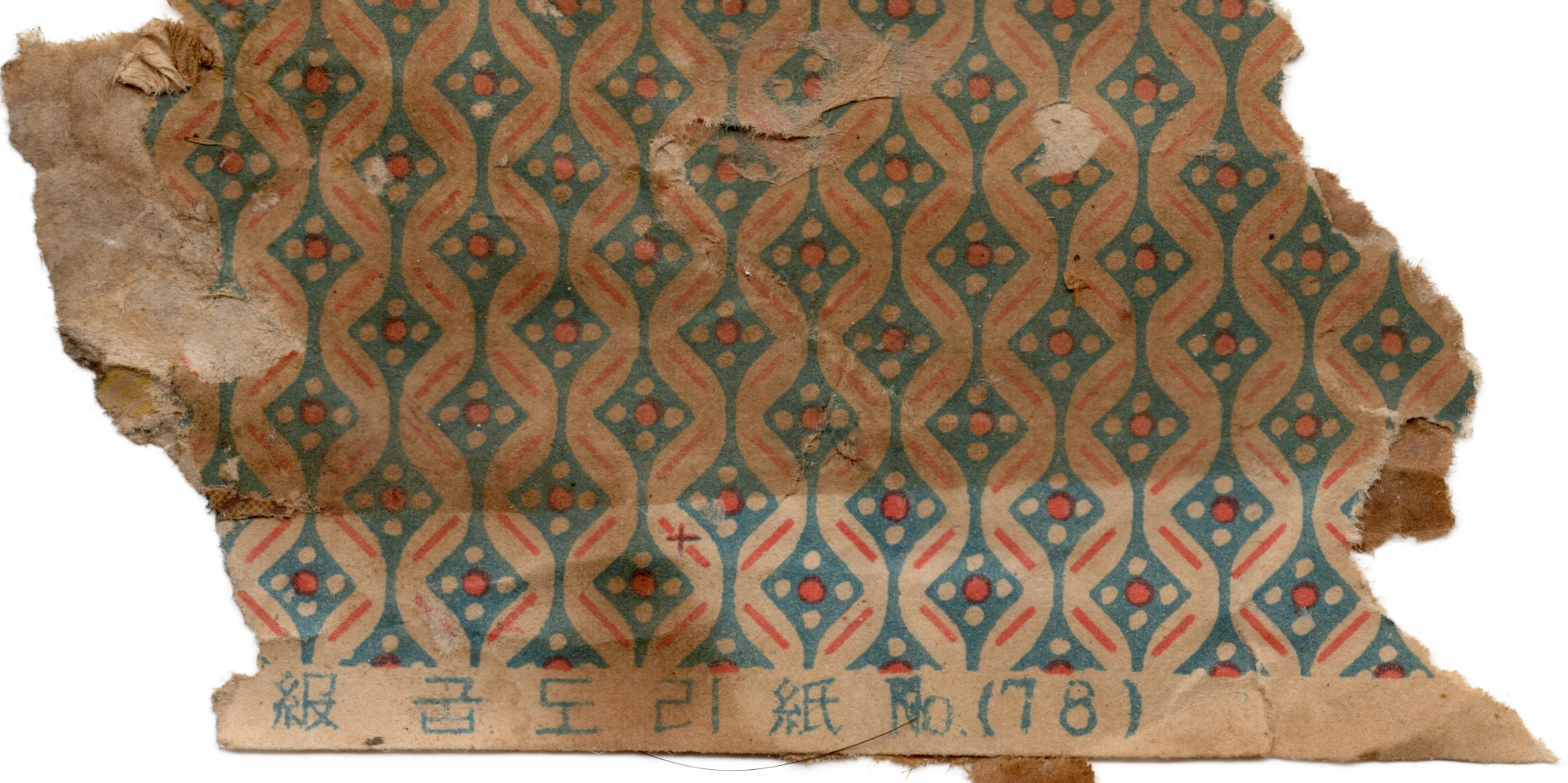
In the turbulence of liberation in 1945 and the war that followed, Japanese technicians departed — but the printing rollers and pattern templates they left behind remained in Korean factories. Materials were scarce, and ink was precious. Korean artisans had to meet the full demand for wallpaper using only a handful of diluted ink colors in place of elaborate multicolor printing. The “geometric sarasa” patterns that emerged in this period took root primarily as a versatile border material — the Korean-style gubdoriji applied to the lower walls, wrapping paper, and a decorative lining for furniture interiors.
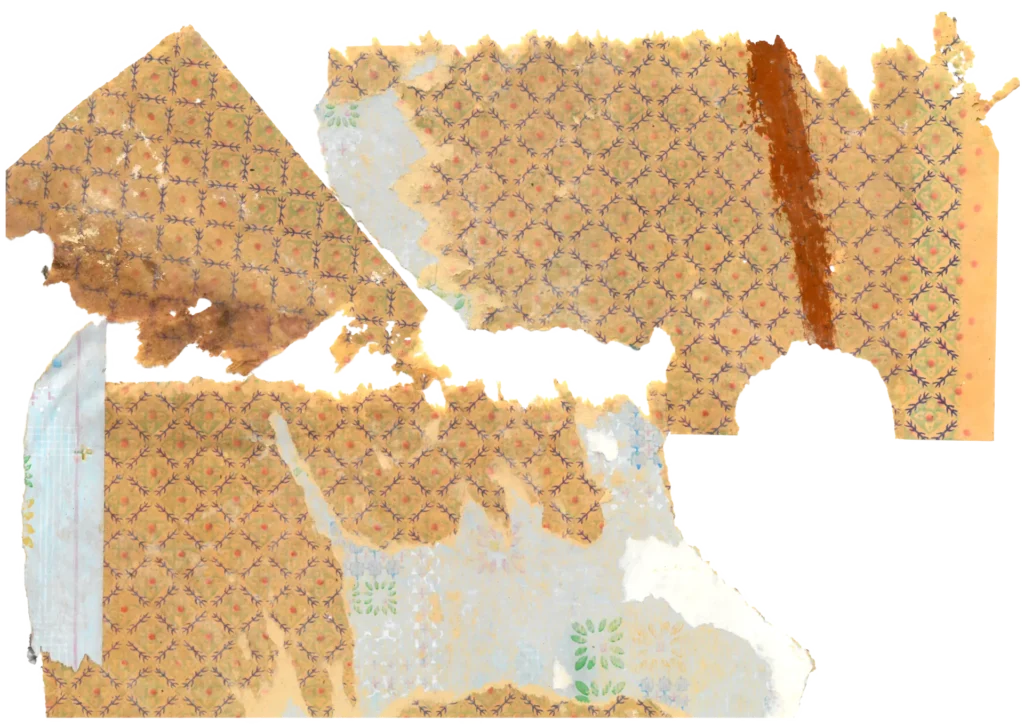
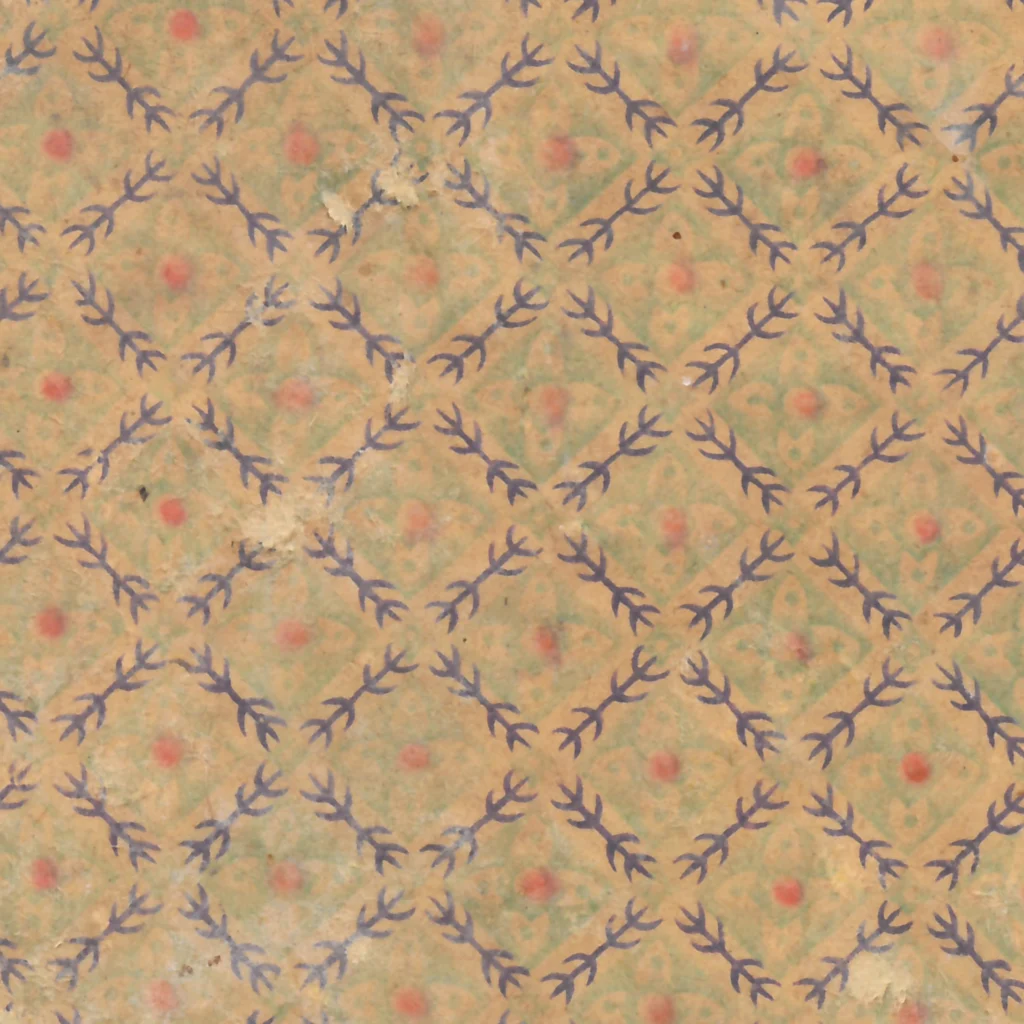
For Koreans living on the floor, the lower portion of a wall was constantly subject to grime from hands and feet and the daily scrubbing of mops. Wallpapers with large open areas of ground revealed stains easily — but the dense sarasa-style pattern concealed them as though the marks were simply part of the design. These small-patterned papers were, beyond their formal beauty, an eminently practical camouflage — a tool for enduring a harsh living environment with a measure of grace.
A Fragment of World Design History, Wrought by the Cheapest Technology
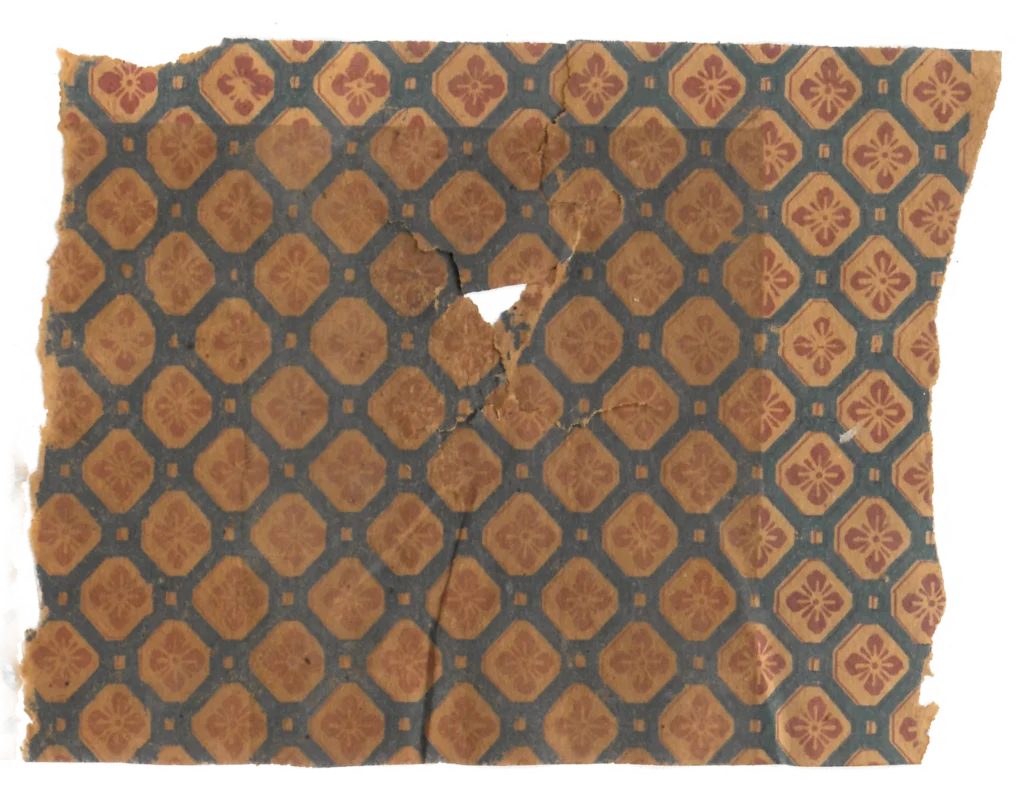
By the time India’s brilliant chintz had traveled the world and come to rest in Korea, the pattern had transcended mere imitation of a foreign motif. The Papier Dominoté that 18th-century French commoners pasted on their walls. The wa-sarasa stamped by Edo-period Japanese artisans. And the 1950s Korean border wallpaper that carried forward the aesthetic of the Joseon neunghwa-pan. These things never met — yet they resemble one another to a remarkable degree.
Source: Collection of Gosate)
The desire of ordinary people — unable to own the expensive original — converged on a similar geometric language through the cheap technologies of woodblock, paper stencil, and worn-out roller. The effort of nameless designers who overcame scarcity through craft and carried familiar traditions forward into new media. In this single humble sheet of border wallpaper flows both the vast design journey that traversed the world, and the aesthetic DNA of the Korean people.
Copyright © 2026 Gosate Archive.
All Rights Reserved.
- All text and scholarly analysis are the intellectual property of the author.
- All photographs marked “Gosate Collection” or “Photo by Gosate” are the copyright of GOSATE. Reproduction, copying, or distribution without prior consent is strictly prohibited.
- Historical images cited from external sources are subject to their respective copyright holders or public domain provisions.
Inquiries: contact@gosate.kr
More from this era