작은 꽃 — 1945~50년대 초 한국의 다용도 벽지
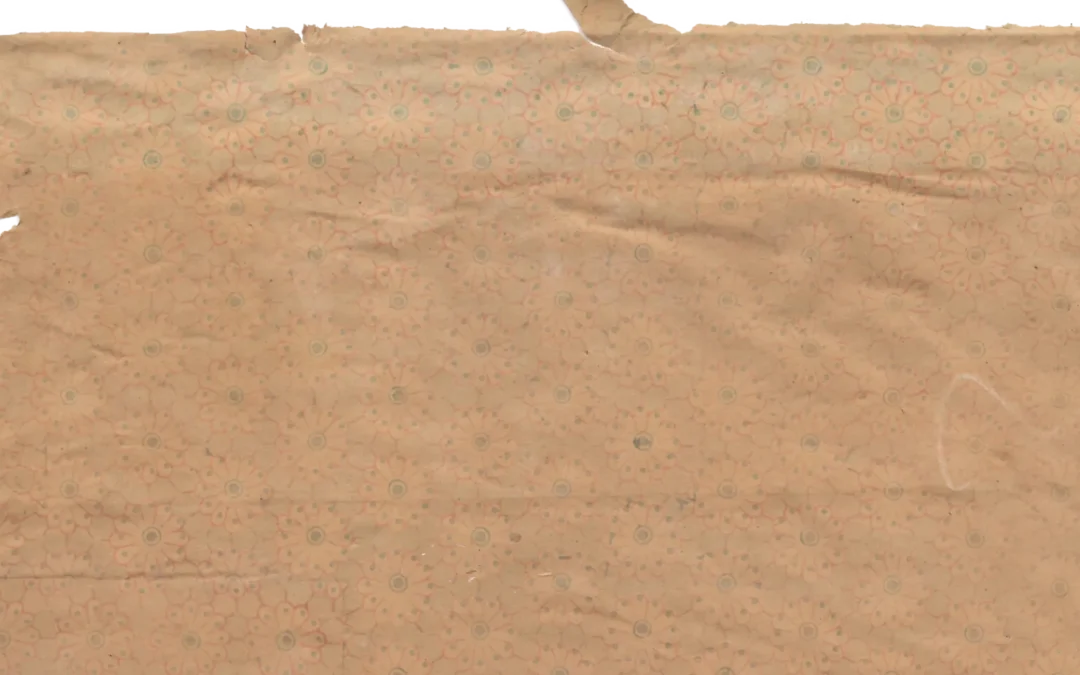
시각적 관찰 이 벽지는 펄프지 위에 붉은색과 푸른색 두 가지 수성 잉크로 찍은 2도 인쇄 벽지입니다. 모티프는 8엽의 작은 꽃 한 종류로, 화면 전체에 균일한 격자 형태로 빈틈없이 반복됩니다. 각 꽃의 구조를 들여다보면 단순합니다. 붉은색 잉크가 꽃잎의 윤곽선을 그리고, 푸른색 잉크가 꽃 중앙에 동그란 점과 그것을 둘러싼 작은 점들을 찍어 꽃술을 표현합니다. 꽃 한 송이의 크기는 손톱 정도. 화면 전체가 이 작은 꽃들의 균일한 반복으로만 구성되어 있고, 다른 모티프나 변주는...
Beyond the Frame: The Significance of Early Korean Wallpaper as ‘Joseon Deconstructivism’
1. The Economics of Two-Color Printing: A Structural Aesthetic Born from Scarcity The first thing that draws the eye in this wallpaper is its extreme restraint in color. In the printing environment of the years immediately following liberation in 1945 through the...
The Flower of India and the Neunghwa-pan of Joseon: Two Bloodlines Running Through the Border Wallpaper
The First Fashion to Conquer the World: From Chintz to the Neunghwa-pan What we casually call a “floral pattern” today — and the ancestor of that humble border wallpaper that once graced a corner of a 1950s Korean ondol room — was born, in fact, beneath...
The Rose That Learned to Bleed: An Aesthetic Born from Scarcity
1. A Design Lineage: The Garden from India, the Legacy of the Indienne The underlying structure of this wallpaper is a classic 19th-century European floral. Ogee- and almond-shaped medallions — pointed at the top, rounded at the base like a teardrop — form a dense...