
Beyond the Frame: The Significance of Early Korean Wallpaper as ‘Joseon Deconstructivism’
1. The Economics of Two-Color Printing: A Structural Aesthetic Born from Scarcity The first thing that draws the eye in this wallpaper is its extreme restraint in color. In the printing environment of the…

1. The Economics of Two-Color Printing: A Structural Aesthetic Born from Scarcity
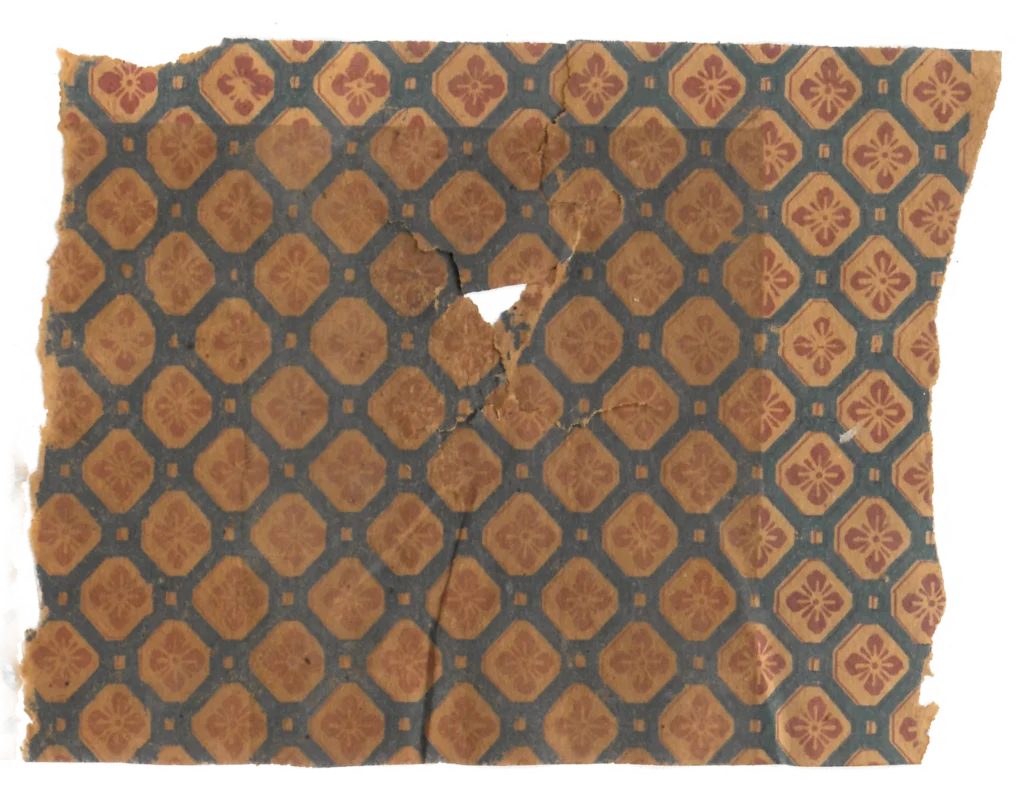
The first thing that draws the eye in this wallpaper is its extreme restraint in color. In the printing environment of the years immediately following liberation in 1945 through the early 1950s, when all materials were in short supply, the luxury of rich, varied color simply did not exist. The result was an inevitable choice: this pattern was composed of just two inks — black and red.
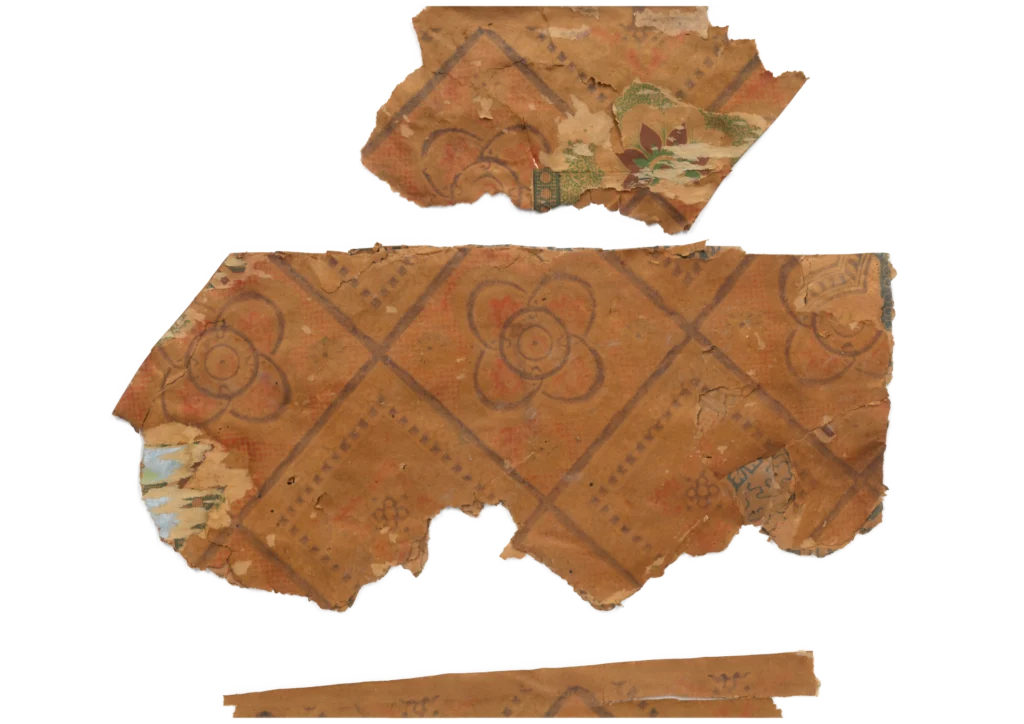
Black defines the overall forms and outlines, tracing the complete contours of the motif, while red ink carries the floral ornaments and background texture. The unprinted ground of the base paper is then activated as a third tonal plane — an economical design strategy aimed at maximizing visual density at minimum cost.
2. ‘Joseon Deconstructivism’: A Popular Variation on the Standardized Western Pattern
The structural foundation of this wallpaper inherits the tile format of Western-style ceiling wallpapers introduced during the Japanese colonial period. Yet a closer look at its details reveals a clear and telling departure from the established style. The most striking point is the treatment of the floral motifs within the red-dotted rectangular units. Unlike the patterns of the preceding era — which pursued perfect symmetry and precision, as though drafted with ruler and compass — the flowers in this wallpaper carry the feeling of having been drawn freely with a brush, light and faintly playful in spirit.
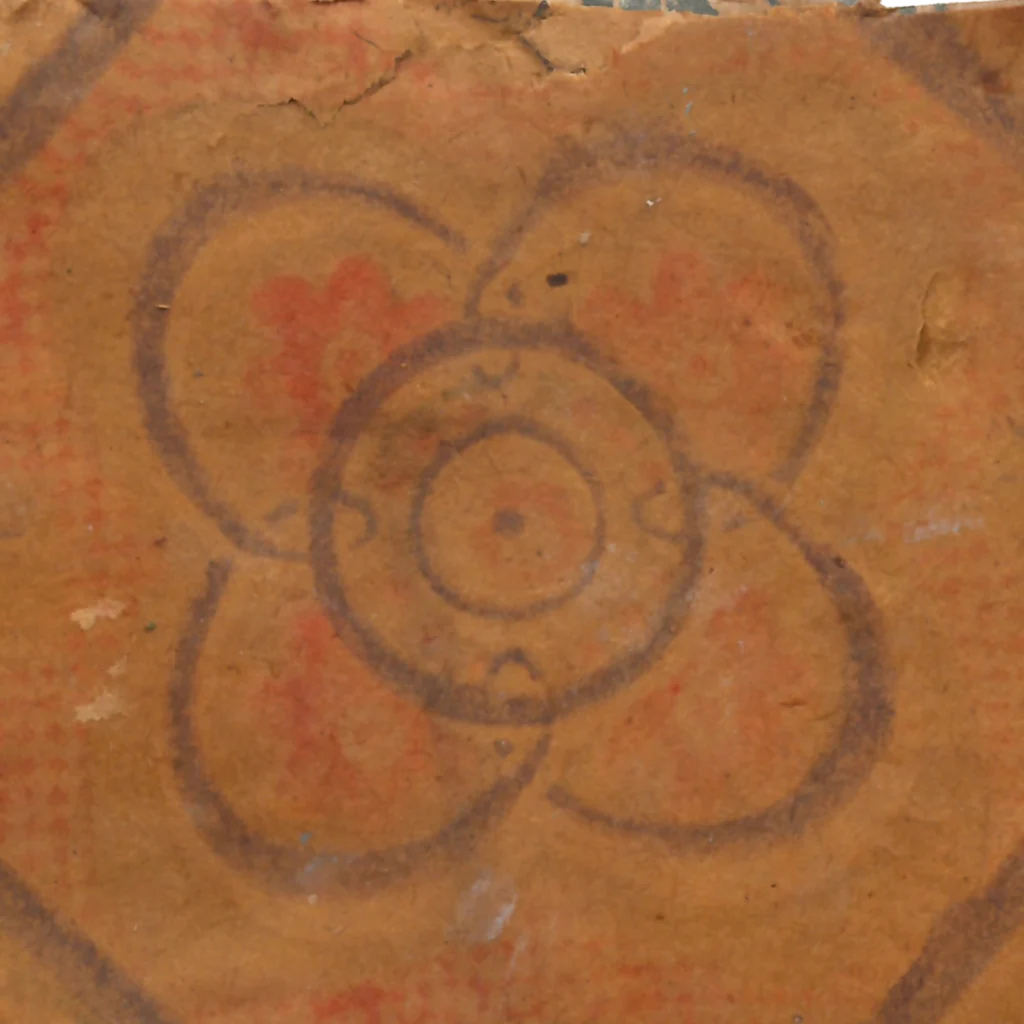
(Source: Collection of Gosate)
This shift resonates deeply with the attitude of Joseon folk art, which expressed its subjects freely through a distinctive aesthetic sensibility, unconstrained by the rigid rules of formal iconography. It can plausibly be understood as a phenomenon that arose when Korean artisans stepped in to fill the vacuum left by the departure of Japanese technicians who had supplied design templates — a departure that came with liberation. The established “frame” of the Western tile grid was retained, but the content within began to be filled with the visual language most natural to those who now held the tools.
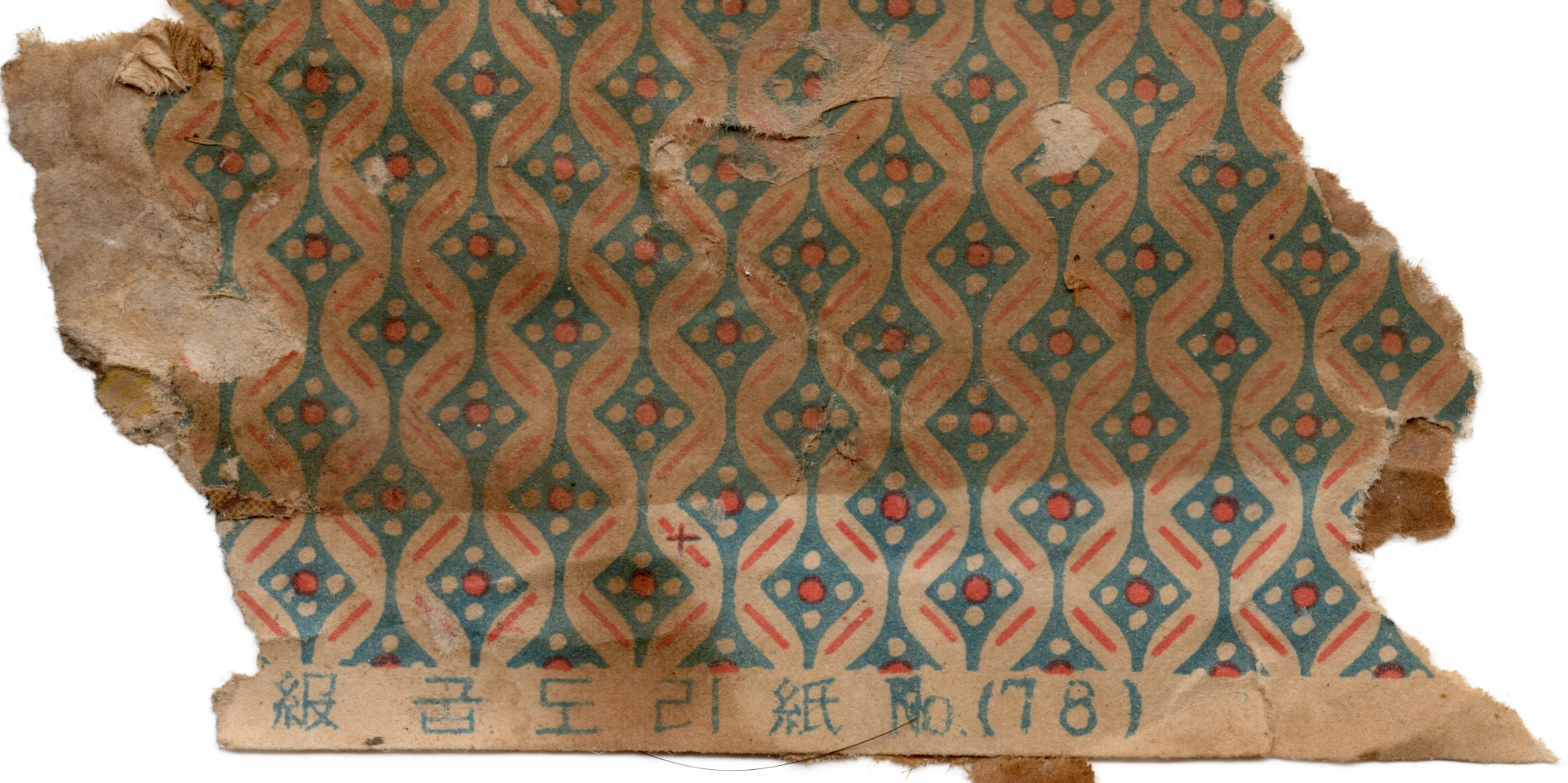
Many wallpaper patterns produced in this period carry precisely this kind of transitional vocabulary — one that dismantles the order of the old regime (the Western-style patterns introduced under Japanese rule) and reconstructs it in the brushstroke of Joseon. In the sense that Korean artisans autonomously deconstructed and newly established what had been left in the wake of a collapsed authority, these works hold profound significance in the history of Korean design. We might cautiously propose calling this “Joseon Deconstructivism.” These wallpapers may be understood as a silent, unconscious resistance on the part of the Korean people against the Western framework that had arrived through Japanese colonial rule — and as a quiet record of independence, written not in proclamations, but in pattern.
Copyright © 2026 Gosate Archive. All Rights Reserved.
All Rights Reserved.
- All text and scholarly analysis are the intellectual property of the author.
- All photographs marked “Gosate Collection” or “Photo by Gosate” are the copyright of GOSATE. Reproduction, copying, or distribution without prior consent is strictly prohibited.
- Historical images cited from external sources are subject to their respective copyright holders or public domain provisions.
Inquiries: contact@gosate.kr
More from this era