
Small Flowers — Multipurpose Korean Wallpaper from the Late 1940s to Early 1950s
A modest two-color floral repeat shows how Korean printed paper after liberation could function not only as wallpaper, but as a flexible material for boxes, furniture interiors, and everyday surfaces.
Visual Observation
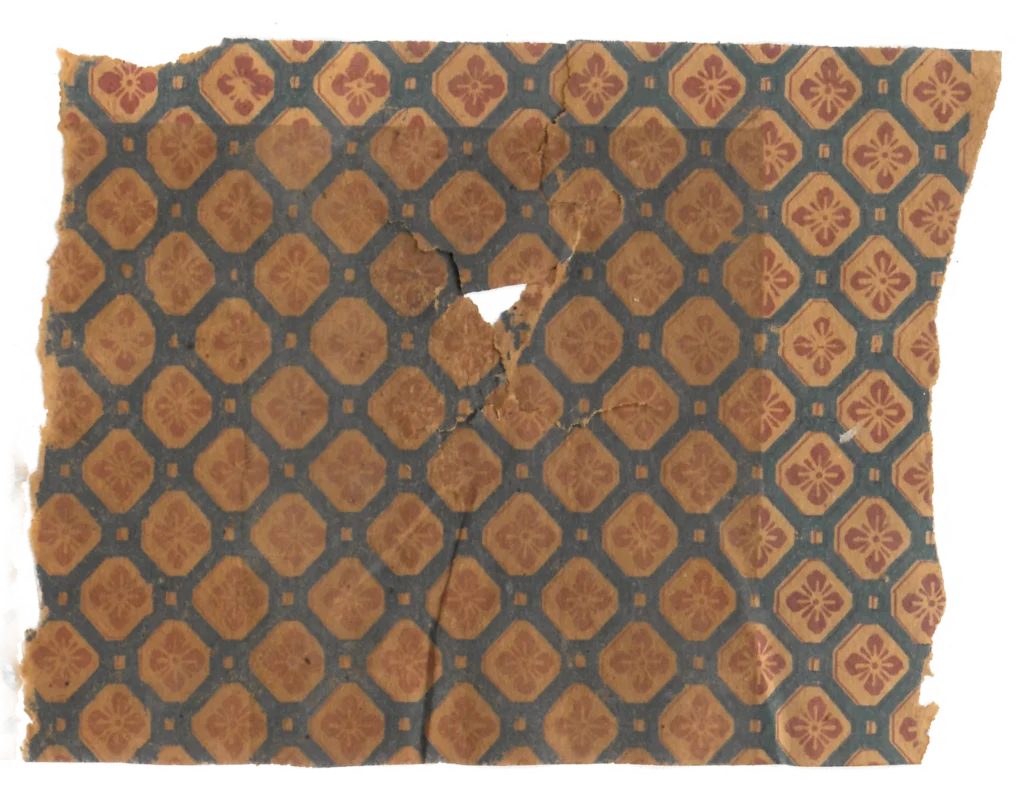
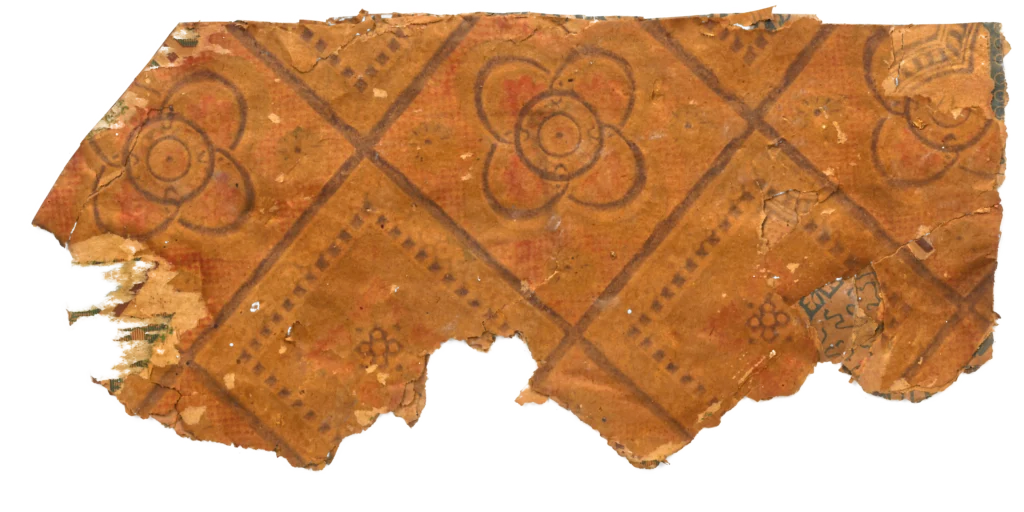
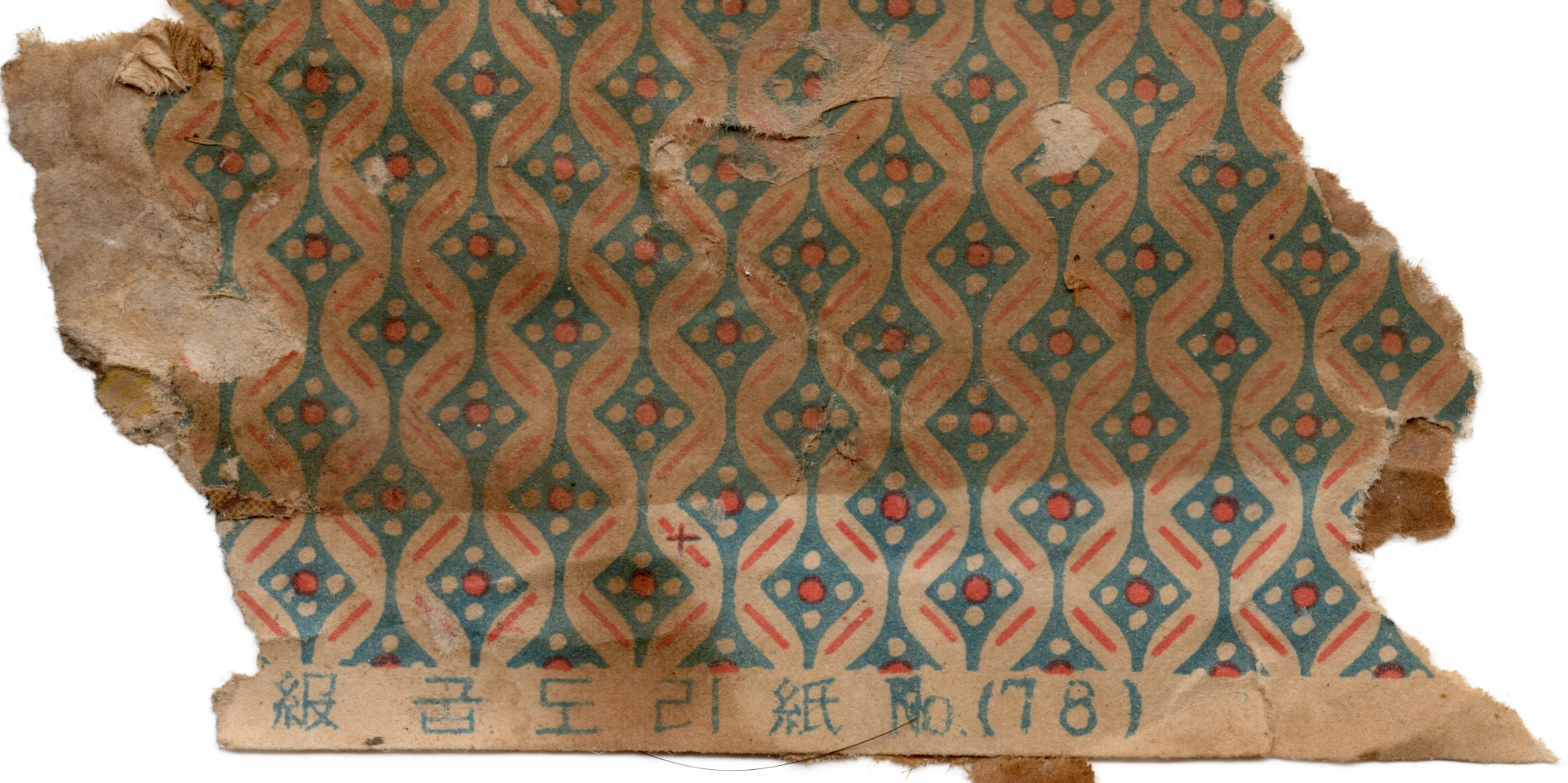
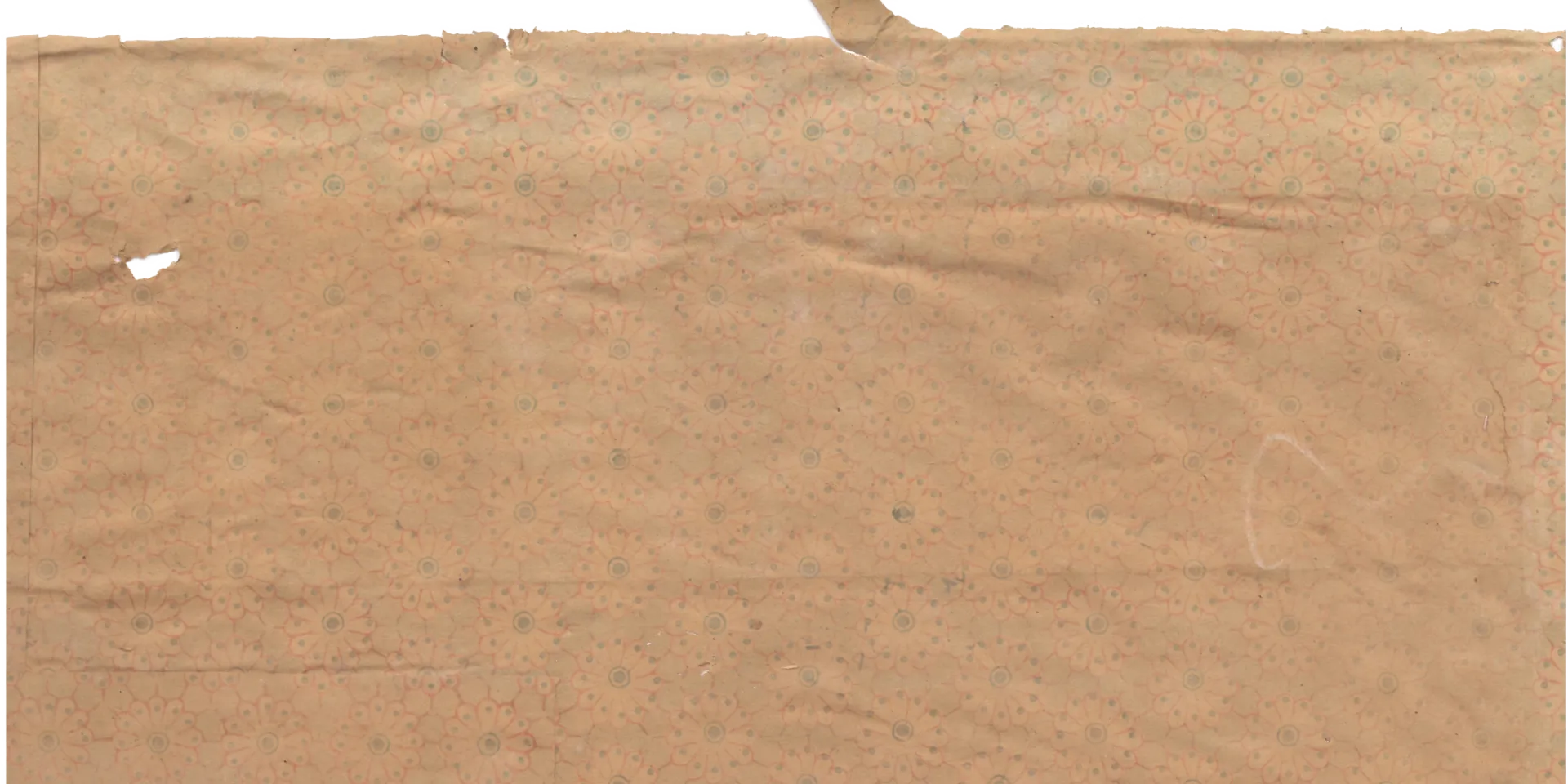
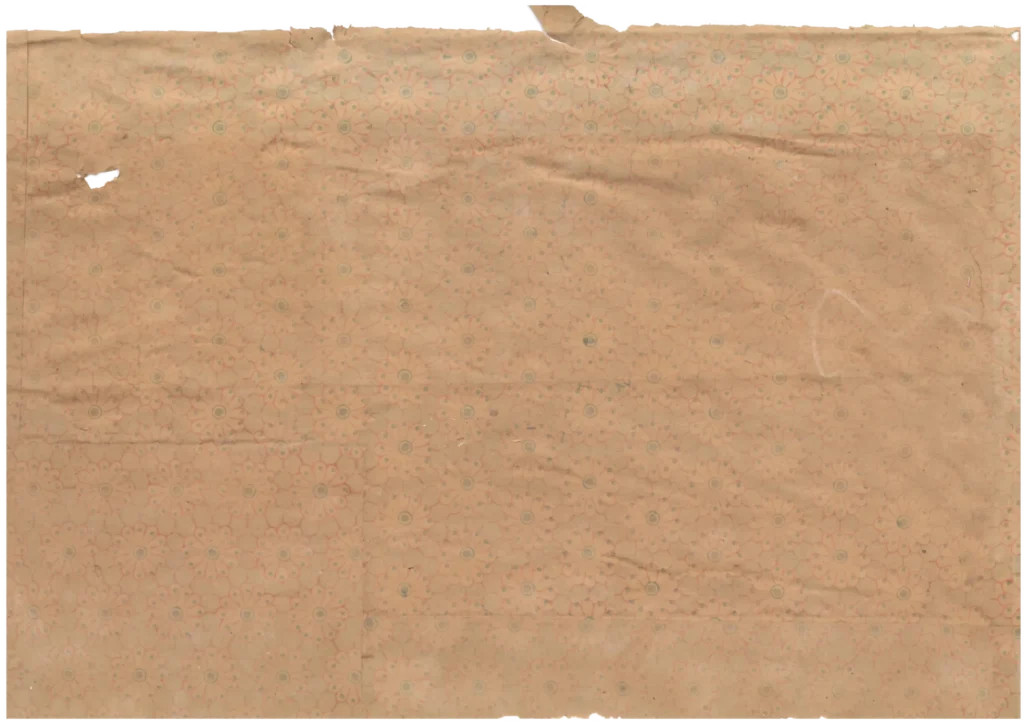
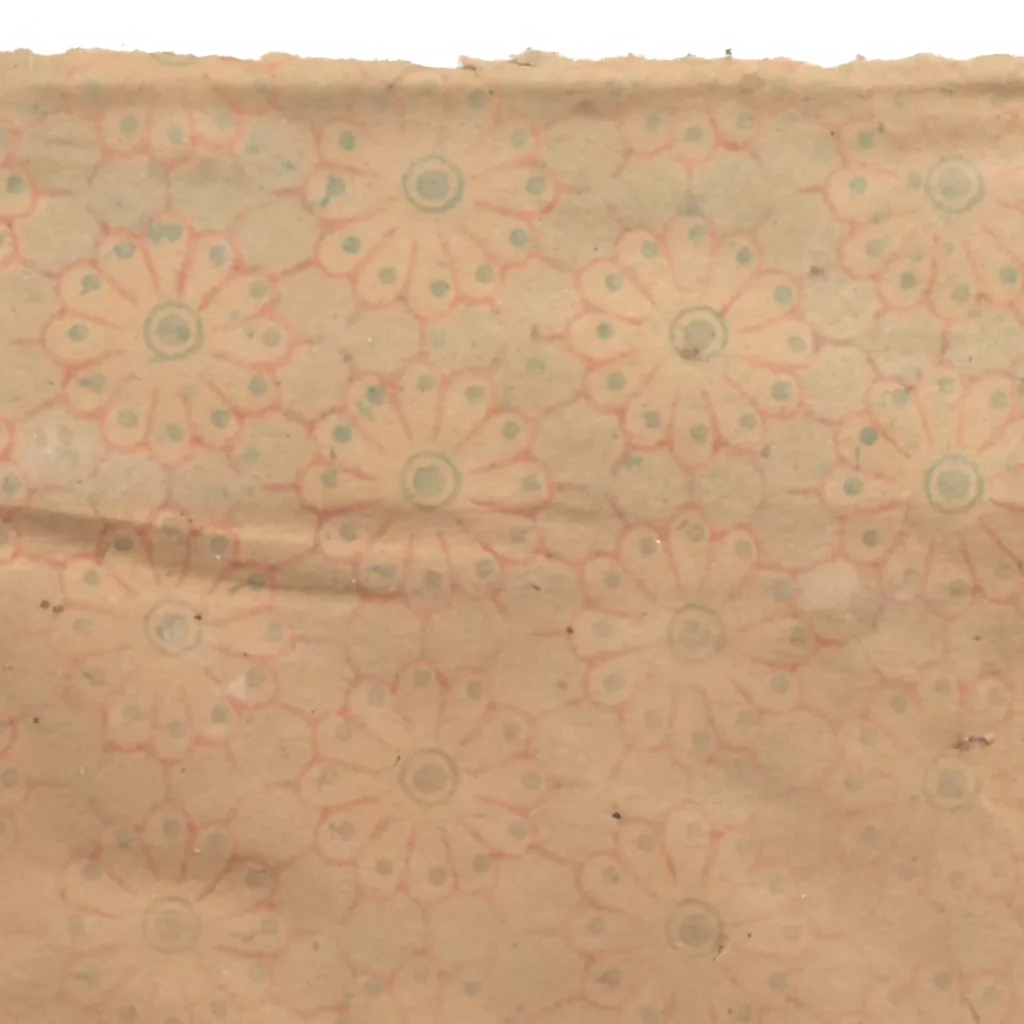
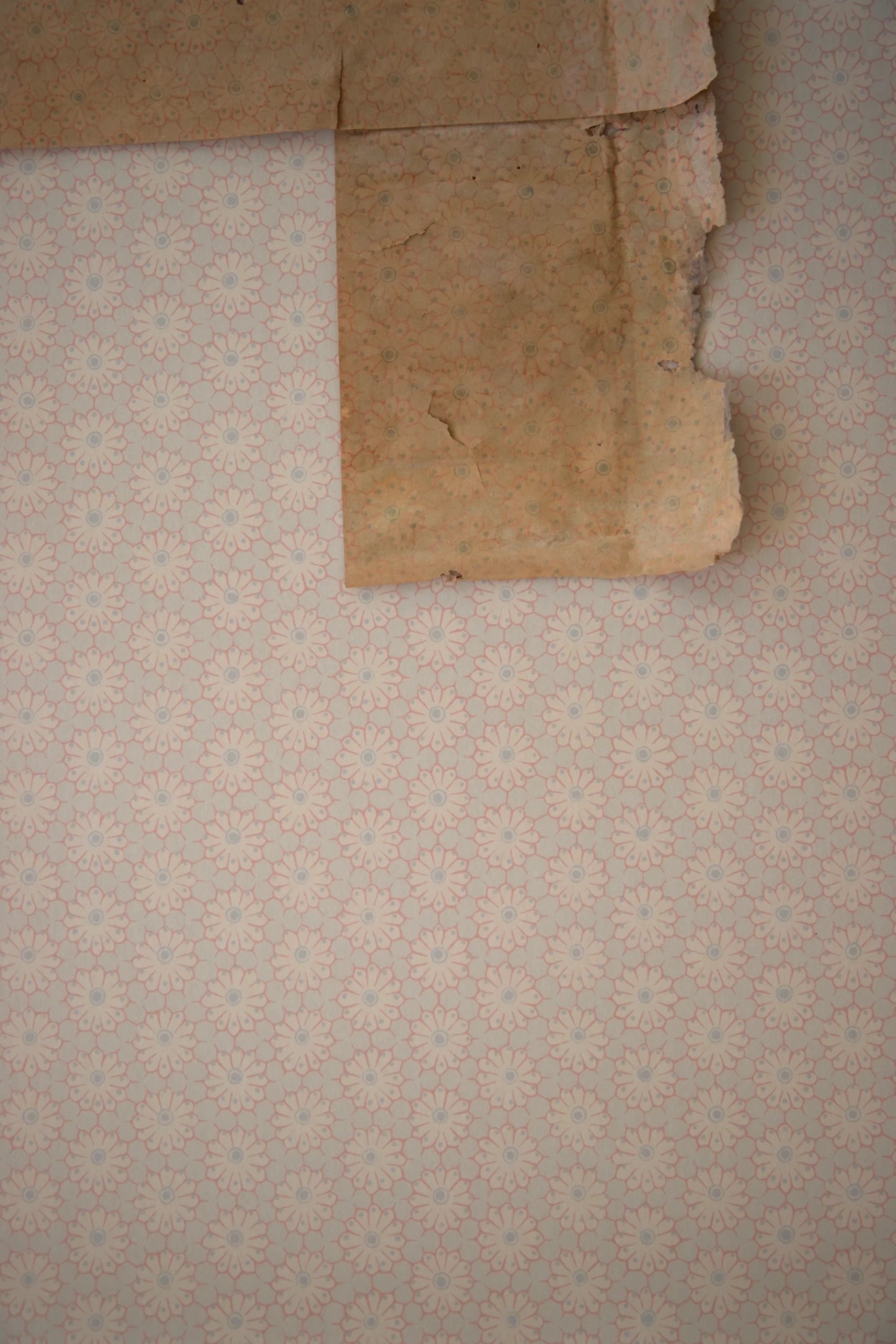
This wallpaper is printed on pulp paper with two water-based inks, red and blue. The motif is a single small eight-petal flower repeated evenly across the surface in a grid.
Each flower is simple. Red ink forms the petal outline; blue ink dots the center. There are no stems, leaves, large focal motifs, or empty pauses. The entire surface is made from the steady repetition of one small flower.
The colors have faded with time. The red has softened toward coral, and the blue has become a pale gray-blue. This fading gives the paper its gentle present-day character.
Simple Motif, Universal Use
The simplicity of the design is not a weakness. It is what made the paper useful. A small, even pattern can be cut anywhere without damaging the composition. It can wrap a box, line a drawer, cover furniture, or fill a small wall.
Unlike large-scale wallpaper motifs that require careful alignment, this pattern behaves like a general-purpose printed paper. It belongs as much to everyday craft and household repair as to interior decoration.
Two-Color Printing after Liberation
The use of only two water-based inks reflects the material conditions of Korea in the late 1940s and early 1950s. Paper, pigments, and industrial resources were limited, but design did not disappear. It became practical, modest, and adaptable.
This small flower pattern shows how decoration survived through economy: repetition instead of complexity, scale instead of spectacle, and usability instead of luxury.
Why Smallness Matters
The small scale of the flower is essential. Because the motif is tiny and evenly repeated, the paper can be used in many directions and at many sizes. It can be cut, folded, wrapped, pasted, or patched without destroying the design.
This kind of pattern belongs to a world where printed paper was a practical material, not just a wall finish. It could line a cabinet, cover a box, repair a surface, or brighten a corner of a room.
Decoration Under Constraint
After liberation and around the years of the Korean War, material scarcity shaped everyday design. The limited palette of red and blue water-based ink is not merely an aesthetic choice. It reflects the available resources of the time.
Yet the wallpaper is not bleak. The repeated small flowers create a modest cheerfulness. Decoration persists, but it becomes light, practical, and economical.
A Pattern for Everyday Life
Because the design has no strong center, it does not demand a formal room. It can belong anywhere. That flexibility is part of its historical meaning. It shows how printed ornament entered daily life not through luxury, but through usefulness.
The paper’s beauty lies in its refusal to be grand. It is small, faded, repeatable, and ordinary. Precisely for that reason, it tells us much about the visual life of post-liberation Korean homes.
Copyright © 2026 GOSATÉ Archive. All Rights Reserved.
Wallpaper from this research
Sooni
1950s
GOSATÉ restores forgotten patterns as wallpapers for contemporary spaces through the collection, documentation, and study of historic originals. A portion of every reproduction sale supports the continuing discovery, preservation, and research of Korean wallpaper.
- Colorways
- Original / Tan
- Material
- Non-woven / Peel & Stick
- Sizes
- 50×6m / 50×10m / 50×244cm
- Delivery
- Approx. 3–5 days · Free shipping
More from this era