

1. Paper Woven into Fabric: The Phantom of the Hydrangea
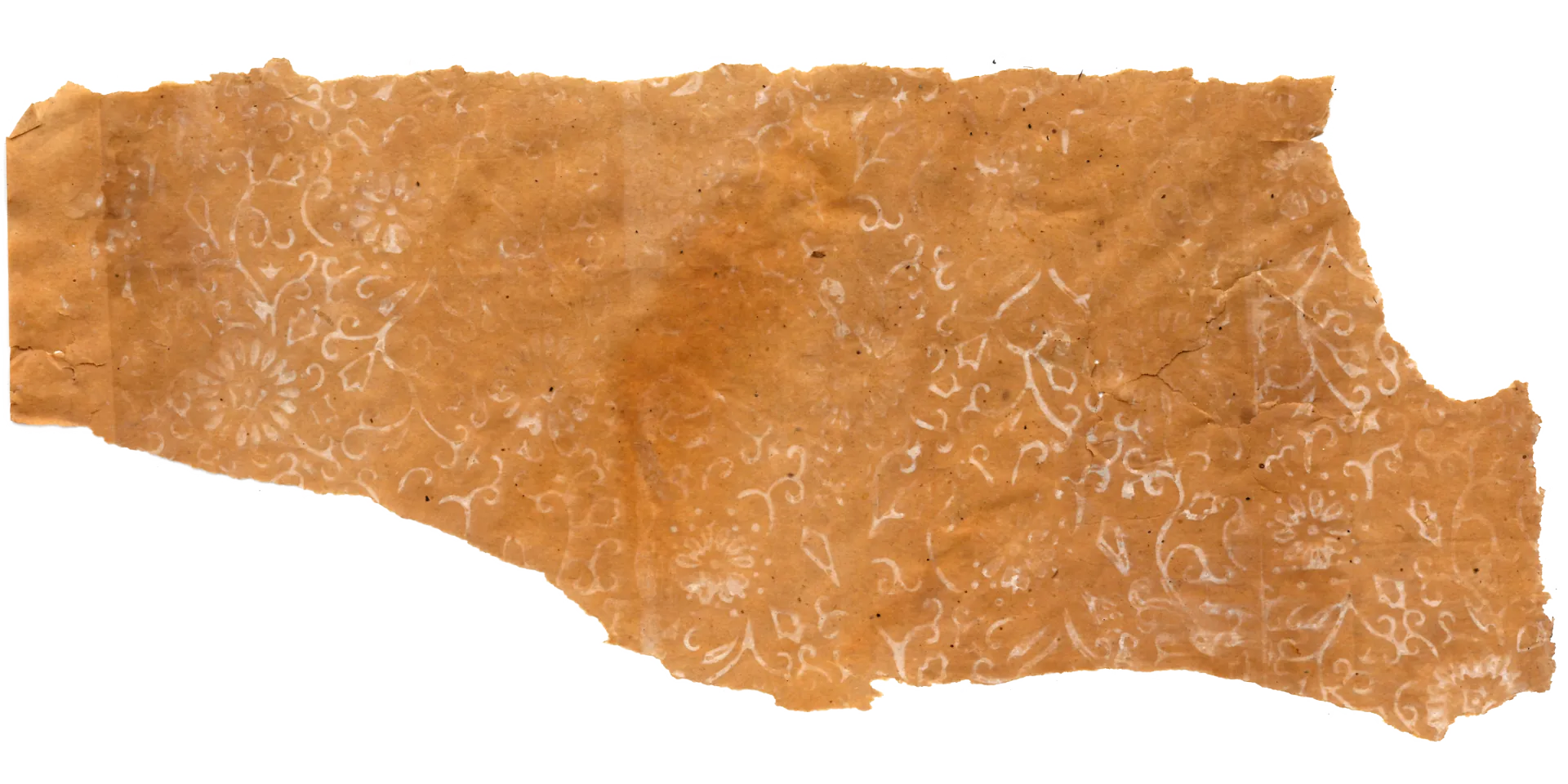
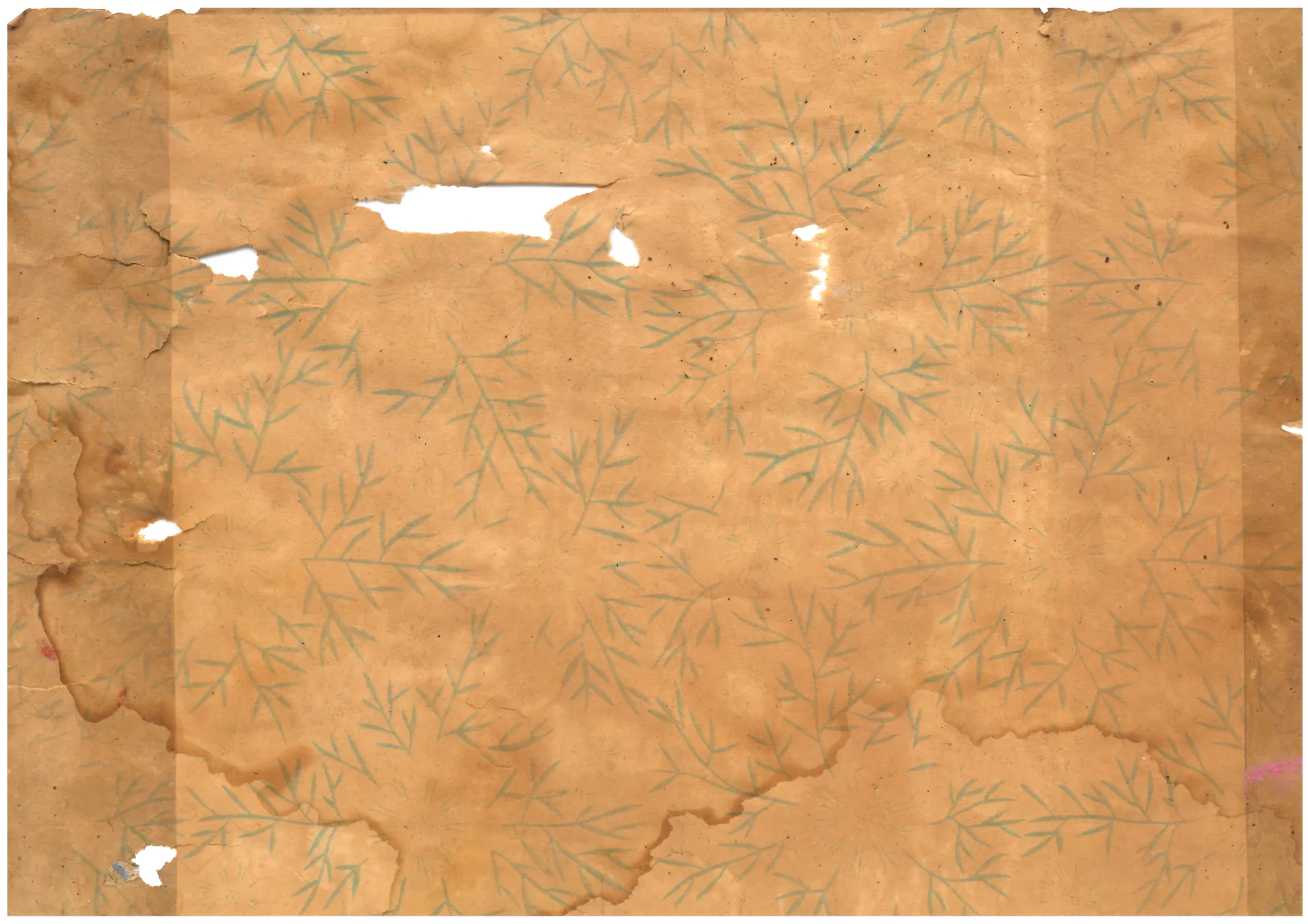
The first thing that registers in this early 1960s wallpaper pattern is its overwhelming density. Rounded flower clusters evoking hydrangea (Hydrangea) or Buddhahead flower (Buldukhwa, 佛頭花), paired with serrated leaves, fill the picture plane without a single gap. Flowers and leaves pressing shoulder to shoulder, leaving almost no ground exposed, gives the impression less of wallpaper than of a closely woven textile.

(Source : Gosate Collection)
This all-over pattern, when applied to thin paper on a wall, creates the visual impression of a fabric with genuine weight and thickness. Look closely and the interior of the petals and leaves is not a simple flat tone. Tiny dots and small secondary patterns are quietly woven throughout. It is precisely this micro-texture and tight overall composition that allows the wallpaper, from a distance, to read convincingly as cloth.
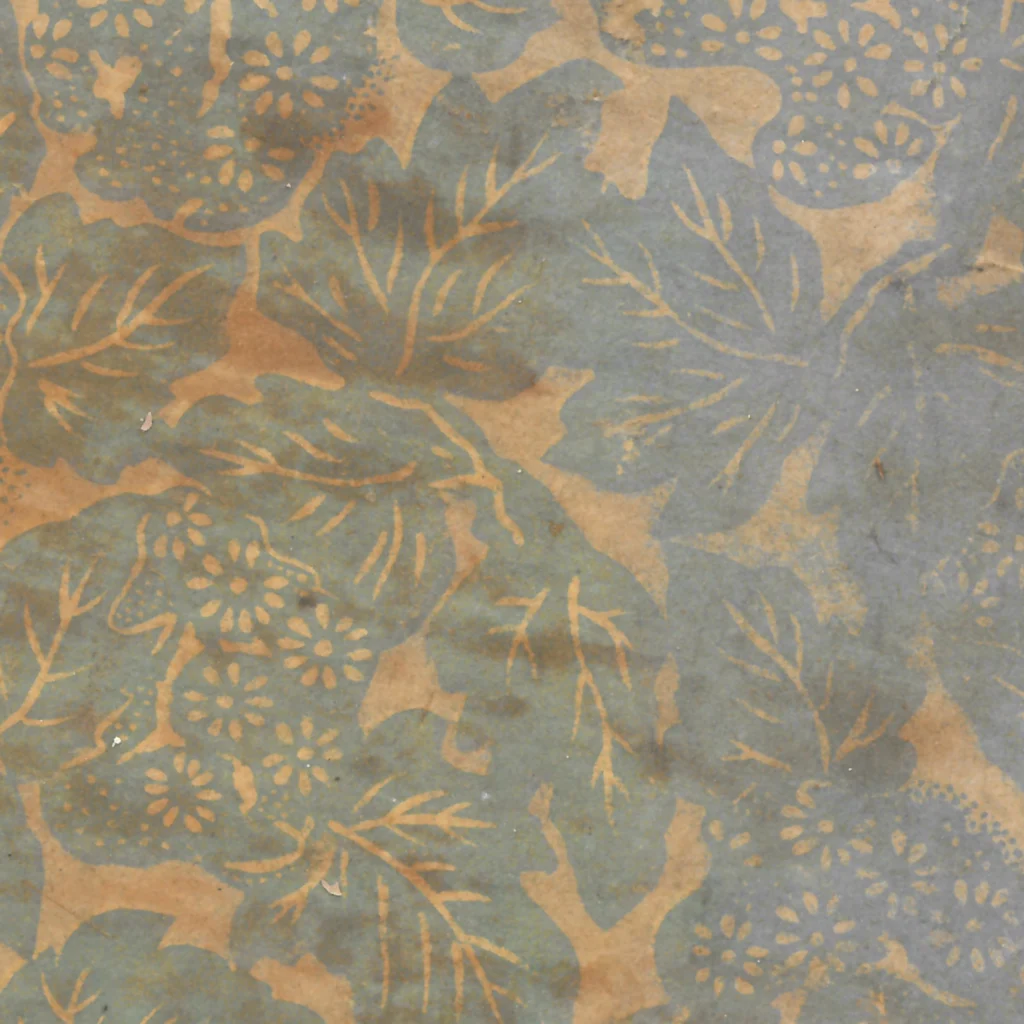
(Source : Gosate Collection)
The manner in which the flowers are rendered is equally interesting. Rather than realistically reproducing a natural hydrangea, the petals have been flattened and graphically simplified. Complex vein structures are boldly omitted, and only the rhythmic outline is emphasized — a result interpreted as the Western textile design aesthetic of the time being “fancified” into a Korean idiom. From a distance it reads as a premium fabric with a raised, textured surface; up close, a charming little flower garden reveals itself. This dual structure — squeezing every ounce of dimensionality from a single-color print — reflects the ingenuity and effort of the time: to make something inexpensive look anything but cheap.
2. Briquette Dust and Narrow Rooms: A Wallpaper That Concealed Grime
The early 1960s, when this wallpaper was in wide use, marked the very threshold of full-scale urbanization and industrialization. People flooding into the cities made their homes in cramped single rooms, improved hanok, or the cement Western-style houses just beginning to be built. The defining conditions of domestic life at the time were confinement and briquette heating.
In this environment, the small, intricate hydrangea pattern would have demonstrated remarkable practical value. Plain white plaster walls or sparsely patterned wallpapers made the soot from briquette fumes, children’s handprints, and the inevitable grime of close-quarter living painfully visible. But this pattern — a tangle of countless dots, lines, and floral motifs — possessed an excellent camouflage effect, visually absorbing the traces of daily life. Stains were difficult to notice; tears and scuffs were naturally assimilated into the complexity of the design.
At the same time, this pattern likely served a psychological function. Large motifs make a small room feel more oppressive, but a small, densely packed single-color pattern like this one causes the wall surface to register as a single calm texture — reducing the sense of spatial pressure.
In the end, this hydrangea wallpaper was more than mere decoration. It carried within it the longing of ordinary people, even amid difficult living conditions, to maintain the feeling of a clean and orderly home. Not showy but practical; inexpensive but never looking cheap — satisfying these contradictory demands, this wallpaper quietly stood watch over the walls of countless Korean homes throughout the 1960s.
Copyright © 2026 Gosate Archive. All Rights Reserved.
All Rights Reserved.
- All text and scholarly analysis are the intellectual property of the author.
- All photographs marked “Gosate Collection” or “Photo by Gosate” are the copyright of GOSATE. Reproduction, copying, or distribution without prior consent is strictly prohibited.
- Historical images cited from external sources are subject to their respective copyright holders or public domain provisions.
Inquiries: contact@gosate.kr