
A Tropical Trace on the Grid — Southern Motifs in 1940s Wallpaper
Found on a hanok ceiling, this 1940s wallpaper suggests how tropical textile vocabularies, Japanese imperial routes, and Korean domestic interiors may have crossed on a single sheet of printed paper.
(Source : Collection of Gosate)
A Grid, Two Hypotheses
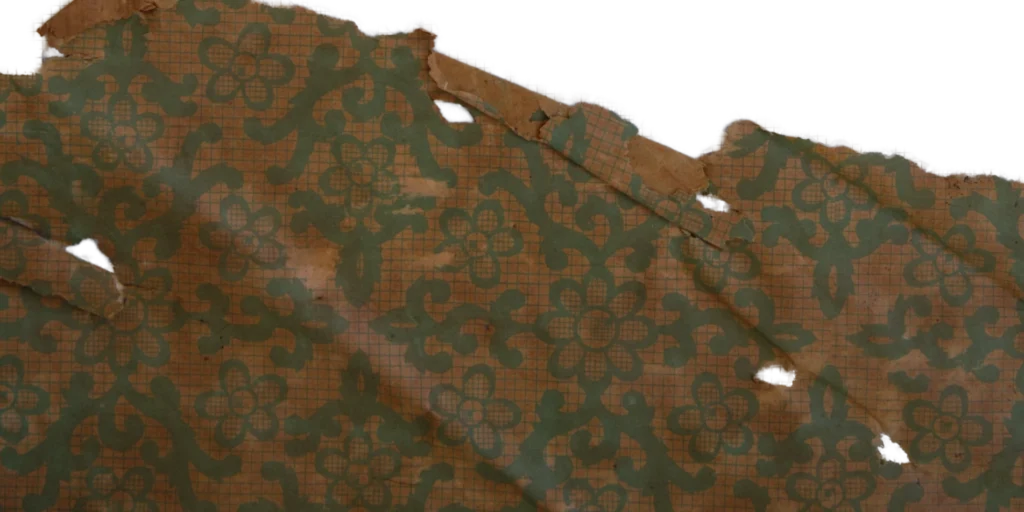
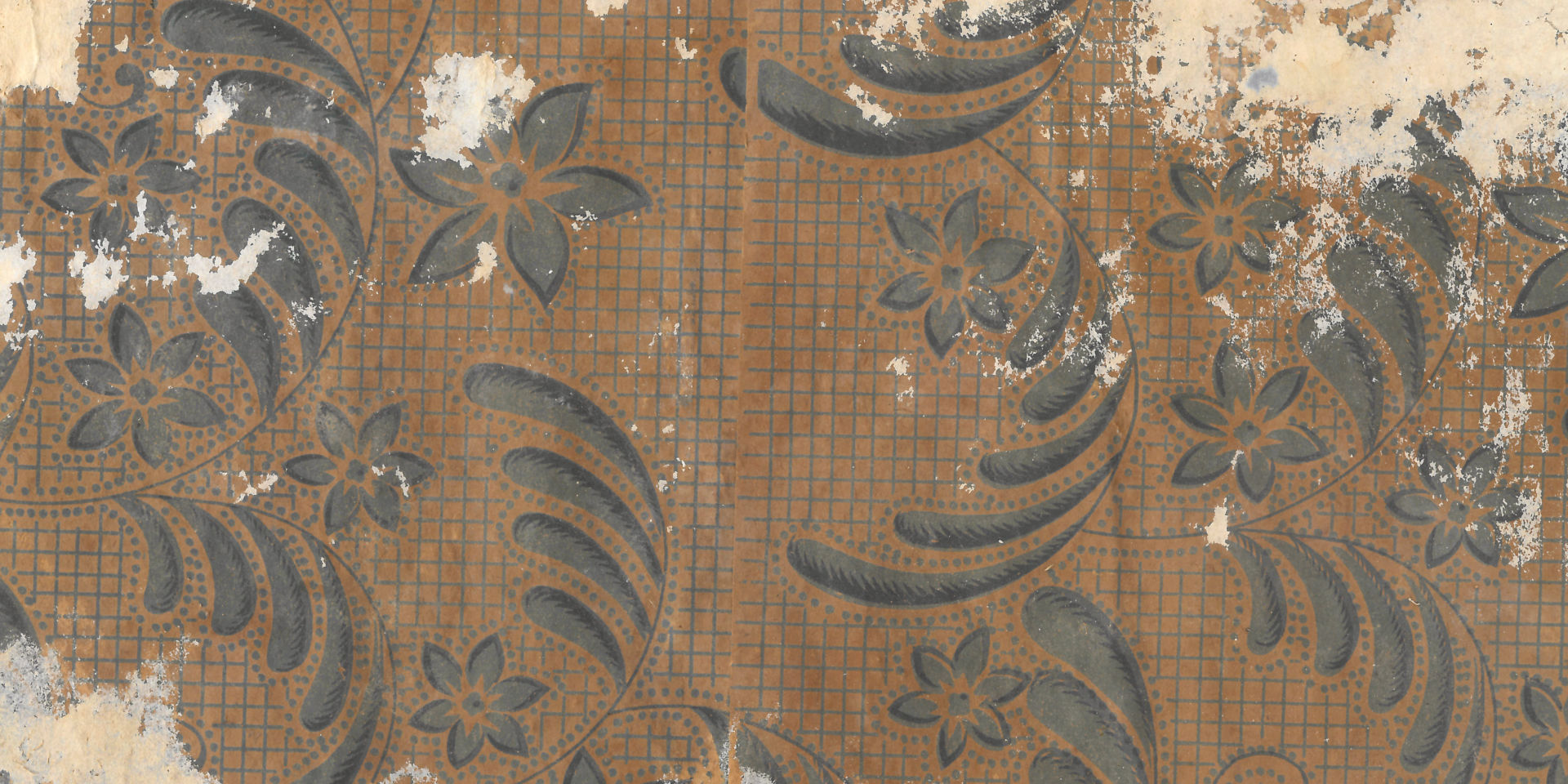
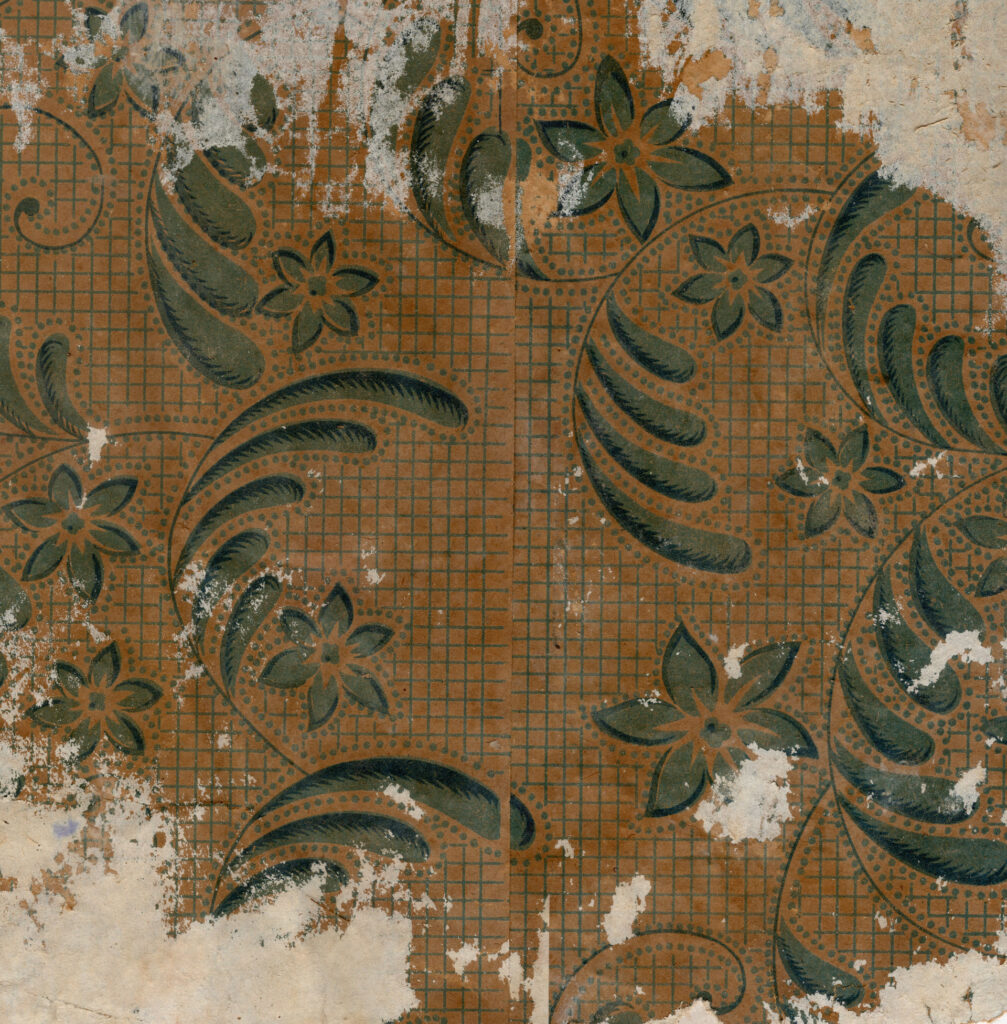
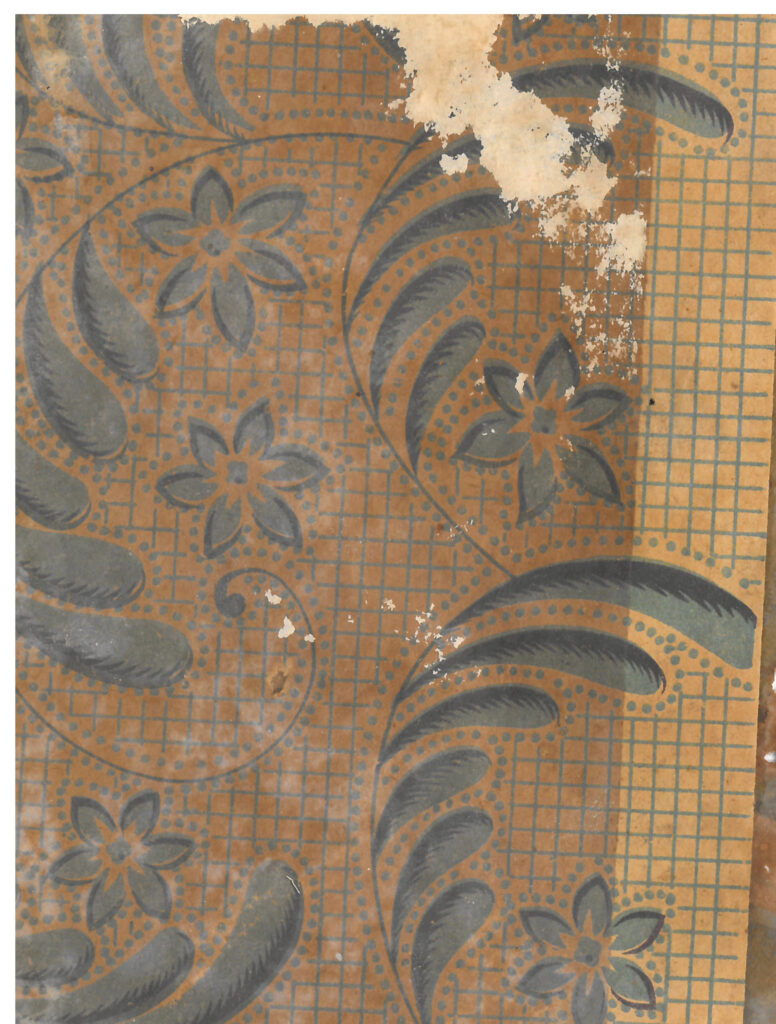
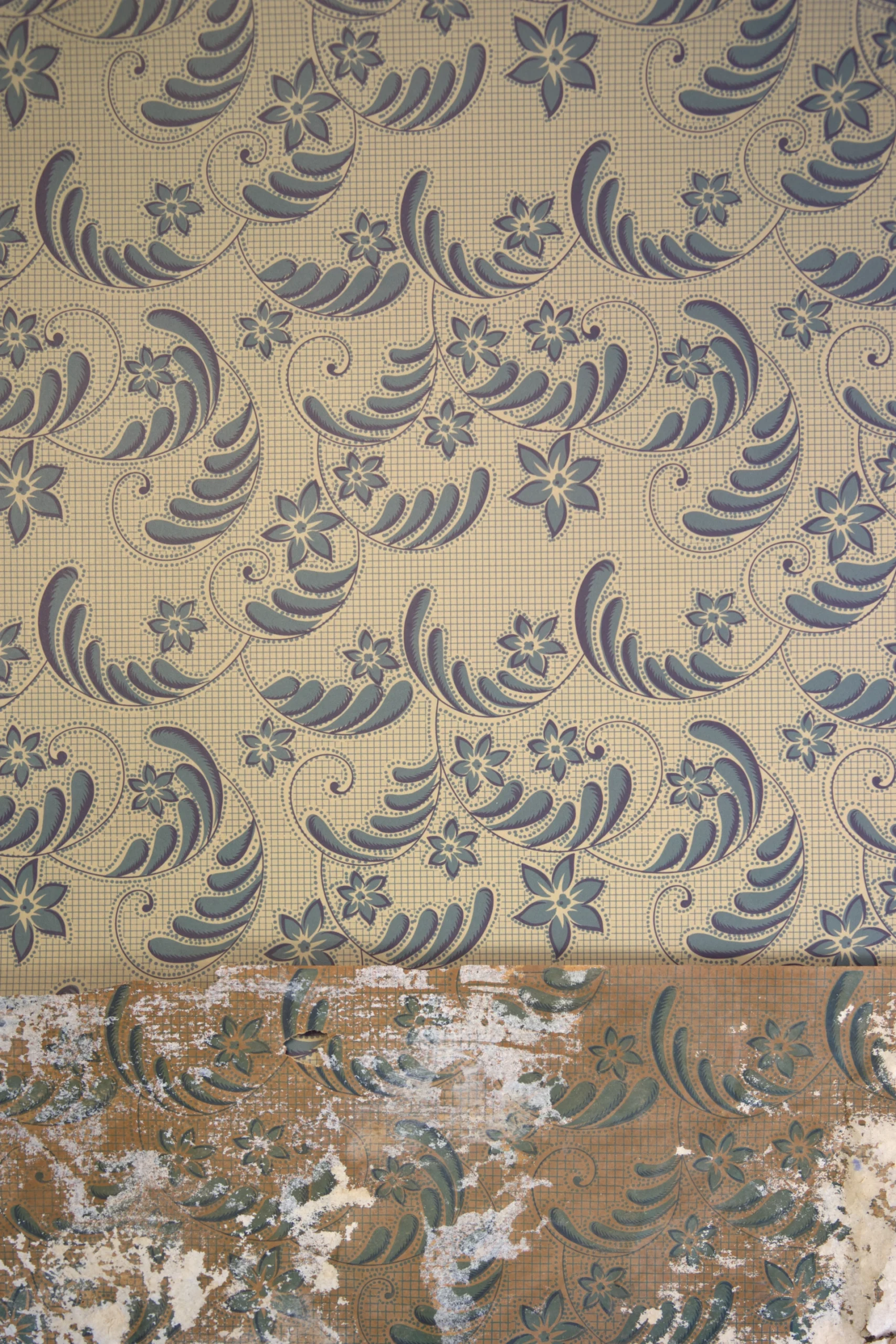
Discovered on the ceiling of a hanok, this wallpaper feels unfamiliar at first glance. A deep blue-green ink has been printed over kraft paper in two closely related tones. Curving leaves, simplified star-like flowers, and a fine grid cover the entire surface. At a distance it may look like a variation on the East Asian arabesque, but the closer one looks, the more it seems to belong to a different decorative grammar.
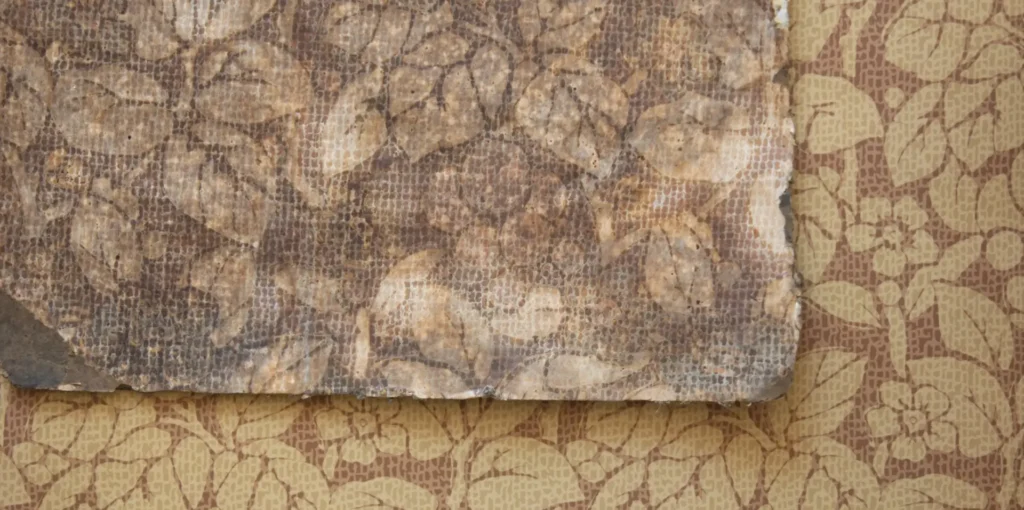
The most striking feature is the grid laid beneath the main motif. It does not look like an accidental trace of printing. It appears deliberate, even if its exact purpose remains uncertain.
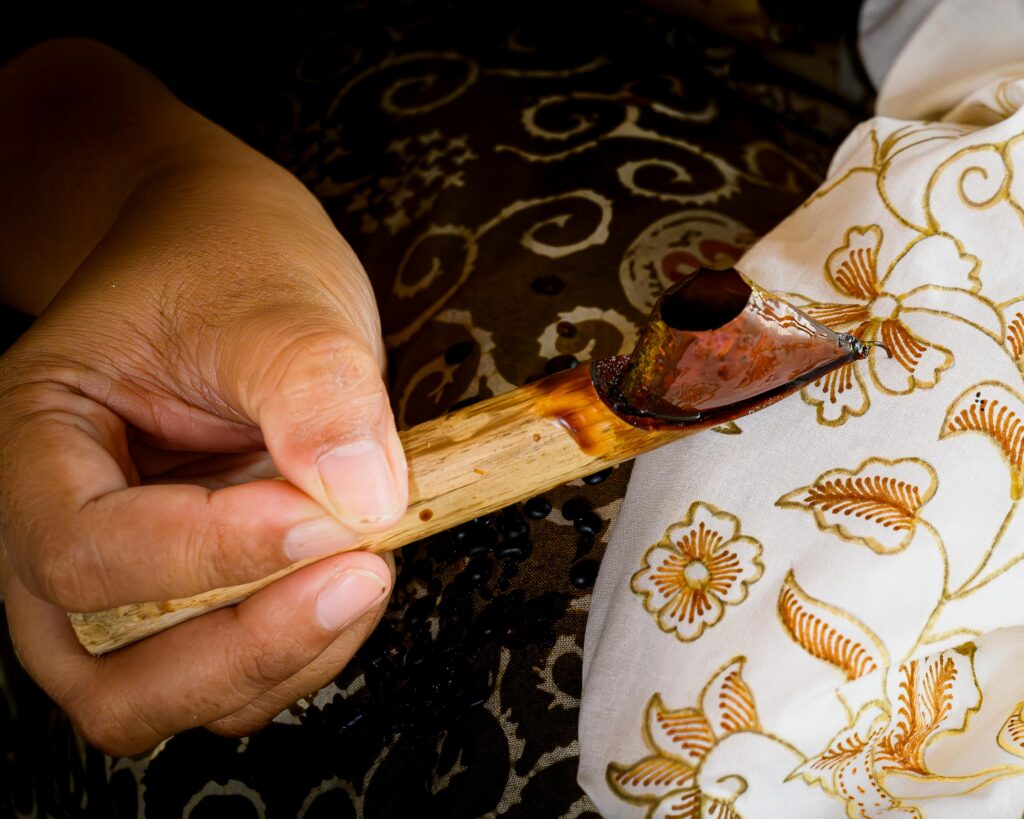
One possibility is that the grid imitates woven cloth. In Javanese batik, a family of patterns called nitik uses small dots and lines to evoke the surface of textiles. If this wallpaper uses the grid in a similar way, it performs a double imitation: paper printed to look like a dyeing technique that itself imitates woven fabric.
A second possibility is the effect of graph paper. The original drawing may have been made on a gridded sheet, and the grid may have been intentionally preserved as a sign of precision. In that reading, the grid becomes evidence of design and calculation.
Tropical Leaves and Geometric Flowers
The central motif is a bending leaf form. Small leaflets extend from a central axis, and the whole stem curves like a bow. The shape recalls palm or fern-like tropical plants more than temperate vegetation. If the grid points toward Southeast Asian textile culture, these leaves may belong to the same visual world.
In traditional East Asian arabesques, leaves often play a supporting role while the vine carries the pattern. Here, the leaves themselves take the visual weight. The vine recedes into a connector, while the feather-like tropical leaf becomes the main event.
(Source : Collection of Gosate)
The small geometric flowers remain harder to identify. They shift between six and eight petals and are too simplified to name botanically. What is clear is their rhythmic function: they act like pauses among the moving leaves.
A Southern Route
In 1942, Japan occupied the Dutch East Indies. Java, Sumatra, Bali, and other regions were drawn into the imperial sphere called the Greater East Asia Co-Prosperity Sphere. The estimated date of this wallpaper, the early 1940s, overlaps with that moment.
It is possible that designers in Japan encountered Southeast Asian decorative vocabularies through textiles, samples, printed matter, or colonial exhibitions, and that those vocabularies moved onward to colonial Korea. The gridded ground, tropical foliage, and geometric flowers may be evidence of that movement.
This remains a hypothesis. A matching Japanese wallpaper or sample book would be needed for firmer proof. Still, if the reading is correct, this small ceiling paper becomes a quiet document of mid-twentieth-century material culture: a language that traveled from Indian textiles to Java, through Japanese imperial circulation, and finally onto the ceiling of a Korean hanok.
A Matter of Printed Evidence
The uncertainty of this wallpaper is precisely what makes it valuable. It does not offer a clean origin story. Instead, it preserves traces: a textile-like ground, tropical foliage, a limited two-color print, and the setting of a Korean hanok. Each of these traces points in a slightly different direction.
For foreign readers, the word hanok refers to a traditional Korean timber house, usually built with papered walls, wooden structural members, and ondol floor heating. Finding a tropical-looking pattern on the ceiling of such a house is therefore not a neutral fact. It shows how older Korean interiors absorbed imported or hybrid printed materials without necessarily changing their architectural form.
The paper itself also matters. Kraft paper was inexpensive and strong, and its warm brown ground became part of the color system. The printer did not need to cover the whole surface with pigment. Instead, the natural color of the paper worked as a third tone between the two blue-green inks.
What the Grid Does
If the grid refers to cloth, it makes the wallpaper imitate a textile. If it refers to graph paper, it makes the wallpaper display the intelligence of its design. In both cases, the grid does more than decorate. It changes how the viewer reads the material.
This is why the pattern should not be described simply as an arabesque. The leaf and flower motifs may belong to a broad ornamental family, but the gridded ground introduces a different logic: measured, constructed, and possibly textile-derived.
From Empire to Interior
The early 1940s were not a neutral historical backdrop. They were years of war, occupation, and forced circulation across the Japanese empire. Materials, motifs, printed samples, and design vocabularies moved through these routes. A wallpaper used in Korea could therefore carry references that had passed through Japan, Southeast Asia, and colonial trade networks.
This does not mean the pattern can be assigned to a single country or influence with certainty. Rather, it shows how domestic decoration often preserves the indirect movements of history. The ceiling paper is small, fragile, and anonymous, but the visual language on its surface suggests a world much larger than the room in which it was installed.
Seen this way, the tropical leaves are not just decorative. They are a material clue: an image of the south printed in the north, fixed to the ceiling of a Korean house at the edge of wartime East Asia.
Copyright © 2026 GOSATÉ Archive. All Rights Reserved.
Wallpaper from this research
Nani
1940s
GOSATÉ restores forgotten patterns as wallpapers for contemporary spaces through the collection, documentation, and study of historic originals. A portion of every reproduction sale supports the continuing discovery, preservation, and research of Korean wallpaper.
- Colorways
- Original
- Material
- Non-woven / Peel & Stick
- Sizes
- 50×6m / 50×10m / 50×244cm
- Delivery
- Approx. 3–5 days · Free shipping
More from this era