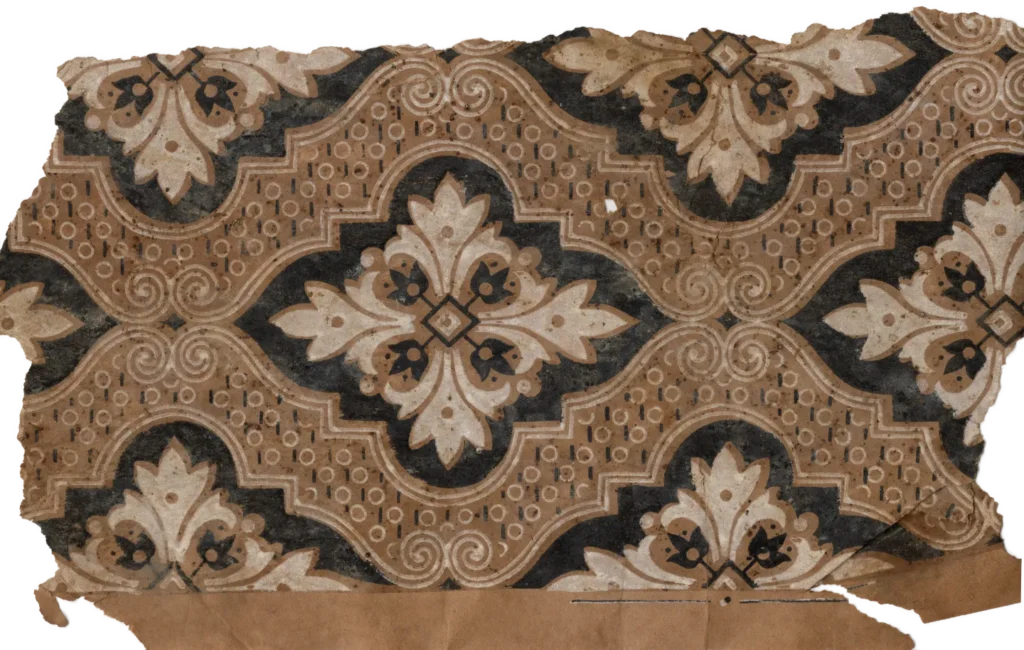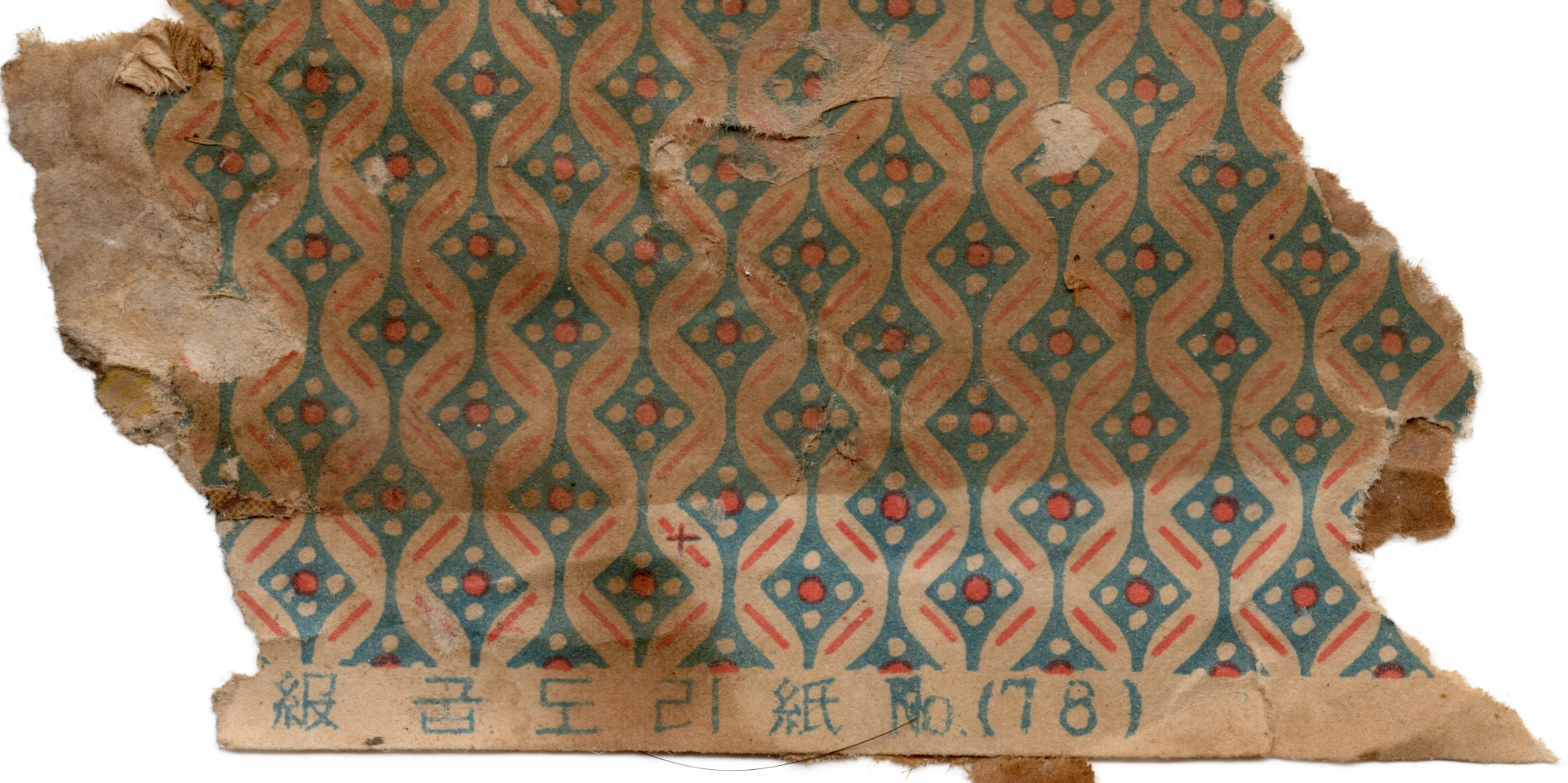
Printed Paper Ceilings — East and West in a 1930s Japanese Ceiling Paper
A 1930s ceiling paper found in a modern hanok combines cracked ice, Greek key borders, four-petal flowers, and diamond forms into a compact record of East-West ornament in circulation.
(Source : Collection of Gosate)
A Grid Above the Hanok
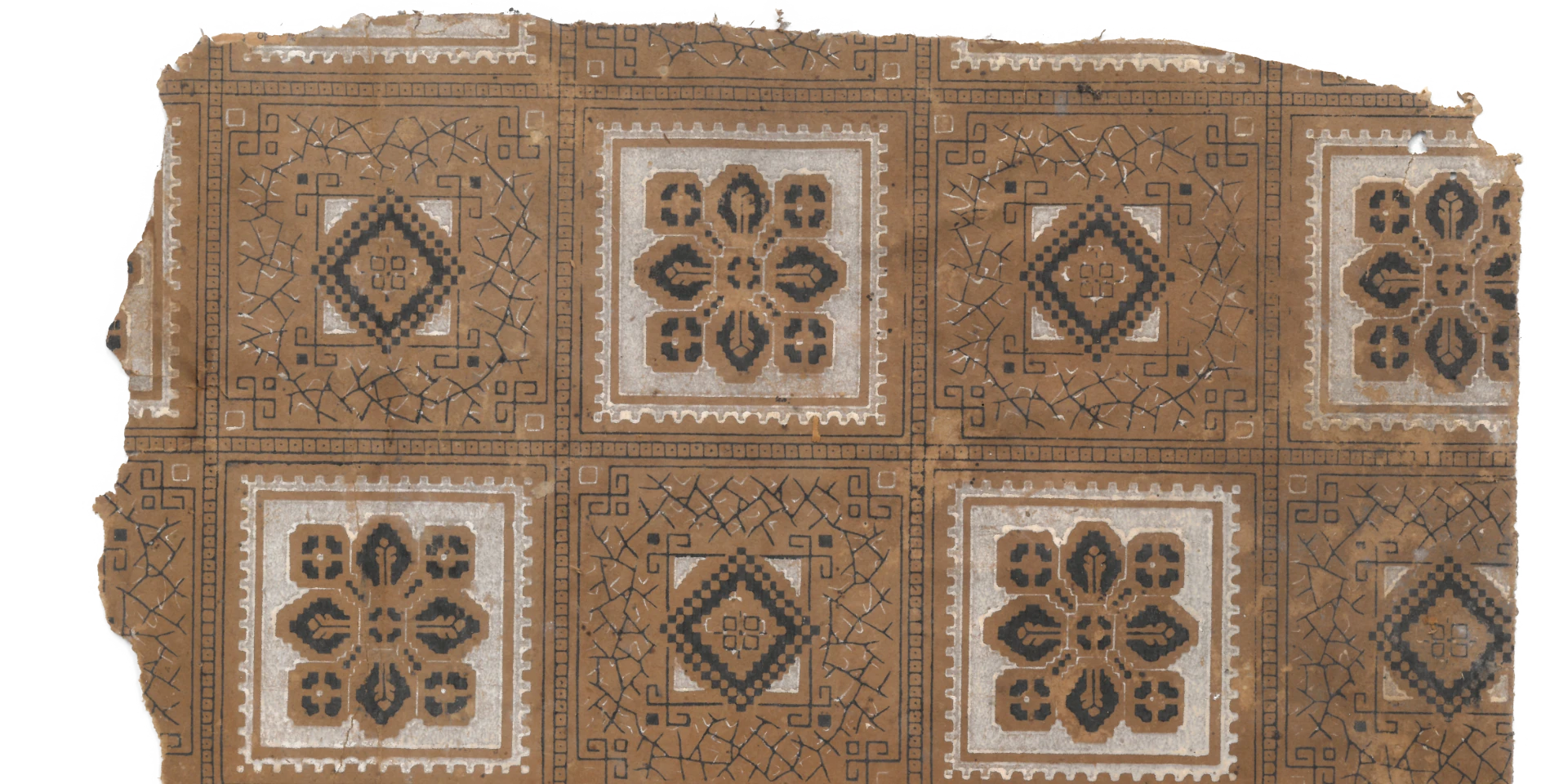
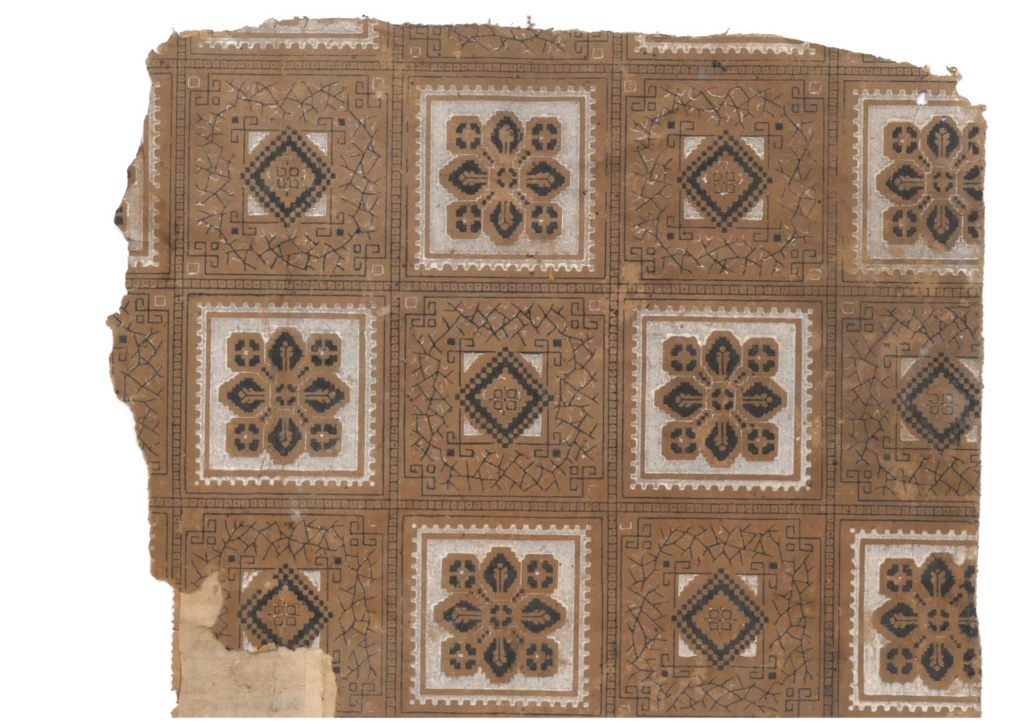
When the ceiling paper of a modern hanok from around the 1930s is peeled back, a distinctive pattern appears: silver-white and black ink printed over kraft paper. Two kinds of square panels alternate like a checkerboard. One contains a four-petal flower; the other contains a diamond. The borders between them are filled with right-angled lines, and the ground outside the panels is covered with an irregular cracked pattern.
Judging by the ink and printing, this paper was likely manufactured in Japan. A similar product appears in Japanese wallpaper catalogues circulated in India during the same period, suggesting that this design moved through export networks across Asia.
Four Layers of Ornament
The irregular angular lines between the panels belong to the Chinese cracked-ice pattern, a motif associated with the moment when ice breaks and spring begins. The right-angled border is the thunder pattern or Greek key, an ornament that developed independently in both East Asia and the Mediterranean world.
The four-petal flower can be read as a highly simplified floral rosette. The diamond, or lozenge, carries a long decorative history in both Buddhist and secular design. Together, these motifs make the ceiling paper feel familiar from several directions at once.
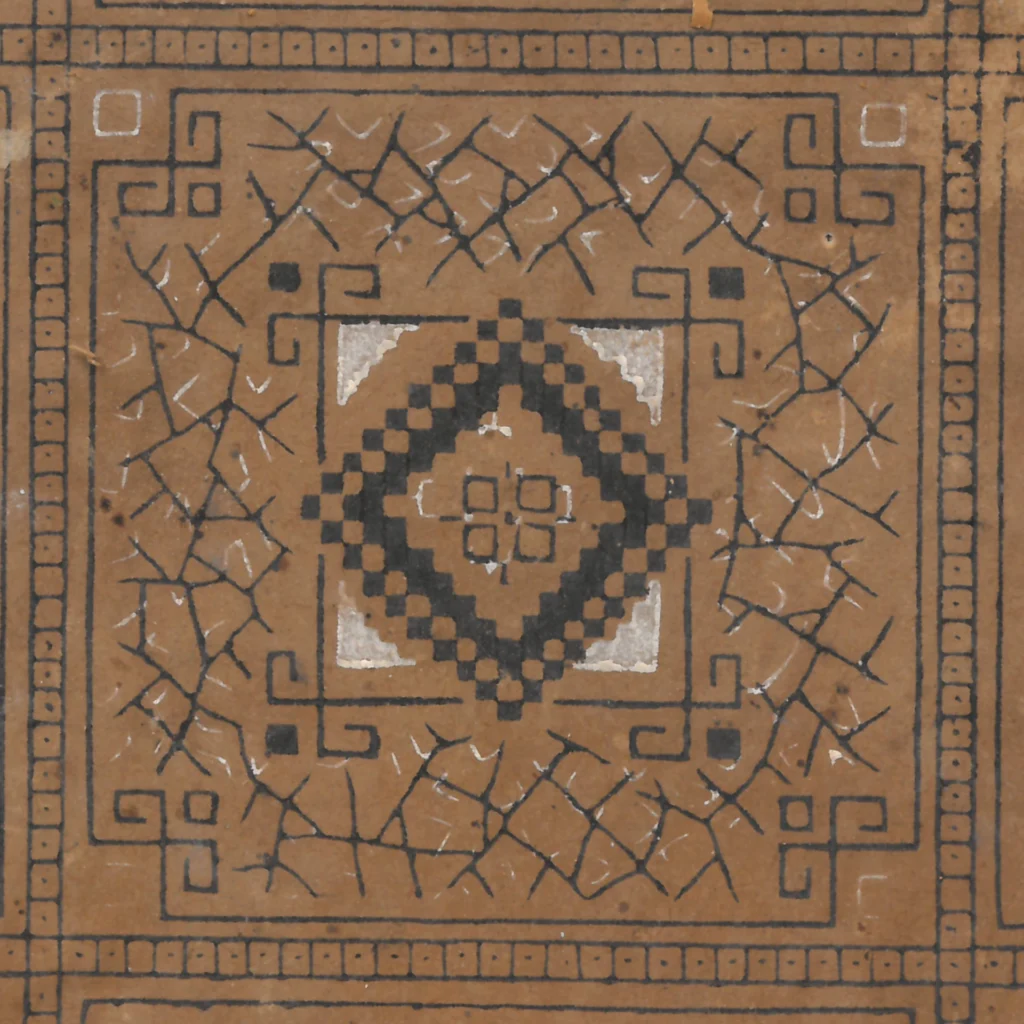
(Source : Collection of Gosate)
What is interesting is not the presence of any single motif, but the way they are compressed into a mass-produced paper. The ceiling becomes a small archive of motifs that had traveled through ceramics, textiles, architecture, and printed design.
Japanese Export Design and Korean Interiors
During the colonial period, Japanese manufacturers produced wallpapers and ceiling papers for domestic use and for export to other Asian markets. Designs often combined motifs that were legible across cultures: cracked ice, Greek-key borders, stylized flowers, diamonds, and geometric frames.
Placed on a Korean hanok ceiling, the paper becomes more than imported decoration. It records the way modern materials entered older domestic architecture. The structure remained Korean, but its surface carried industrial printing, export design, and hybrid ornament.
Why the Ceiling Matters
Ceiling paper is easy to overlook because it is rarely preserved. It is removed during repairs, hidden under later layers, or discarded as ordinary building waste. Yet ceilings often received some of the most geometrically organized papers in a house, because a repeat pattern could cover a broad plane without demanding a pictorial center.
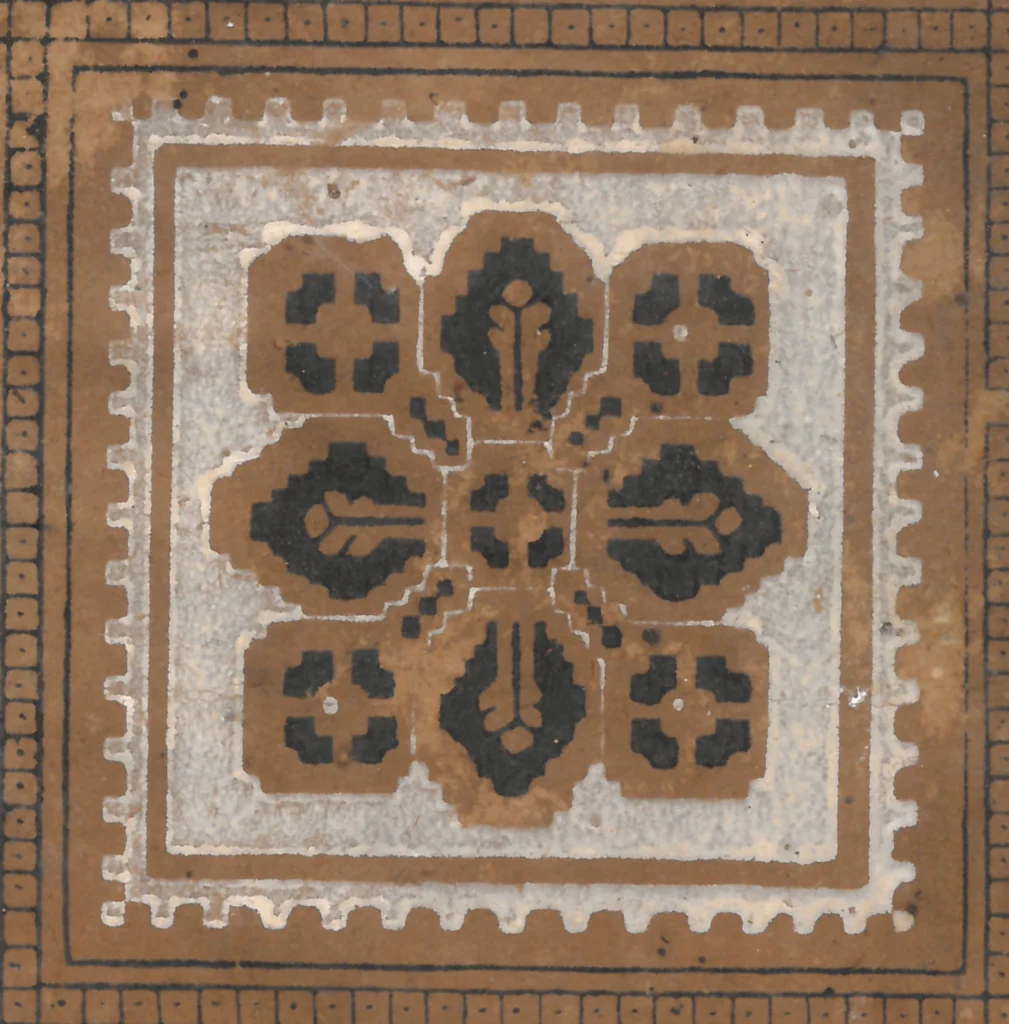
(Source : Collection of Gosate)
In a hanok, the ceiling is also an important boundary. It mediates between the timber structure above and the room below. A printed ceiling paper could therefore modernize the room without changing the building itself.
Motifs Without a Single Homeland
The cracked-ice pattern, the thunder or Greek-key border, the four-petal flower, and the diamond all have long histories. None belongs exclusively to one place. They moved through ceramics, textiles, architectural ornament, printed pattern books, and craft manuals.
This wallpaper is interesting because it does not attempt to explain those histories. It simply places them side by side in a practical repeat. A Chinese-derived cracked-ice ground, a border known in both East and West, and East Asian floral geometry become one industrial surface.
The pixel-like rendering of the flowers and diamonds adds another layer. The motifs appear as if they were counted out on a grid, close to embroidery charts or cross-stitch diagrams. This gives the printed paper a textile memory even when it is used as a ceiling finish.
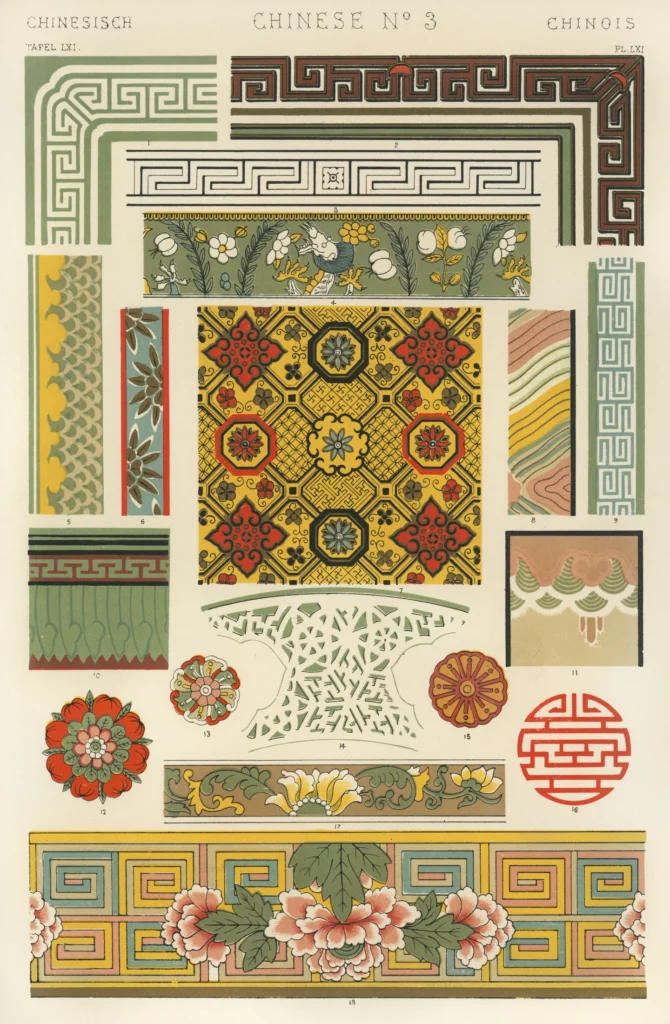
A Japanese Product in Korean Space
The same or similar design appearing in Japanese catalogues circulated outside Korea suggests that this was not a local one-off paper. It belonged to a wider export and distribution system. During the colonial period, Japanese manufacturers produced designs for multiple Asian markets, often using motifs that could travel across cultural boundaries.
Installed in Korea, the paper becomes a record of that system. It does not erase the hanok; it covers one surface of it. The result is a room where Korean architecture, Japanese industrial production, and shared East-West ornament meet above the viewer’s head.
Copyright © 2026 GOSATÉ Archive. All Rights Reserved.
Wallpaper from this research
Giseok
1930s
GOSATÉ restores forgotten patterns as wallpapers for contemporary spaces through the collection, documentation, and study of historic originals. A portion of every reproduction sale supports the continuing discovery, preservation, and research of Korean wallpaper.
- Colorways
- Original
- Material
- Non-woven / Peel & Stick
- Sizes
- 50×6m / 50×10m / 50×244cm
- Delivery
- Approx. 3–5 days · Free shipping

More from this era