
Dignity in Brown and Gold: The Aesthetics of the 1970s ‘Western-Style’ Ceiling Wallpaper
1. The Four-Leaf Grid and the Functional Definition of a 'Ceiling-Only' Wallpaper This wallpaper exemplifies a type of 1970s Korean wallpaper designed from the outset specifically for the ceiling. Soft curves evoking a four-leaf…

1. The Four-Leaf Grid and the Functional Definition of a ‘Ceiling-Only’ Wallpaper
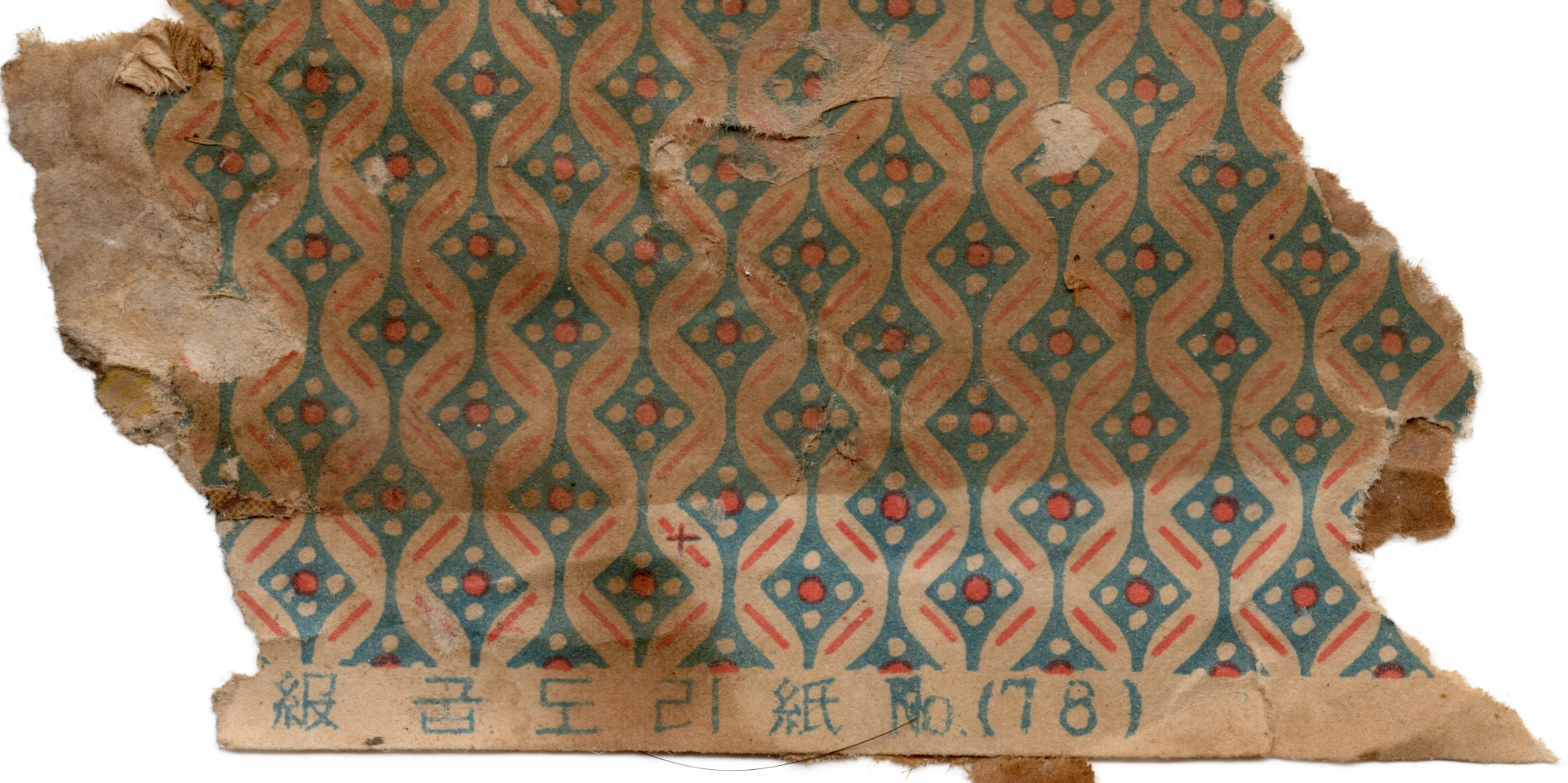
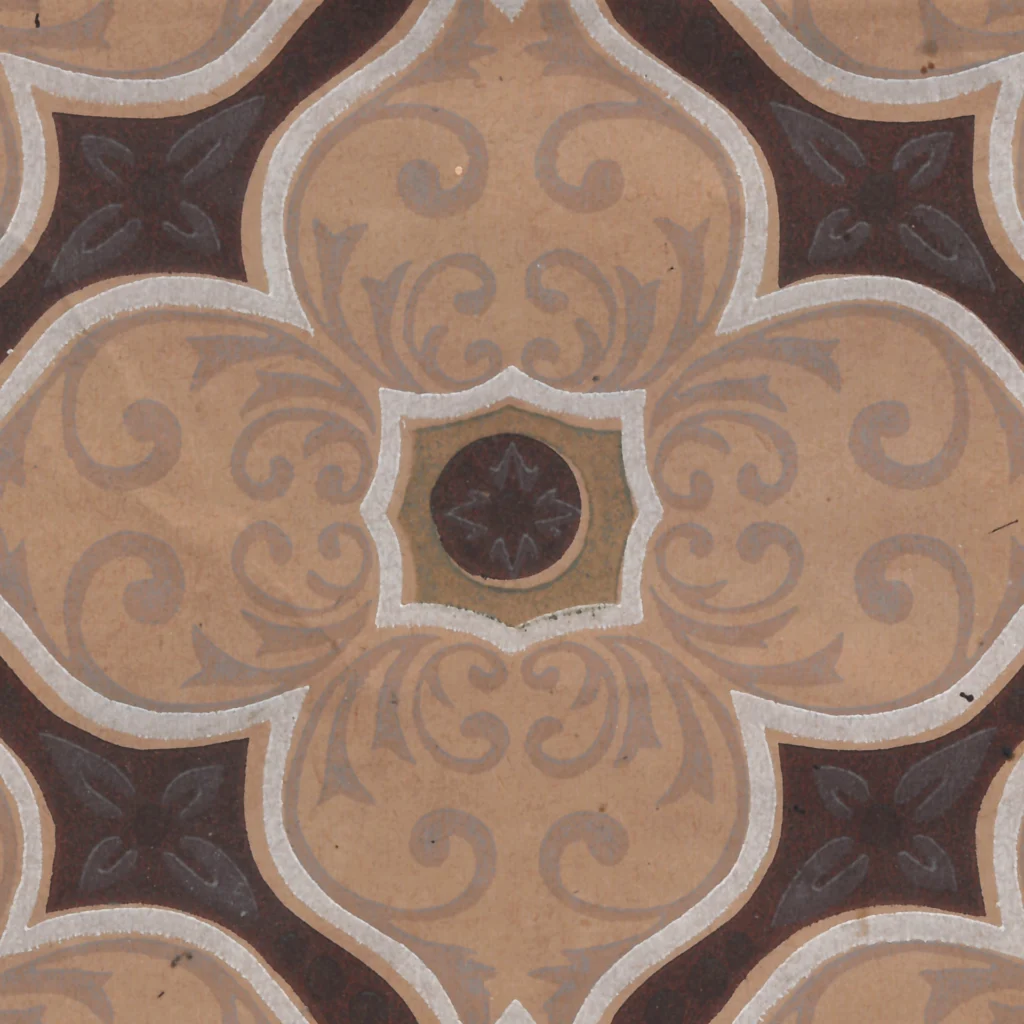
This wallpaper exemplifies a type of 1970s Korean wallpaper designed from the outset specifically for the ceiling. Soft curves evoking a four-leaf clover extend in all four directions, and at every intersection, small diamond- or shield-shaped knots are placed with precision. This repeating four-leaf motif forms a diagonal grid structure, imparting the settled, secure feeling of a surface tiled edge to edge. The curves and knots printed on the paper go beyond mere decoration — they function as a kind of visual ceiling framework, creating the effect of binding the entire room firmly together from above.
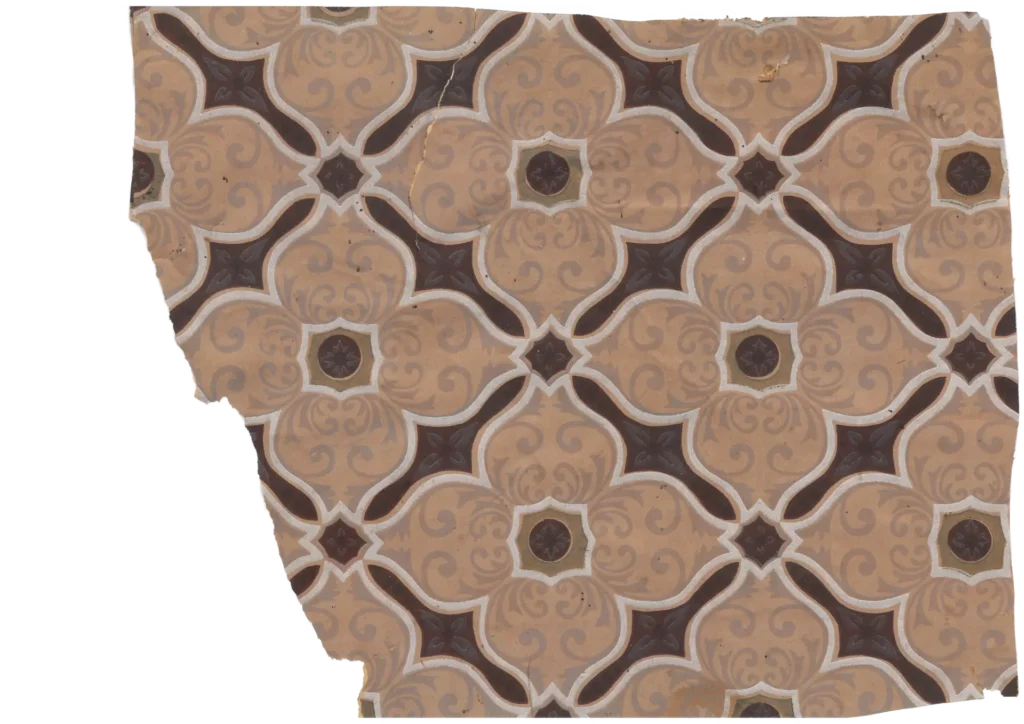
(Source: Collection of Gosate)
Tracing the lineage of this motif, the four-leaf grid finds its roots in 19th–20th century European tile and linoleum patterns, as well as in Islamic geometric ornamentation. This style — commonly found in the floor tiles of historic European buildings and hotel lobby mosaics — traveled from the West through China and Japan before reaching Korea. In Korean society of the time, it was absorbed and consumed not as a strict reproduction of any particular historical style, but as an image of “luxury Western tilework.” What is particularly interesting is that a grid lineage used in the West for floors and wall panels was transposed onto the ceiling in Korea. The custom of filling the ceiling with geometric grids, established since the enlightenment era, continued into the 1970s as an independent genre — completing a distinctly Korean domestic logic: “a pattern with a clear grid belongs overhead.”
2. The Meeting of Brown and Gold: The Aesthetics of the 1970s ‘Western-Style Ceiling’
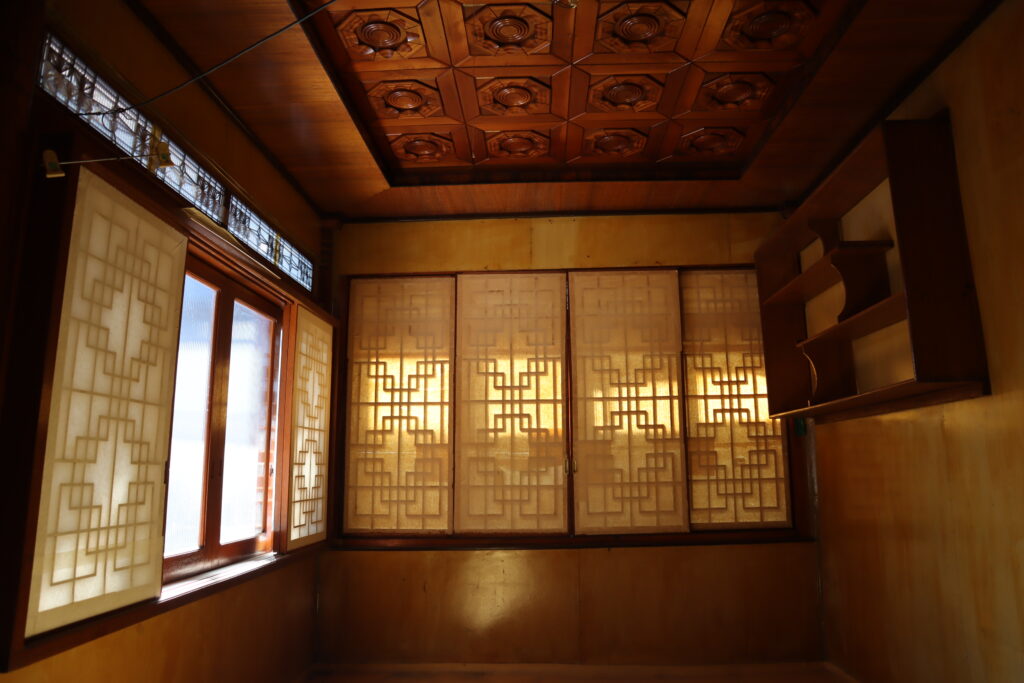
The varnished wood-grain plywood panels on the ceiling vividly illustrate the ‘Western-style’ interior aesthetic fashionable at the time.
(Photo by Gosate 2022)
The composition of color and material reflects, without embellishment, the tastes of the 1970s middle-class living room. The deep brown chosen as the base paper harmonizes perfectly with the varnished wood-grain plywood, solid wood furniture, and louver finishes that were fashionable at the time. The interior aesthetic of the era favored enveloping a room in weighty, substantial tones rather than brightness — and this ceiling paper was a defining element in completing that sense of dignified gravity.
(Source: Collection of Gosate)
Within the four-leaf motifs, a tone-on-tone layer of scrollwork in a subtly different shade of brown runs as an understated ground, creating a fabric-like depth that exceeds what plain paper can offer. It is a quiet pattern that reveals itself only up close, yet as a whole it lends a visual richness reminiscent of thick plaster relief or carpet. At the intersections and within the central diamonds, gold leaf (or metallic ink) accents are added — discreetly dormant by day, but catching the light and glimmering when the interior lights are switched on in the evening. This device was a visual embodiment of the middle-class aspiration of the time: the desire to enjoy the “luxury” of a hotel lobby or fine restaurant, even within a modest home.
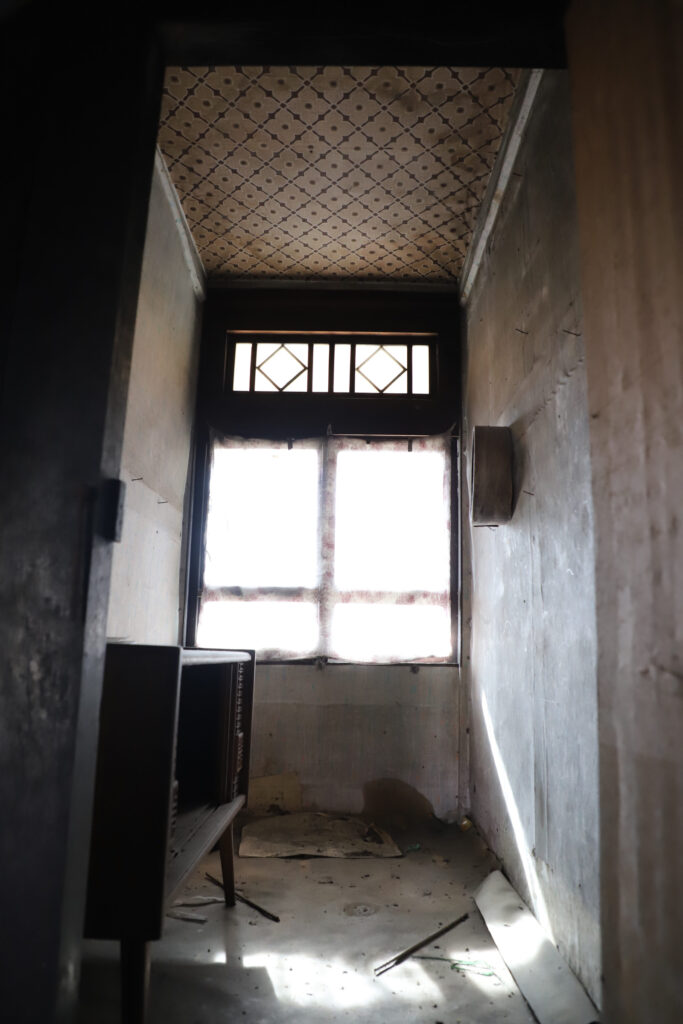
Wallpaper ‘Gyeongae’ is applied to the ceiling.
(Photo by Gosate 2023)
This 1970s ceiling paper is ultimately a product of its era — a fusion of the traditional practice of the latticed ceiling and the contemporary aesthetics of the ‘Western-style’ (yangok-pung) interior. The firm structural sensibility conferred on the ceiling, rendered in brown and gold, speaks eloquently to the symbolic image of a “house with dignity” that Korean society of the time imagined for itself.
Copyright © 2026 Gosate Archive. All Rights Reserved.
All Rights Reserved.
- All text and scholarly analysis are the intellectual property of the author.
- All photographs marked “Gosate Collection” or “Photo by Gosate” are the copyright of GOSATE. Reproduction, copying, or distribution without prior consent is strictly prohibited.
- Historical images cited from external sources are subject to their respective copyright holders or public domain provisions.
Inquiries: contact@gosate.kr
More from this era