
Warp and Weft on Paper: The Colonial-Era Damask and the Economy of Modern Taste
1. Anatomy of a Design: Fabric Applied to the Wall — 'Textile Emulation' This wallpaper belongs to the lineage of authentic European damask textile design. What first catches the eye is the X-shaped ribbon…
1. Anatomy of a Design: Fabric Applied to the Wall — ‘Textile Emulation’
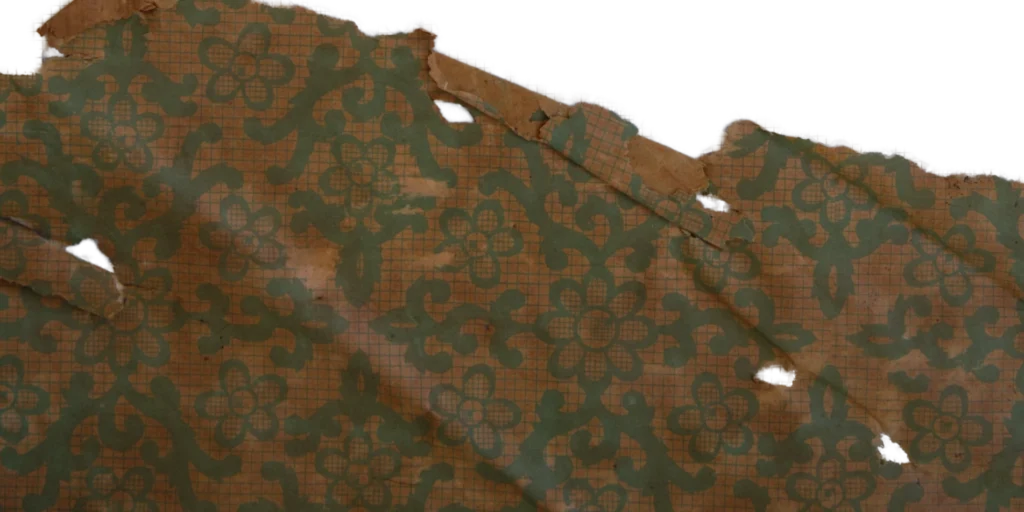
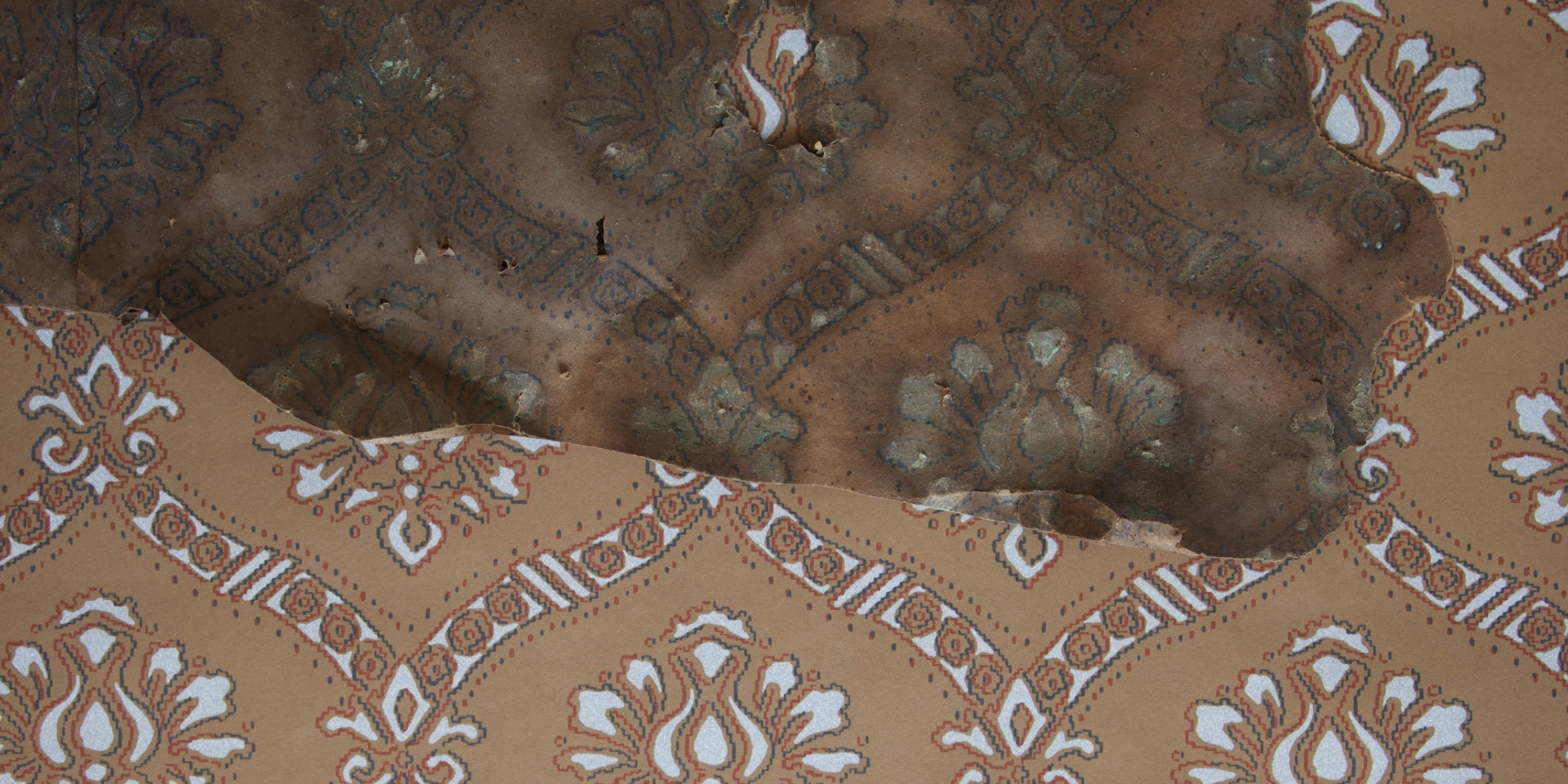
This wallpaper belongs to the lineage of authentic European damask textile design. What first catches the eye is the X-shaped ribbon trellis — diagonal ribbons crossing to form a grid. The ribbon trellis pattern was enormously popular in 19th-century Europe and North America. At each intersection where the ribbons meet sits a medallion-form ornament, visually anchoring the grid and giving it rhythmic punctuation — here rendered as a combination of plant stem and scroll, a universally accessible decorative language.
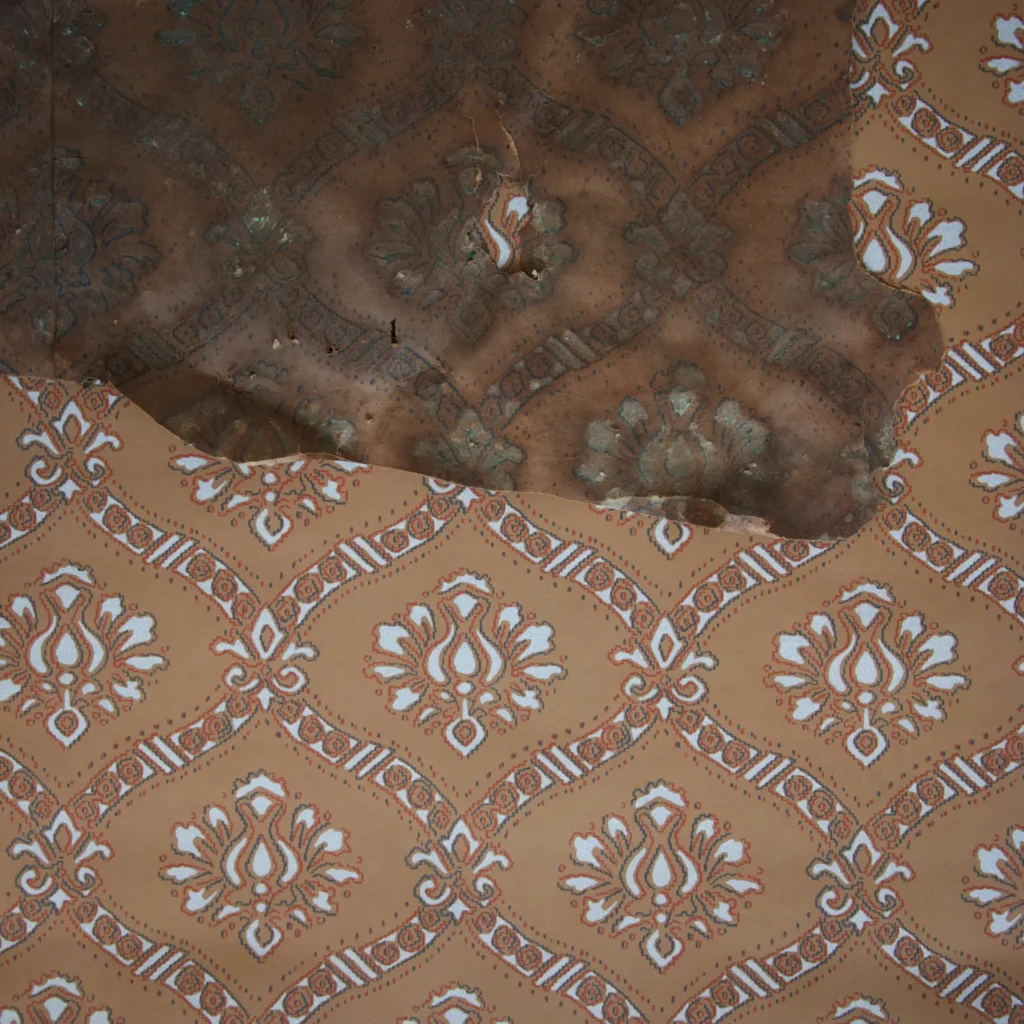
(Photo by Gosate 2025)
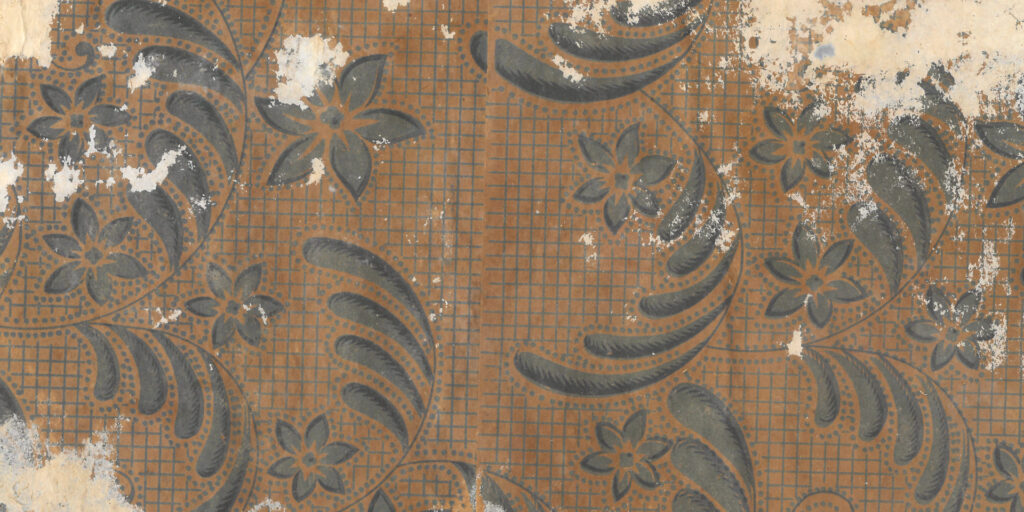
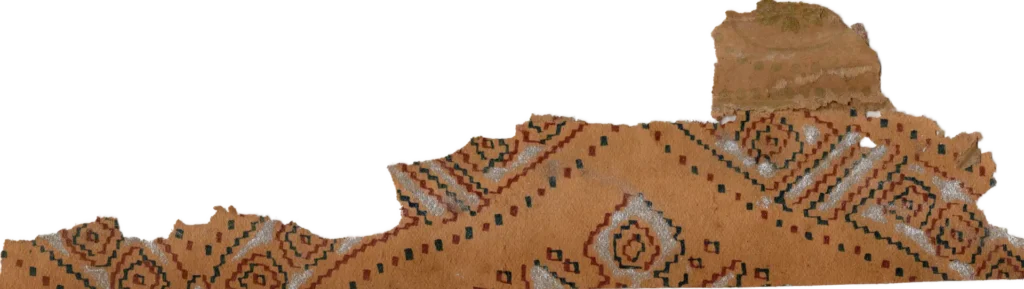
The primary motif filling each grid cell is a classic Baroque-Rococo vase with palmette. Leaves and petals erupting from an inverted teardrop-shaped vase — this form originated in the silk designs of 17th–18th century Lyon, France, was mass-produced on mechanical Jacquard looms throughout the 19th century, and spread across Europe as a result. From the late 19th century these textile patterns began to be transposed into wallpaper, and by the early 20th century Japan was importing and reproducing them domestically.
(Source: Collection of Gosate)
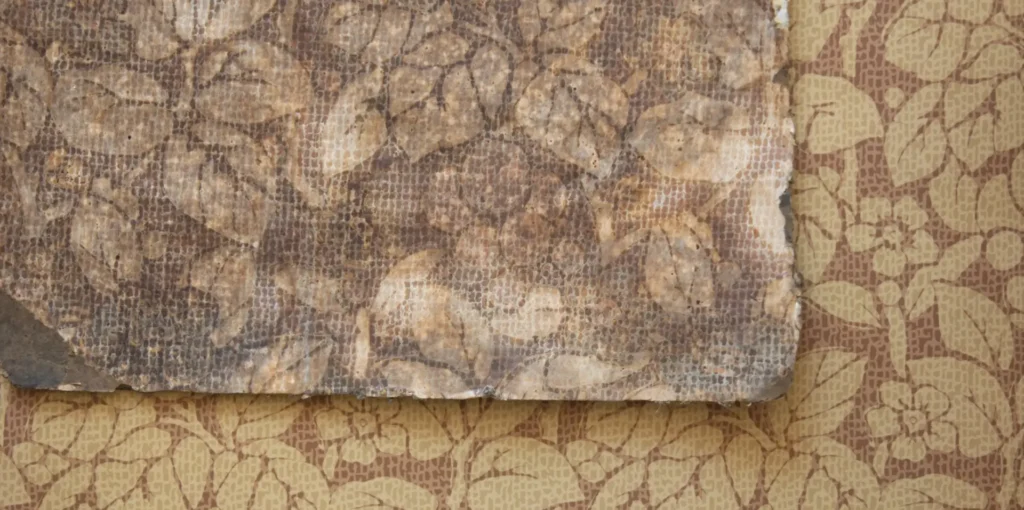
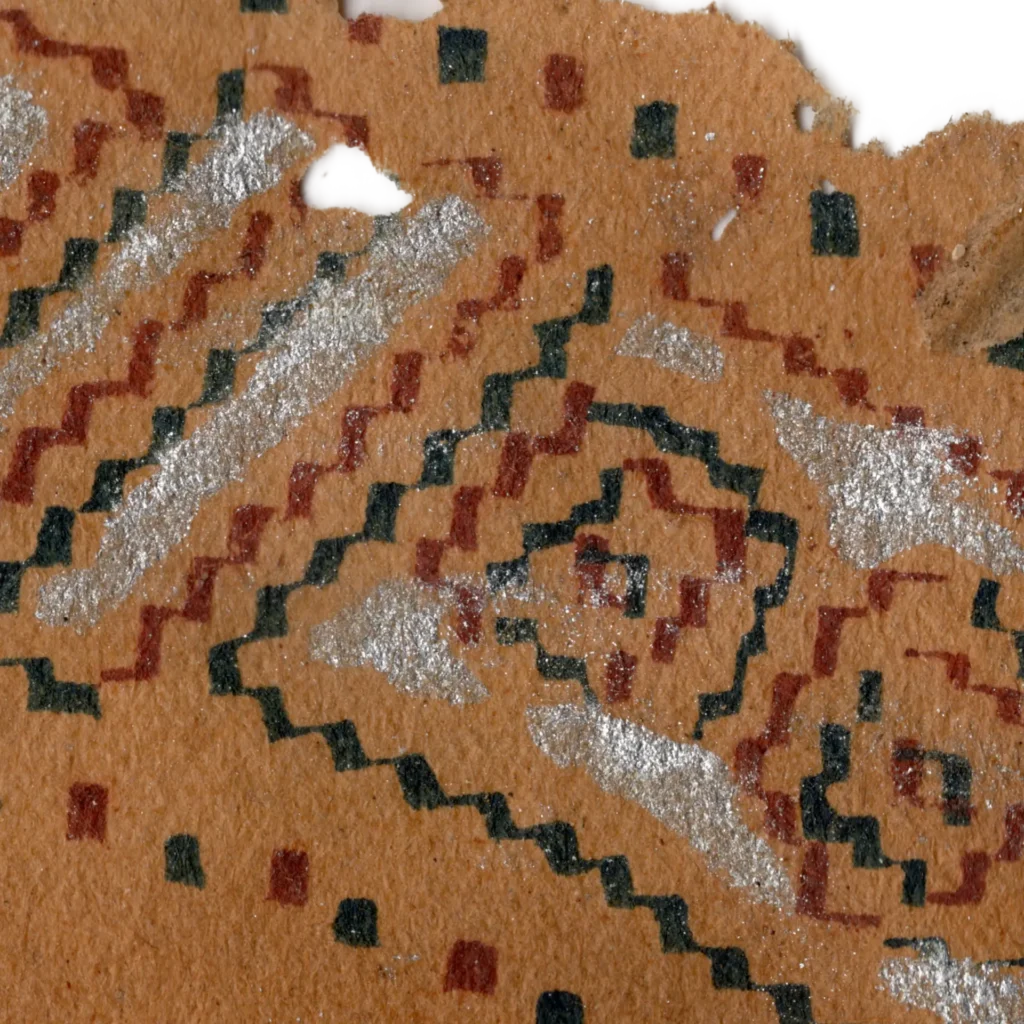
Most noteworthy is the textile emulation technique. Examine the edges of the motifs closely and the lines are not smooth — they are rough, stepping outward in pixel-like increments. This is not a printing defect. It is a deliberate replication of the texture created by interlocking warp and weft threads, produced on paper through points and short strokes. 19th-century wallpaper designers used this technique to simulate the weave of cloth — so that this thin paper wallpaper, from a distance, produces the illusion of a richly layered brocade textile.
2. Production and Circulation: Wallpaper of the Imperial Economy
The journey of the damask pattern:
While the pattern’s origins lie in Europe, the wallpaper itself was most likely manufactured in Japan. Tracing that route:
- 17th–18th century: Origins in the premium silk textile designs of France and Italy
- 19th century: Mass production via mechanical Jacquard loom; diffusion across Europe
- Late 19th century: Textile patterns transposed into wallpaper; middle-class market established
- Early 20th century: Japan begins importing and reproducing European wallpapers
- 1930s–40s: Japanese factories produce localized versions for Asian markets — Joseon, Taiwan, Manchuria
Economic design.
1940년대 초 조선의 한옥에서 발견된 이 서양식 패턴은, 일본이 아시아 식민지 시장을 겨냥해 제작한 현지화된 버전입니다. 유럽의 원본 도안을 따르되, 생산 방식은 철저히 경제적으로 설계되었습니다.
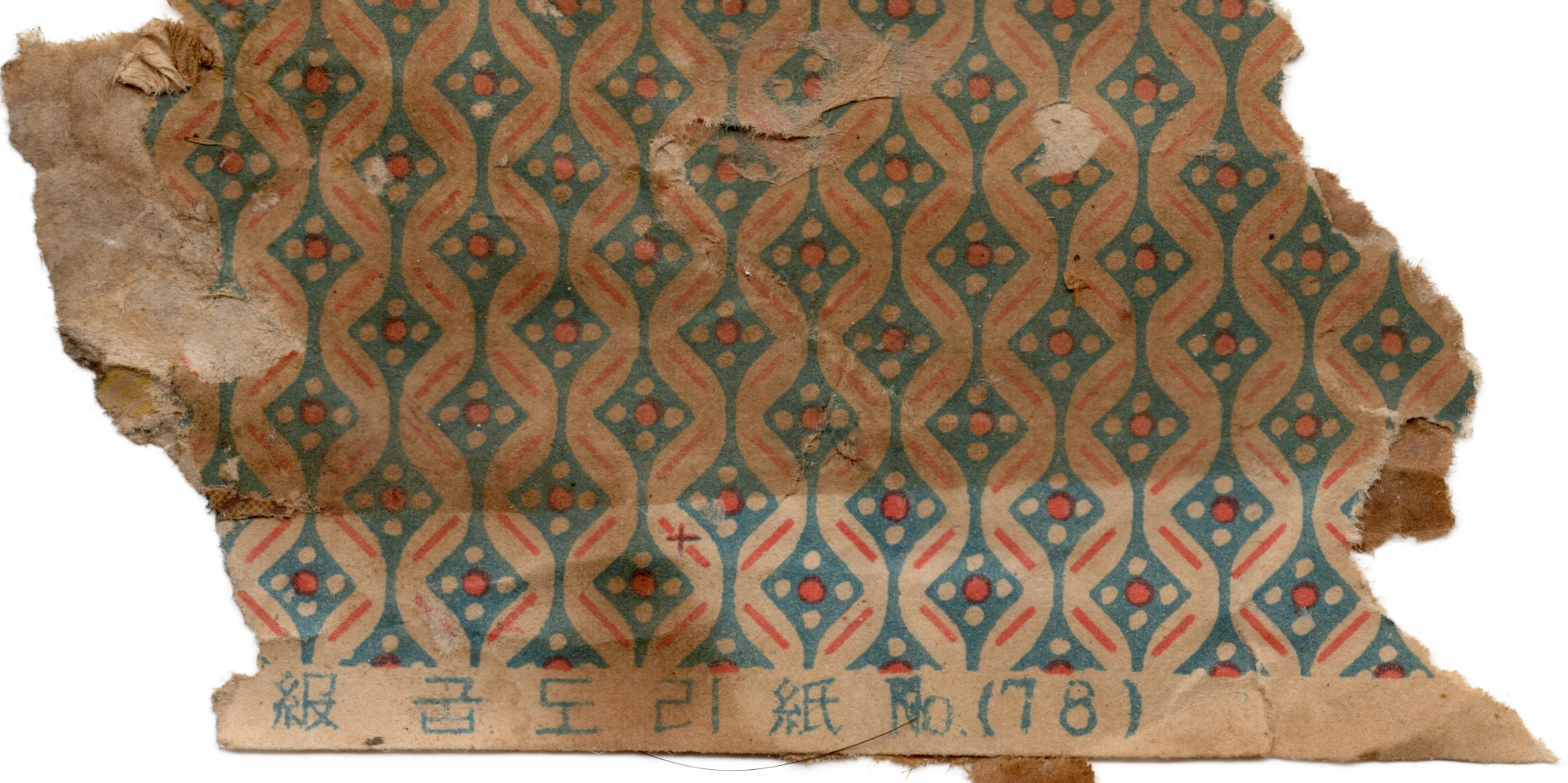
This Western-style pattern, found in a 1940s Joseon hanok, is a localized version produced by Japan for the Asian colonial market. The European original design is followed, but the production method is economically engineered throughout. Thin pulp paper replaces expensive fabric; two or three ink colors are made to deliver maximum effect. The technique of establishing the outline in red and grey-blue over yellowish pulp paper, then applying a final layer of silver pigment to produce a metallic shimmer under light, is a characteristic feature of Japanese export wallpapers of the 1930s–40s.
(Source: Collection of Gosate)
Silver pigment printing was a technique used in 19th-century European wallpapers as well — but Japan developed a method of mass-producing it cheaply. The result was an economical paper brocade mimicking the costly Western silk wallpaper: a product precisely calibrated to the demand for modern atmosphere at minimal cost.
3. A Cross-Section of Its Era: Modernity Under Wartime Conditions
The context of early 1940s Joseon.
The early 1940s, when this wallpaper was installed, was the period of intensifying wartime mobilization under the Pacific War — material controls at their most severe. Timber, metal, and textiles were all conscripted for the war effort, and even ordinary consumer goods became difficult to obtain. Against this backdrop, the fact that a decorative silver damask was applied to the earthen walls of a hanok is worth noting. The implication is clear: even under wartime conditions, the domestic culture of the middle class and the desire to furnish interiors with dignity did not disappear.
An accessible modernity.
Wallpaper was, in the circumstances of the time, a relatively accessible decorative material. Silk curtains or imported furniture were unthinkable — but mass-produced paper wallpaper from Japanese factories was comparatively affordable. A single sheet of paper applied to a wall was sufficient to create a clean, modern interior.
In the end, the journey this wallpaper made — from Western Baroque form through Japanese transformation, onto silver-tinged pulp paper, and into the reception room of a Joseon hanok — is concrete evidence of how a modern aesthetic circulated and was consumed within the imperial economic sphere.
Copyright © 2026 Gosate Archive.
All Rights Reserved.
- All text and scholarly analysis are the intellectual property of the author.
- All photographs marked “Gosate Collection” or “Photo by Gosate” are the copyright of GOSATE. Reproduction, copying, or distribution without prior consent is strictly prohibited.
- Historical images cited from external sources are subject to their respective copyright holders or public domain provisions.
Inquiries: contact@gosate.kr
More from this era