The Wallpaper That Crossed an Empire: From Changdeokgung Palace to a Warehouse in India
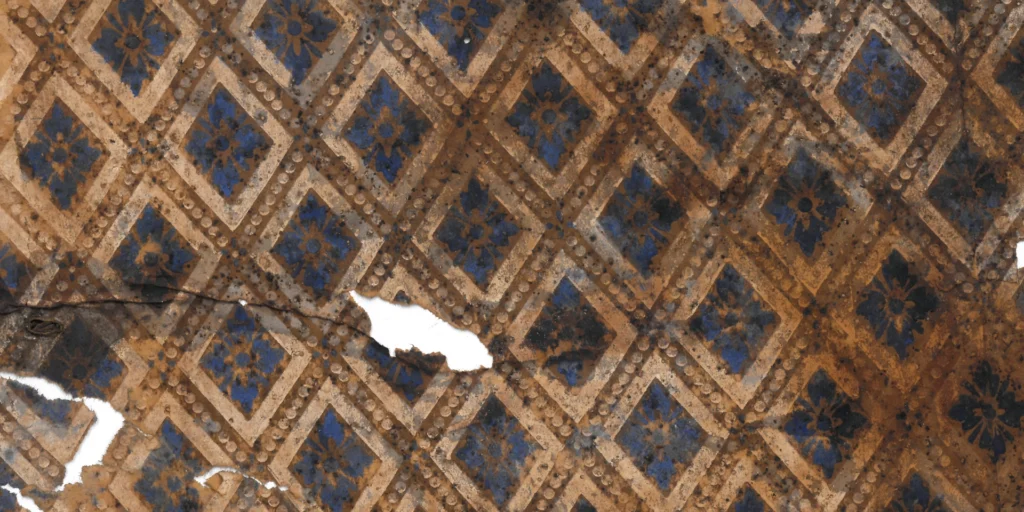
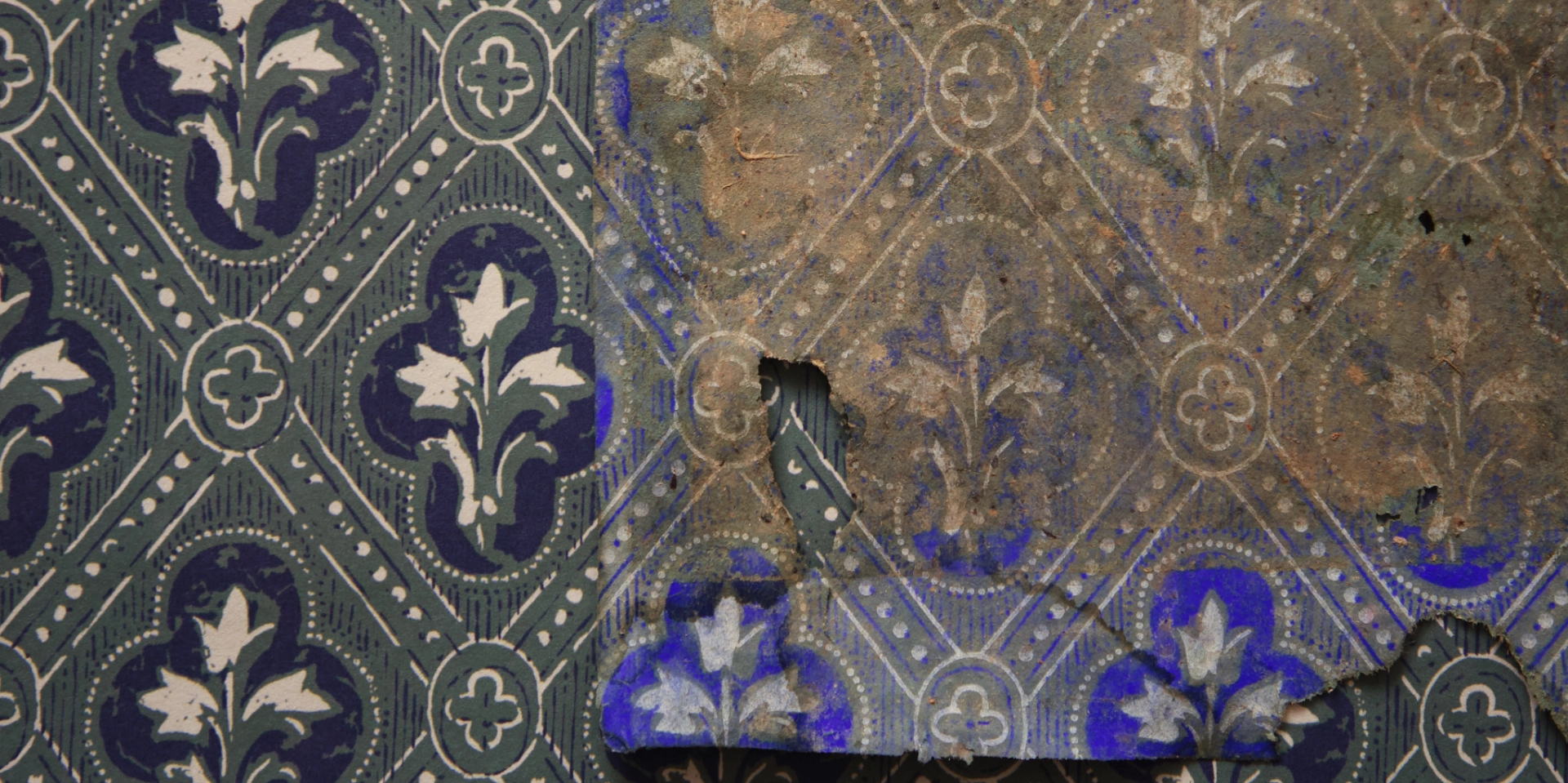
1. An Encounter with the Wallpaper: 'Hyehwan' Hidden Beneath Layers of Time Original scan of a Japanese colonial-era wallpaper discovered in a late 19th-century historic home on Yeongjong Island, Incheon.(Source: Collection of Gosate) The…
1. An Encounter with the Wallpaper: 'Hyehwan' Hidden Beneath Layers of Time
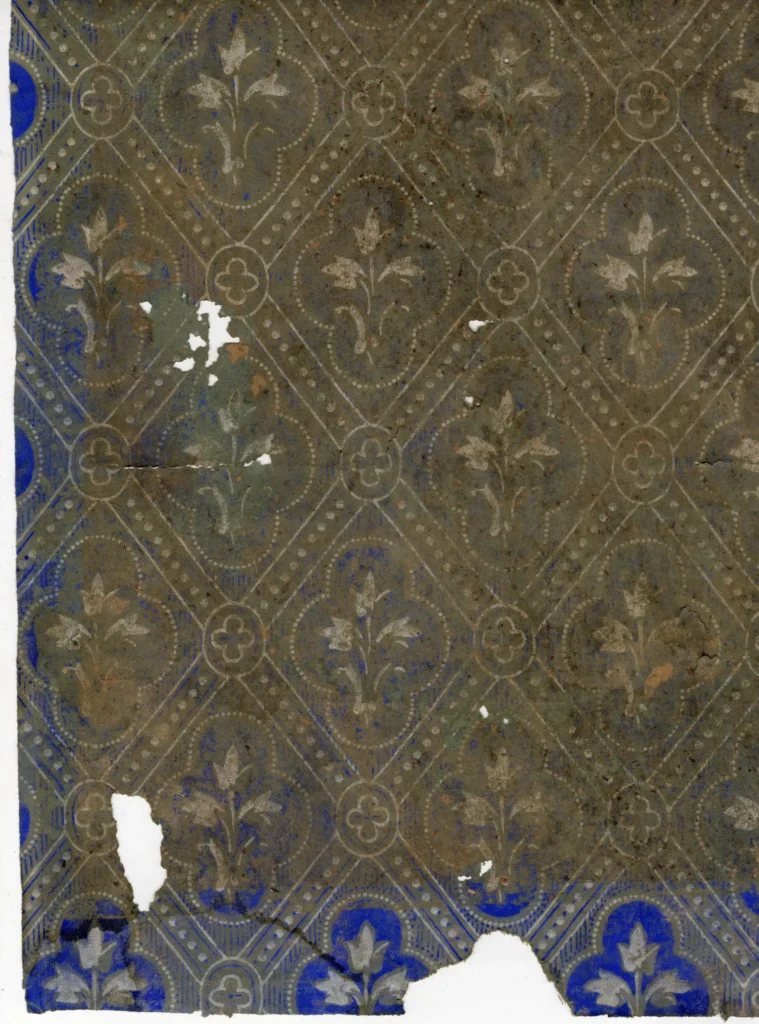
The first encounter with Hyehwan took place in a late Joseon-era historic home on Yeongjong Island, Incheon. Similar wallpapers have been found in a home in Seocheon, South Chungcheong Province, and in the Naksodang Hall of Unhyeongung Palace — but this was the first time a fully intact original was encountered in person.
(Photo by Gosate)
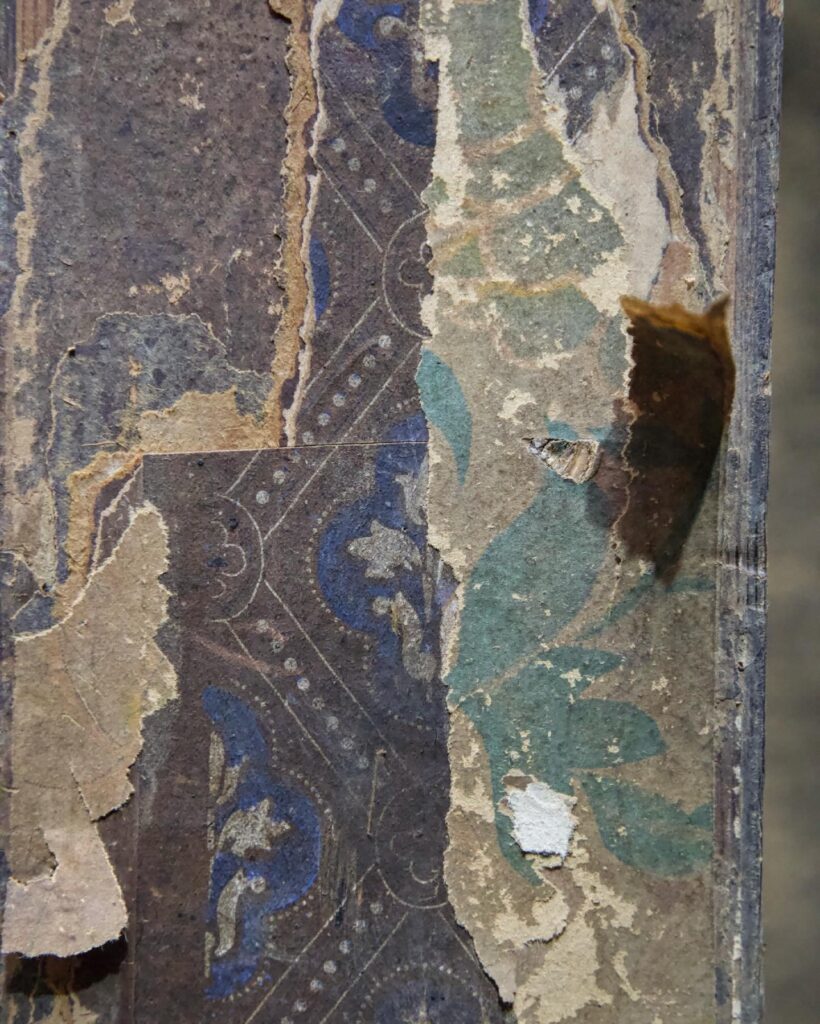
A hanok renovation is more than repairing a house — it is an excavation of the time that has accumulated within it. While surveying the wallpaper to determine the direction of the design work, most of the wall surfaces had already been recovered with fresh hanji and their traces lost. Just as the search was about to be abandoned, a small built-in cabinet door in the inner room caught the eye. On a hunch, the door was removed, soaked in water, and the layered papers peeled back one by one — and the forgotten strata of time gradually revealed themselves.
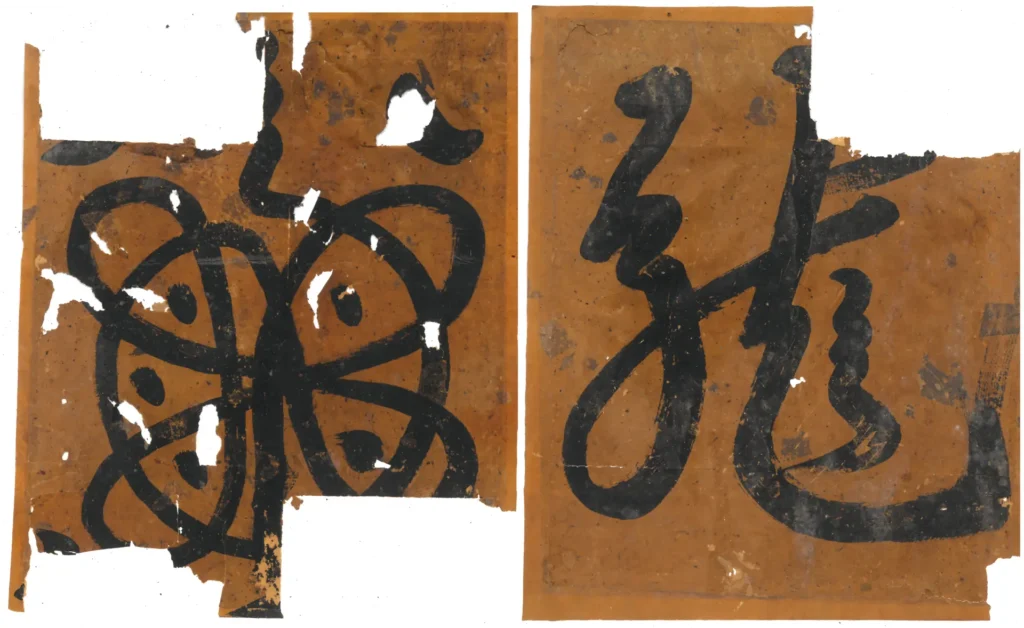
Originally, the door had been papered with a munjado (letter painting) depicting a dragon and turtle, invoking protection against misfortune. Over the years, successive owners had pasted new wallpaper and floor paper over it, and directly above the munjado layer, we found this blue-toned wallpaper — Hyehwan. The many old documents and backing papers sandwiched between the wallpaper and the painting testified that this wallpaper had been installed around the 1910s.
(Source: Collection of Gosate)
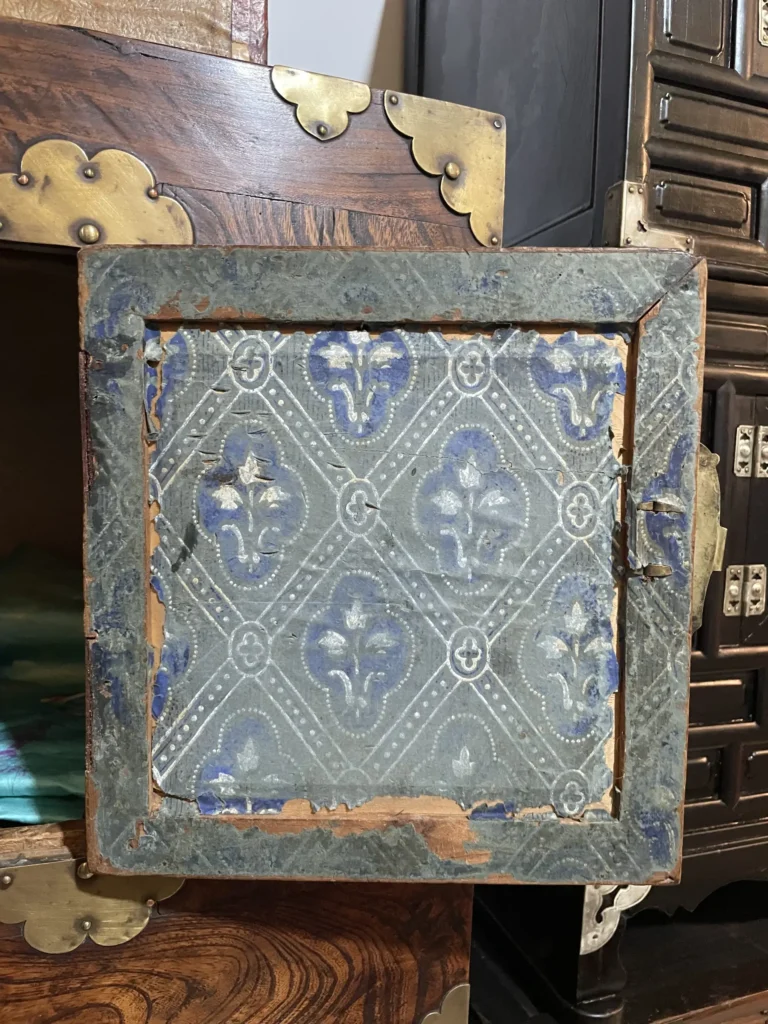
Hyehwan was not confined to this single location. It has been found applied as interior lining paper in antique furniture of the period, and as book covers — evidence that it was one of the bestselling patterned papers of its era, used across the country in a wide variety of applications.
(Photo by Gosate 2023)
2. The Origin: 19th-Century European Romanticism — Neo-Gothic and Textile
Tracing this wallpaper back to its source leads to 19th-century France and Belgium. Exhausted by the rapid urbanization and machine civilization that followed the Industrial Revolution, Europeans sought a return to the spirituality and romance of the Middle Ages — a longing that manifested in the rise of the Gothic Revival. During the very period when architects like Viollet-le-Duc were restoring cathedrals and redefining Gothic for a new age, the silk industry capital of Lyon was ceaselessly weaving brocade textiles to adorn those cathedrals and aristocratic residences.
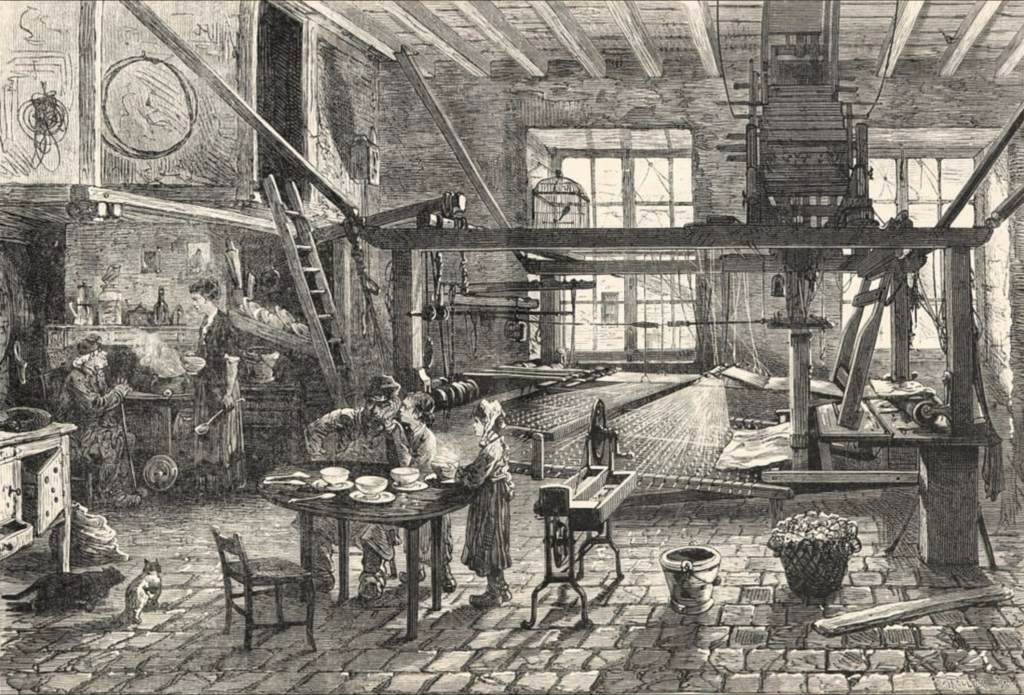
(Intérieur d’un atelier de tisseur en soie à Lyon (canut) au début du XIXᵉ siècle)
public domain. Source: Wikimedia Commons.
The pattern of Hyehwan is the result of transposing exactly this textile design grammar onto paper. At the center of the pattern sits a flower evoking the French royal emblem — the fleur-de-lys. The shield-shaped cartouche surrounding it, the diamond diaper grid connecting the units, and the cross-shaped medallions set at each intersection create a solemn rhythm — like a cathedral floor tile or altar cloth rendered in miniature. The dense dots around each cartouche and the fine background stripes are not merely decorative: they are deliberate devices for visually reproducing the texture of fabric, making the wallpaper read as cloth applied to the wall.

(Source: Collection of Gosate)
3. From Japan to India: An Export Wallpaper That Crossed the Sea
How did a pattern that had been the exclusive property of European aristocracy arrive in a rural home in Incheon? The answer was found in the Japanese wallpaper sample books recently acquired from India.
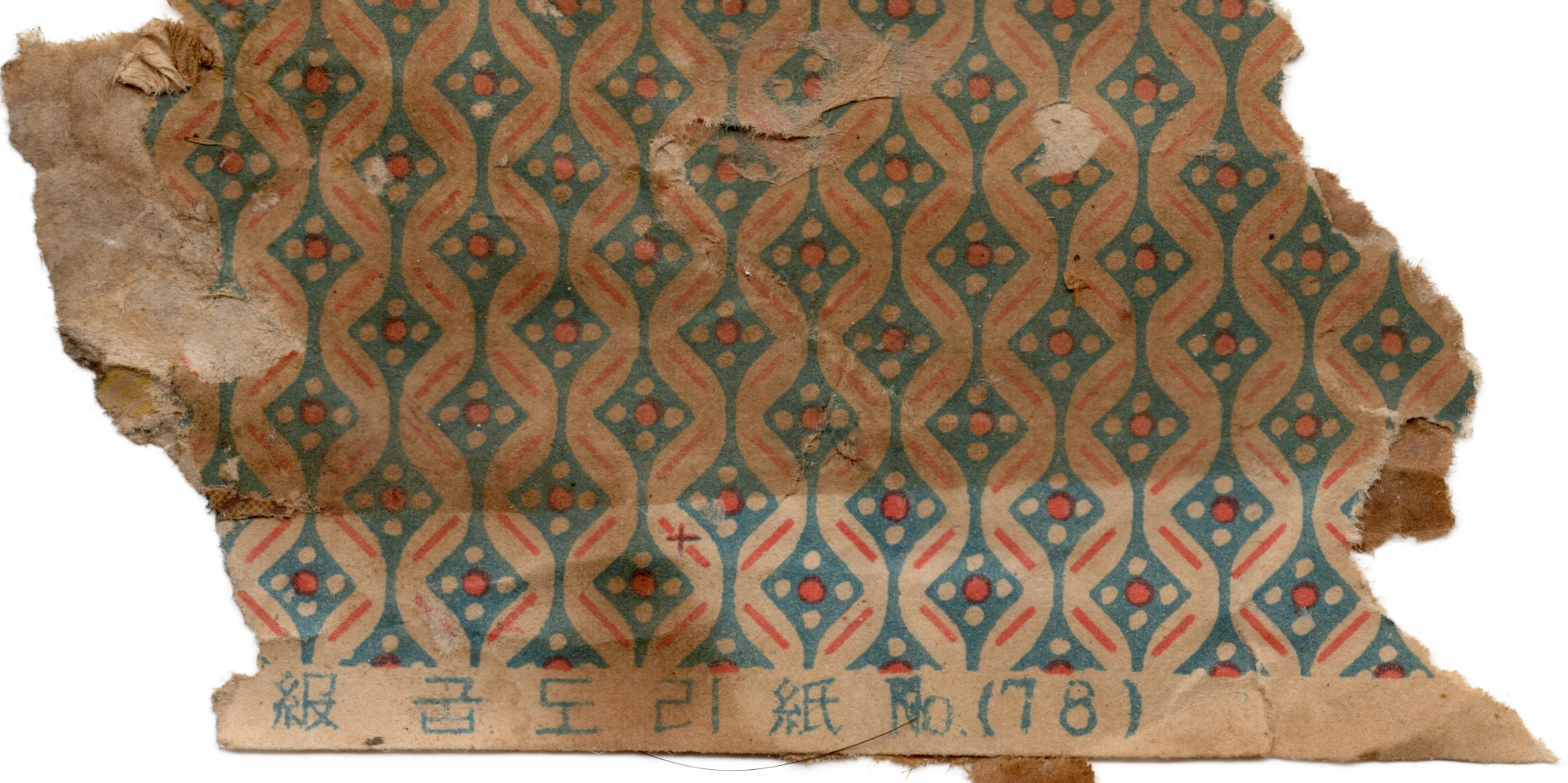
Within a vintage Japanese sample book sourced locally in India, a remarkable number of Neo-Gothic patterns directly related to Hyehwan were found. This strongly suggests that this wallpaper was not produced for the Japanese domestic market alone — it was conceived from the outset as a mass-produced export product. Following the Meiji Restoration, Japan absorbed Western printing technology, copied and simplified European designs to create Made in Japan wallpapers, and shipped them across Asia wherever Japanese imperial influence reached. The samples found in an old Indian warehouse are decisive evidence that Japanese-manufactured wallpaper circulated not only across the Korean peninsula but into the South Asian market as well.
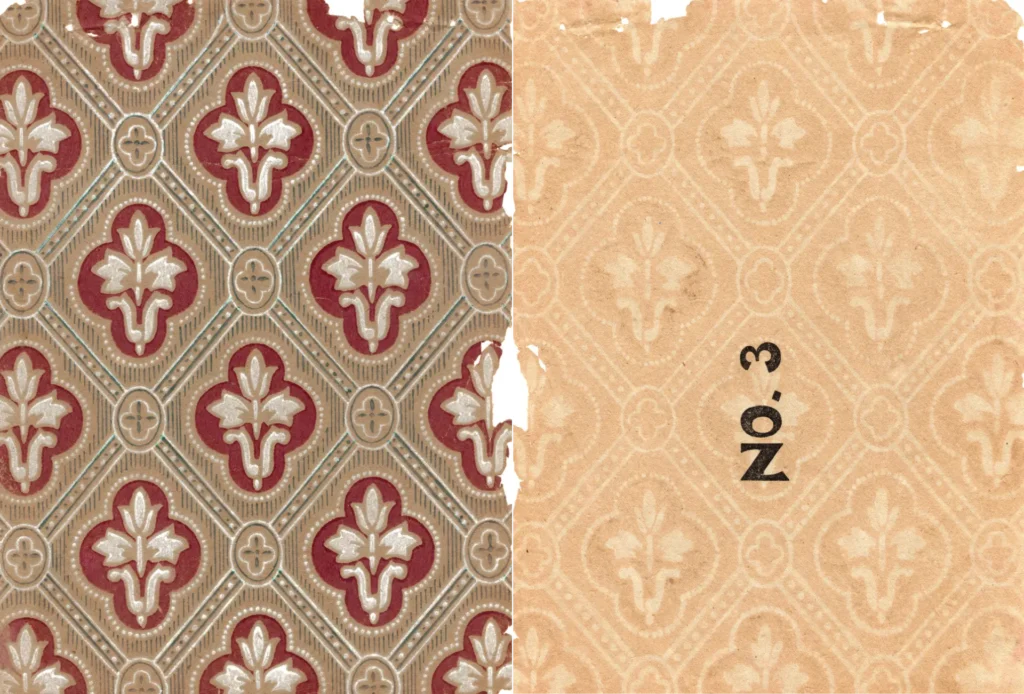
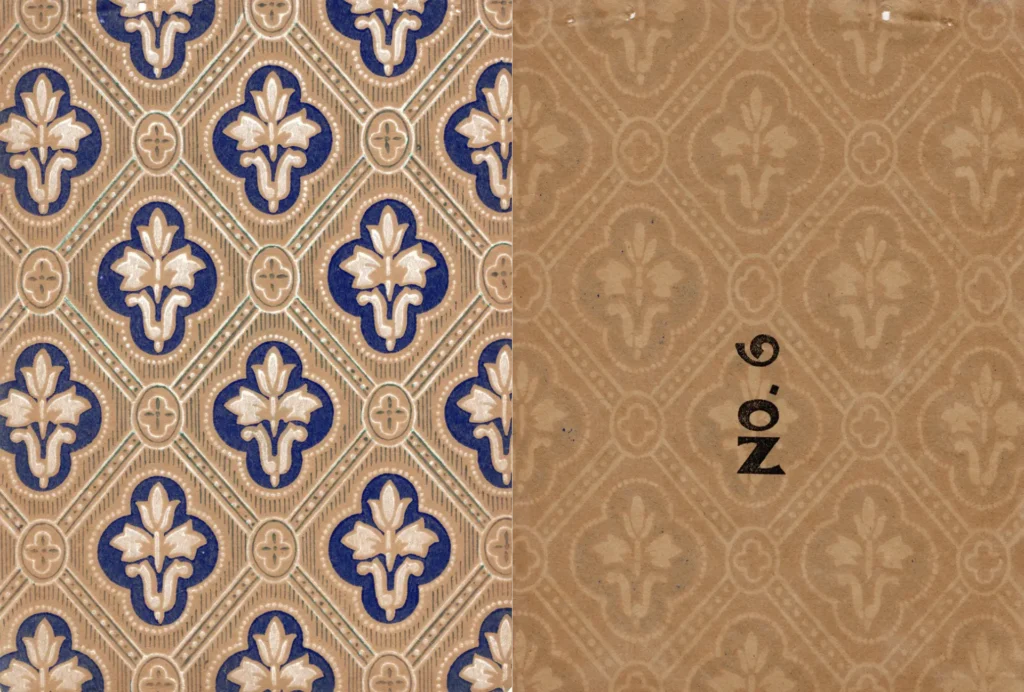
(Source : Gosate Collection)
4. From Changdeokgung to an Ordinary Home — and on to India
From Changdeokgung Palace, where the kings of Joseon resided. To an ordinary hanok on Yeongjong Island, Incheon. And across the sea to a residence in India. Transcending social class and national borders, this wallpaper decorated the rooms of Asians living in the same era.
For some it symbolized royal dignity; for others, the sophistication of a Western hotel; for others still, the life of an enlightened, modern person. A single fragment of wallpaper peeled from a small cabinet door on Yeongjong Island becomes the link connecting the splendid history of Changdeokgung Palace and the distant, exotic landscape of India. Hyehwan is not merely a decorative material — it is the great wave of modernity itself, the tide that swept across Asia in the early 20th century.
Copyright © 2026 Gosate Archive.
All Rights Reserved.
- All text and scholarly analysis are the intellectual property of the author.
- All photographs marked "Gosate Collection" or "Photo by Gosate" are the copyright of GOSATE. Reproduction, copying, or distribution without prior consent is strictly prohibited.
- Historical images cited from external sources are subject to their respective copyright holders or public domain provisions.
Inquiries: contact@gosate.kr
More from this era