
Silver Arabesque — One-Color Silver Pigment Wallpaper from 1930s Korea
A single silver pigment printed over a warm ground creates a dense arabesque of small flowers and vines, linking modern wallpaper to older East Asian decorative paper traditions.
Visual Observation
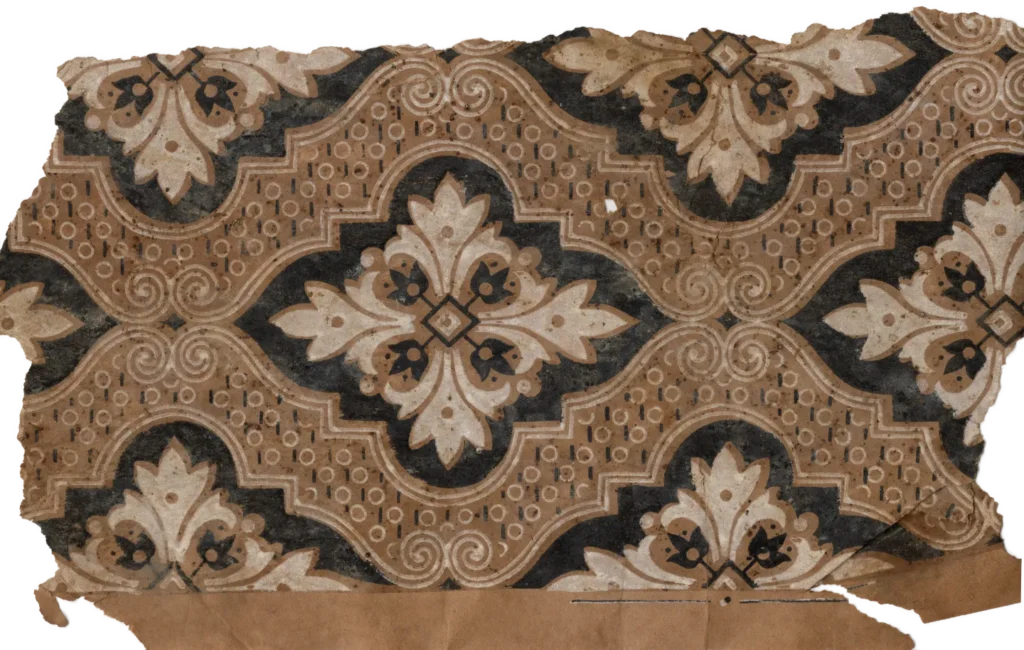
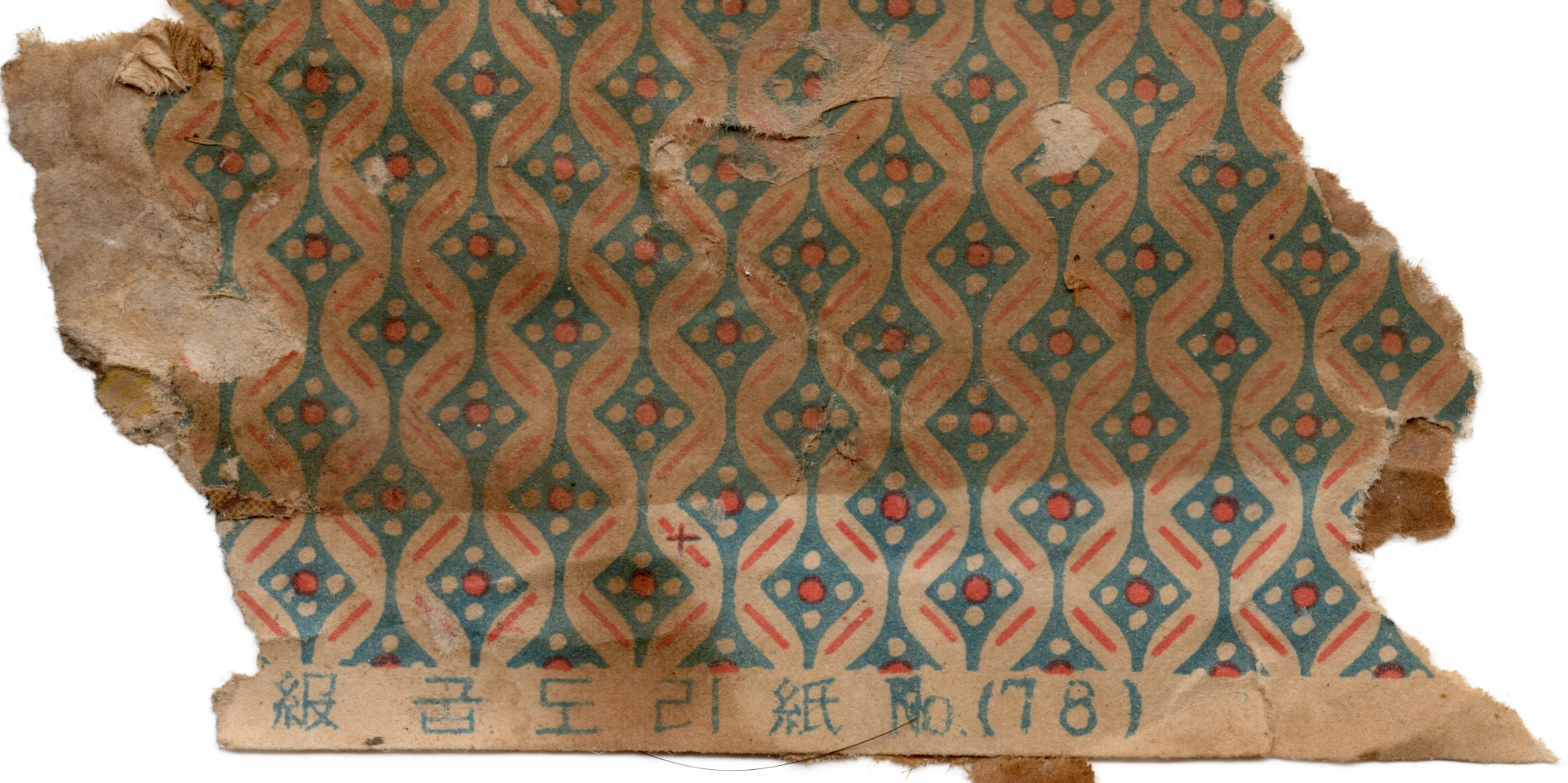
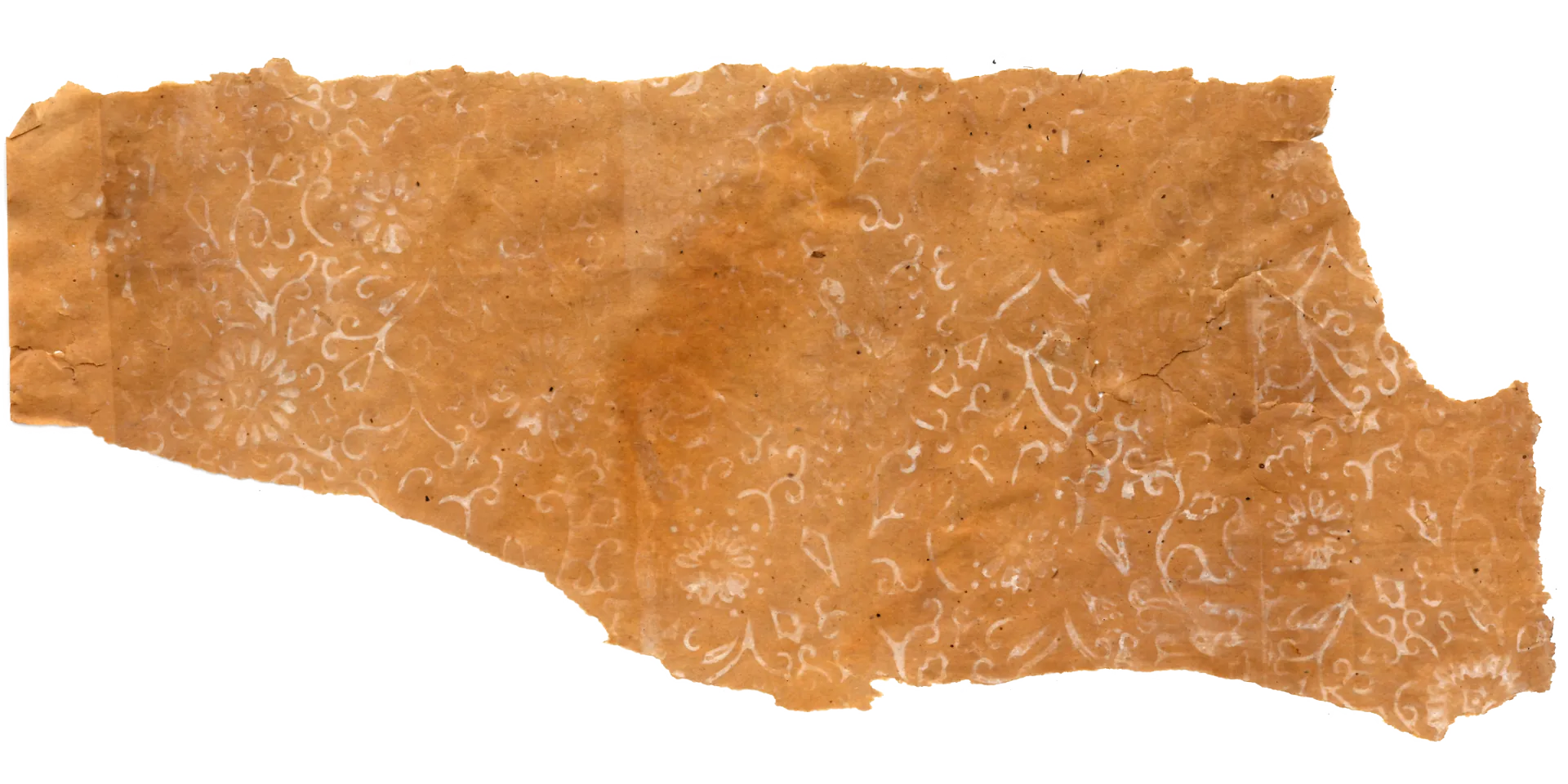
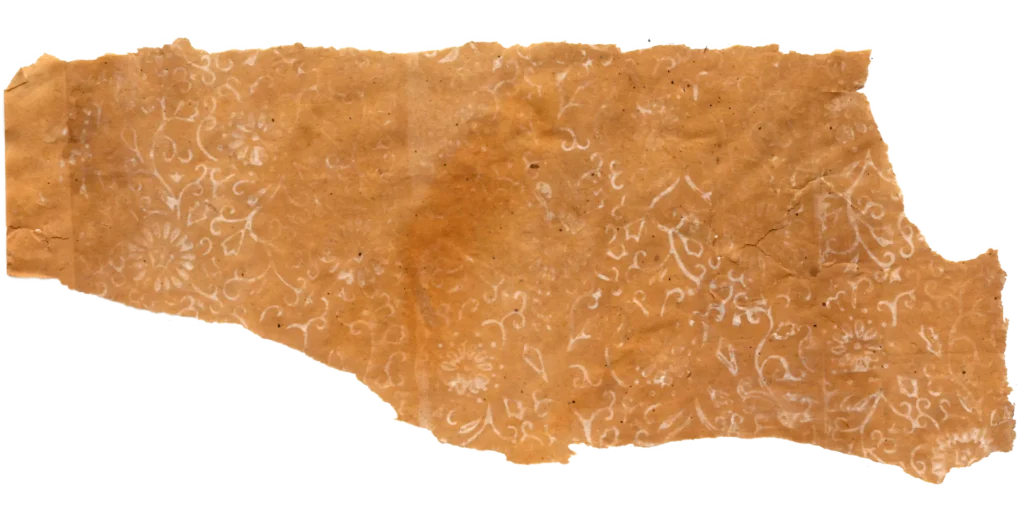
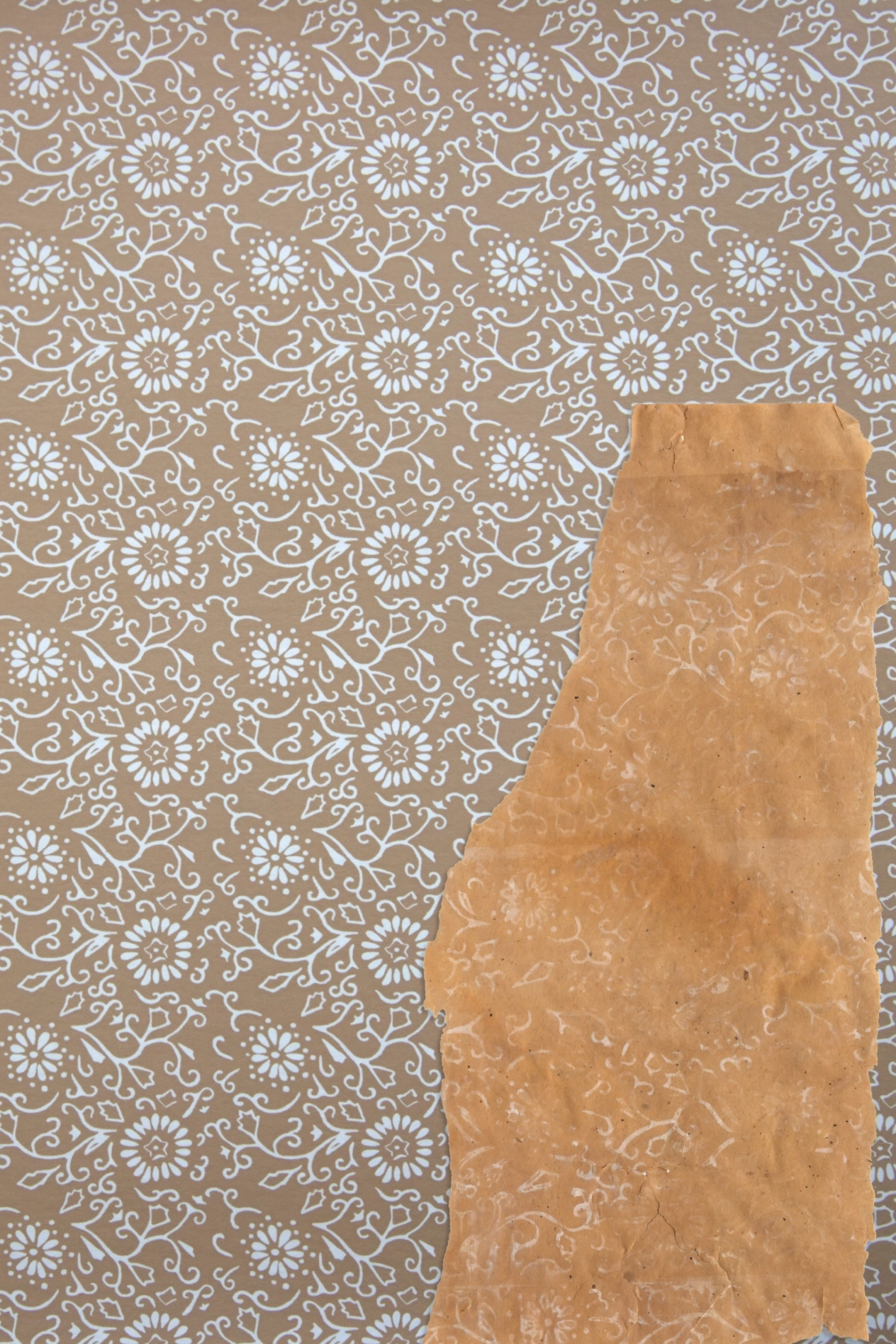
This wallpaper was made by coating one side of pulp paper in a pale yellow-brown tone and printing over it with a single silver pigment. After more than seventy years, the paper has darkened and the metallic shine has faded, but the pattern remains legible.
When new, the surface would have carried a delicate silver arabesque over a warm ground. The design depends not on color variety, but on the subtle light of metallic pigment.
Small Flowers and Winding Vines
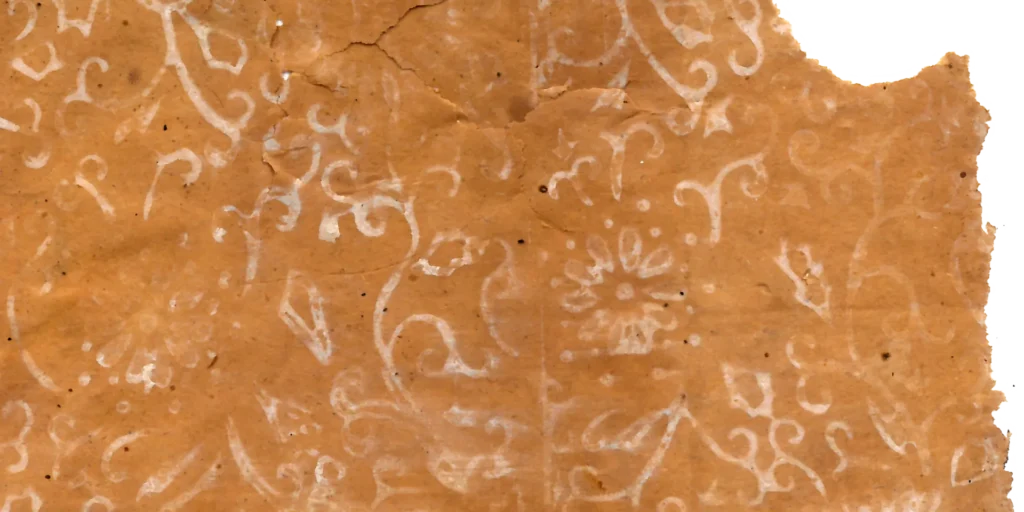
The pattern is built from three elements. First are small chrysanthemum-like flowers, placed throughout the surface. Second are winding vines that connect the flowers in continuous curves. Third are small secondary details: dots, diamond-shaped leaves, hooks, and tiny marks that fill the spaces between the main motifs.
The result is dense and continuous. There is little empty ground. The eye follows the vine from one flower to the next, while the small details keep the surface alive.
Arabesque and Mother-of-Pearl Vocabulary
The pattern clearly belongs to the East Asian arabesque tradition, in which vines and leaves spread endlessly across a surface. But it also has an affinity with the visual world of mother-of-pearl lacquer: small flowers, curling stems, and shimmering surfaces.
Silver pigment gives the paper a restrained luxury. It is not the heavy gilding of a palace interior, but a domestic shimmer produced through industrial printing.
In this sense, the wallpaper sits between craft memory and modern manufacture. It translates older decorative desires into a thin, repeatable, affordable printed surface.
The Logic of One-Color Luxury
One-color printing is usually associated with economy, but here it becomes a form of restraint. Because the single ink is silver pigment, the design changes with light. The pattern can appear bright, muted, or almost invisible depending on the viewer’s position.
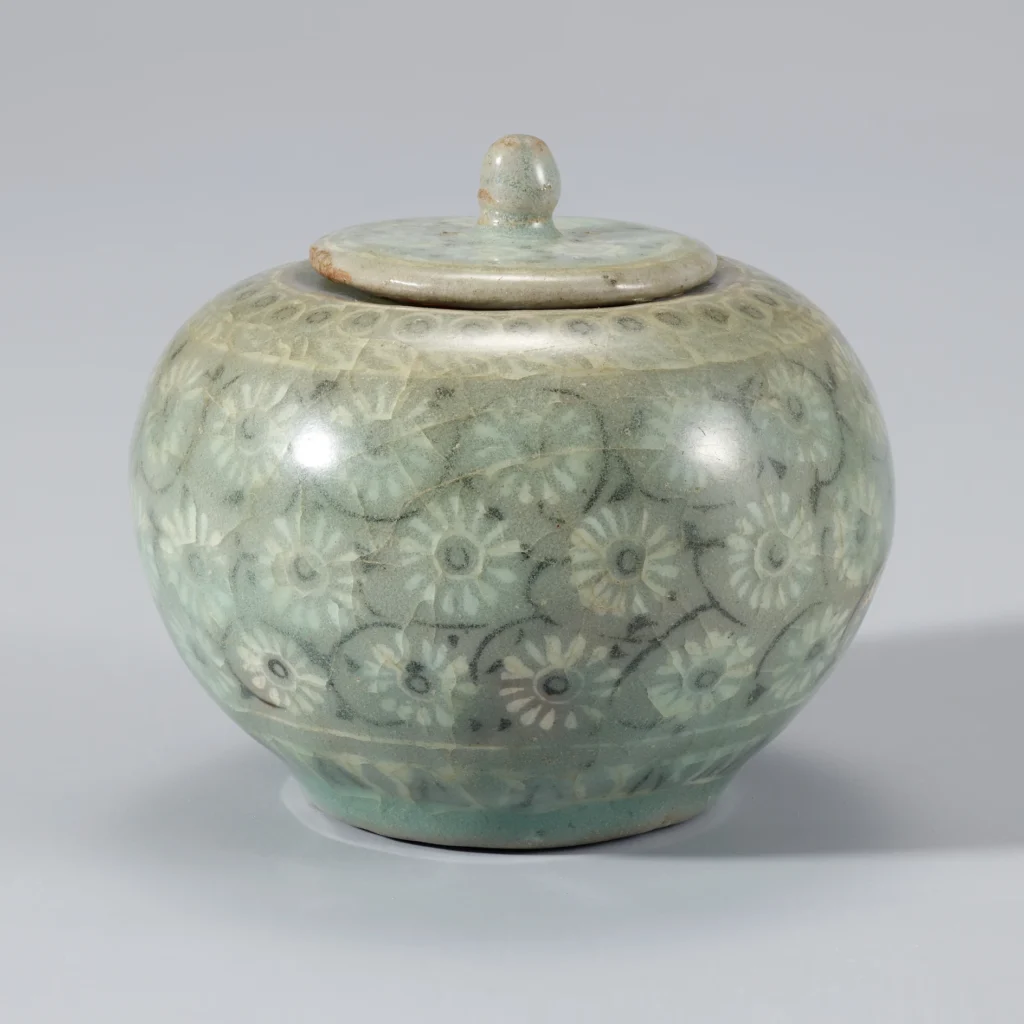
This makes the wallpaper closer to lacquer, mother-of-pearl, or metallic paper than to ordinary flat printing. The value lies not in many colors, but in the shifting surface.
Small Chrysanthemums and Craft Memory
The small chrysanthemum-like flowers connect the wallpaper to a long craft vocabulary. Similar small floral arabesques appear in textiles, ceramics, embroidery, and mother-of-pearl lacquer. They are not spectacular motifs; they are quiet fillers that create continuous refinement.
In Korean mother-of-pearl work, tiny floral elements and curling vines often cover a dark ground with rhythmic delicacy. This wallpaper translates a related sensibility into paper and silver pigment.
A Room Wrapped in Shimmer
When newly installed, the wallpaper would have made the room shimmer subtly under lamplight. The pattern would not have overwhelmed the space. It would have appeared as a fine metallic veil over the wall.
This is why the paper matters. It shows how a modest household surface could borrow the visual dignity of older luxury crafts without requiring expensive materials.
Copyright © 2026 GOSATÉ Archive. All Rights Reserved.
Wallpaper from this research
Booni
1930s
GOSATÉ restores forgotten patterns as wallpapers for contemporary spaces through the collection, documentation, and study of historic originals. A portion of every reproduction sale supports the continuing discovery, preservation, and research of Korean wallpaper.
- Colorways
- Original
- Material
- Non-woven / Peel & Stick
- Sizes
- 50x6m / 50x10m / 50x244cm
- Delivery
- Approx. 3-5 days – Free shipping
More from this era