
An Old-School Korean Eatery,
Retold Through 1970s Wallpaper.A neighborhood place,
warmed by a restored pattern.
In Sillim, Zero Branding turned a 50-square-meter old eatery into a hideaway with the warmth of a Korean side street from the 1980s and 90s. At the center of that atmosphere is Eunju, a restored 1970s wallpaper by GOSATÉ. This is a story about how much warmth a wall of paper can bring to a room.
ProjectYoungjae’s · Sillim
WallpaperEunju · Original
InterviewGOSATÉ × Zero Branding
Building a Room,
Building a Memory.
Branding, in the end, is the work of shaping a mood. Zero Branding has built its practice around two fields that may look different at first: food-and-beverage brands and exhibitions. Both unfold in physical space. And when a clear concept and story are placed precisely into a room, the visitor’s experience deepens, and the brand stays in memory longer.
A space does not have to be flashy to disarm people. Sometimes warmth, familiarity, and a trace of everyday life are what open the heart.
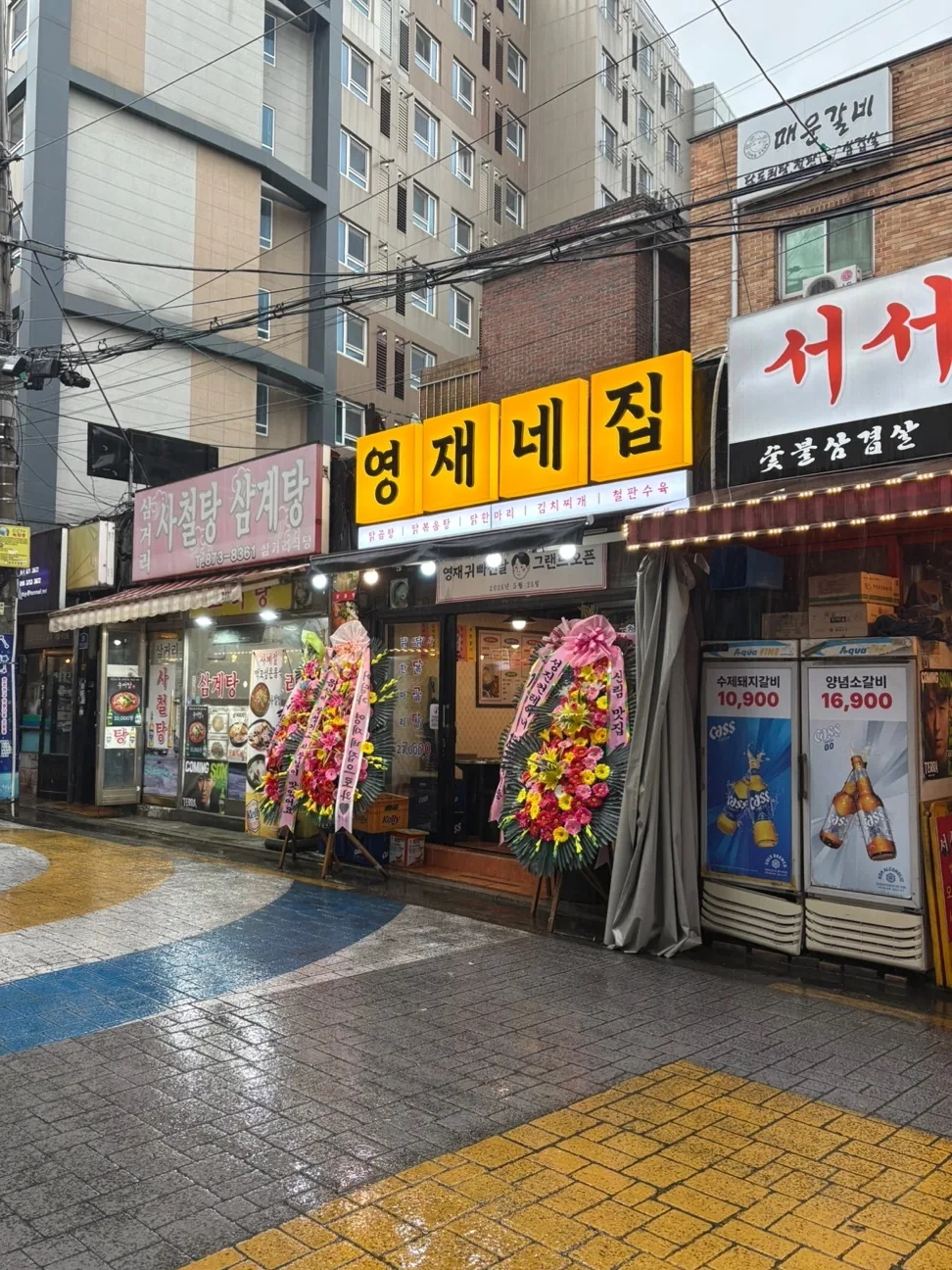
On a side street in Sillim, a 50-square-meter restaurant long loved by its new owner was reborn this way. Instead of wiping the place clean with a full renovation, the team chose to keep the patina left by time. Patterned wallpaper became the way to cover damaged walls while preserving the soul of the old space. The wallpaper they chose was Eunju, a restored 1970s design. In front of that wall, we spoke with Jihye Oh of Zero Branding, the designer behind the space.
Question 01 · PracticeWhy do you work across both F&B branding and exhibition design?
Zero Branding is a studio that builds from brand strategy into design, video, and content marketing. F&B and exhibitions share an important foundation: both are experienced through offline, physical space, and both respond quickly to cultural trends.
The industries are different, but the work is similar at its core. The more clearly we bring a concept and story into the space, the more satisfying the customer experience becomes, and that often leads to stronger brand loyalty. That shared appeal is why our studio naturally came to focus on these two offline fields.
Question 02 · StudioTell us about using your office as a naturally lit photo studio.
I wanted everyone on the team, myself included, to spend our working days in a more beautiful place. Work can be intense, and I hoped the space itself could offer a small sense of comfort. We looked for somewhere with greenery and warm sunlight, and found our current office overlooking Yangjaecheon Stream. For about a year, we also operated it as a naturally lit rental photo studio.
These days, as outside projects have grown, we are focusing more fully on our core branding work. Still, this cozy office remains a welcome breath of fresh air during demanding days. It works as a comfortable meeting place for clients and as a multi-purpose studio where we film YouTube content.
The more intense the work,
the more a space should offer a small sense of comfort.
Question 03 · ConceptHow do you begin shaping the concept for an F&B space?
The first thing we do is listen closely to the client’s story. The public’s perspective matters, of course, but above all, the space has to be one the owner genuinely likes and feels at ease in.
We ask questions like, “What kind of guests would you like to welcome?” “What is your happiest memory of a place?” and “What is your greatest asset as an operator?” From there, we draw out key words and connect them with the interests and trends people are drawn to. A lot of our thinking goes into finding the right balance between a strong, distinctive brand character and a sense of familiarity that feels easy to enter.
Question 04 · MaterialHow important are wallpaper and finishing materials in spatial branding?
After the facade, finishing materials are often what communicate the most information and mood when someone first enters a space. That is why we spend so much time considering them during the planning stage.
When choosing materials, we look carefully at the size of the room, ceiling height, and the sequence of movement through the space. In F&B, guests stay for at least 30 minutes and sometimes two or three hours, so the room cannot feel tiring. We try to choose materials that remain comfortable for the eyes and mind, while quietly carrying the brand’s distinct personality.
Question 05 · ChoiceWhy did wallpaper feel right for this retro concept?
Our client had spent more than ten years building experience in restaurants and was now, as a young owner in his thirties, opening a place of his own for the first time. He was confident in the food and service, and his brief was clear: he wanted guests to enjoy the space in a relaxed, playful atmosphere.
The site was a small, worn-in 50-square-meter eatery where the owner had been a regular for years. We decided to preserve as much of its age and feeling as possible, because no artificial design can imitate the traces left by time. But once demolition began, the walls were in much worse condition than expected. Patterned wallpaper became the unexpected key: it could hide the flaws while amplifying the warmth and wit of an old neighborhood restaurant.
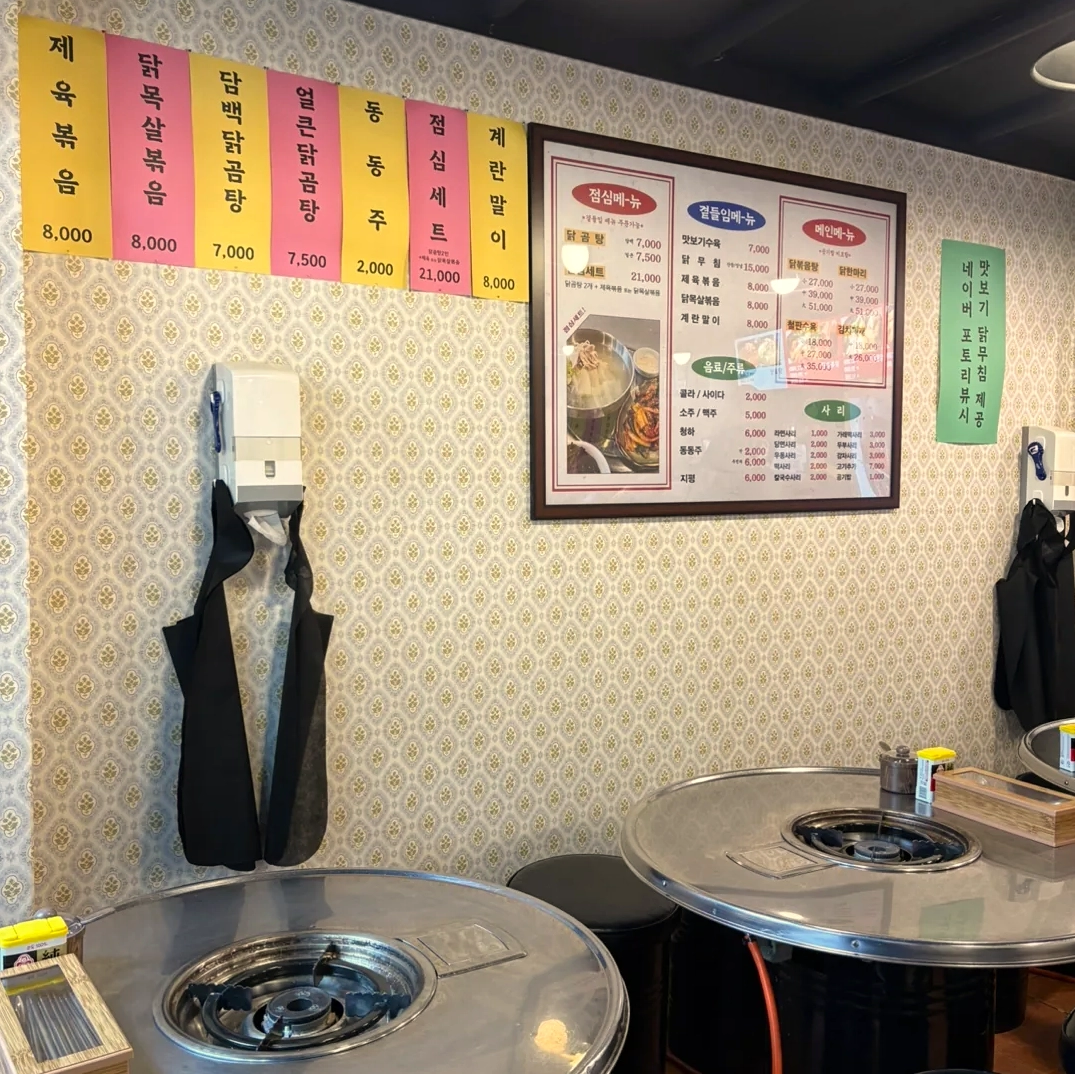
Menu strips for spicy pork, chicken neck meat, chicken soup, and more sit warmly against the Eunju wallpaper.
Question 06 · DiscoveryWhat was your first impression when you discovered restored wallpaper?
To be honest, I was skeptical even as I searched for “retro wallpaper.” Most products on the market felt either heavily ornate or strongly graphic, so I wondered whether we could find a pattern with the right warmth for the old Korean eatery we were imagining. Then I came across a distinctly Korean vintage pattern, and it caught my eye.
It turned out to be restored wallpaper, recreated from historical designs, and I became curious enough to look through the entire collection. It felt very different from today’s intentionally retro graphics. The lyrical lines and analog character of a design that had actually existed in the past carried a much stronger personality and a very particular aura.
Lines that truly belonged to the past
carry an aura that manufactured nostalgia cannot imitate.
Question 07 · AfterHow did the space change after installation?
Once the wallpaper was installed, the cold, aging 50-square-meter shop instantly became a cozy hideaway straight out of a friendly Korean side street of the 1980s or 90s.
When the owner saw the finished space, he was delighted. He said, “The relaxed, playful mood I had been picturing for an old neighborhood eatery came to life exactly as I hoped.”
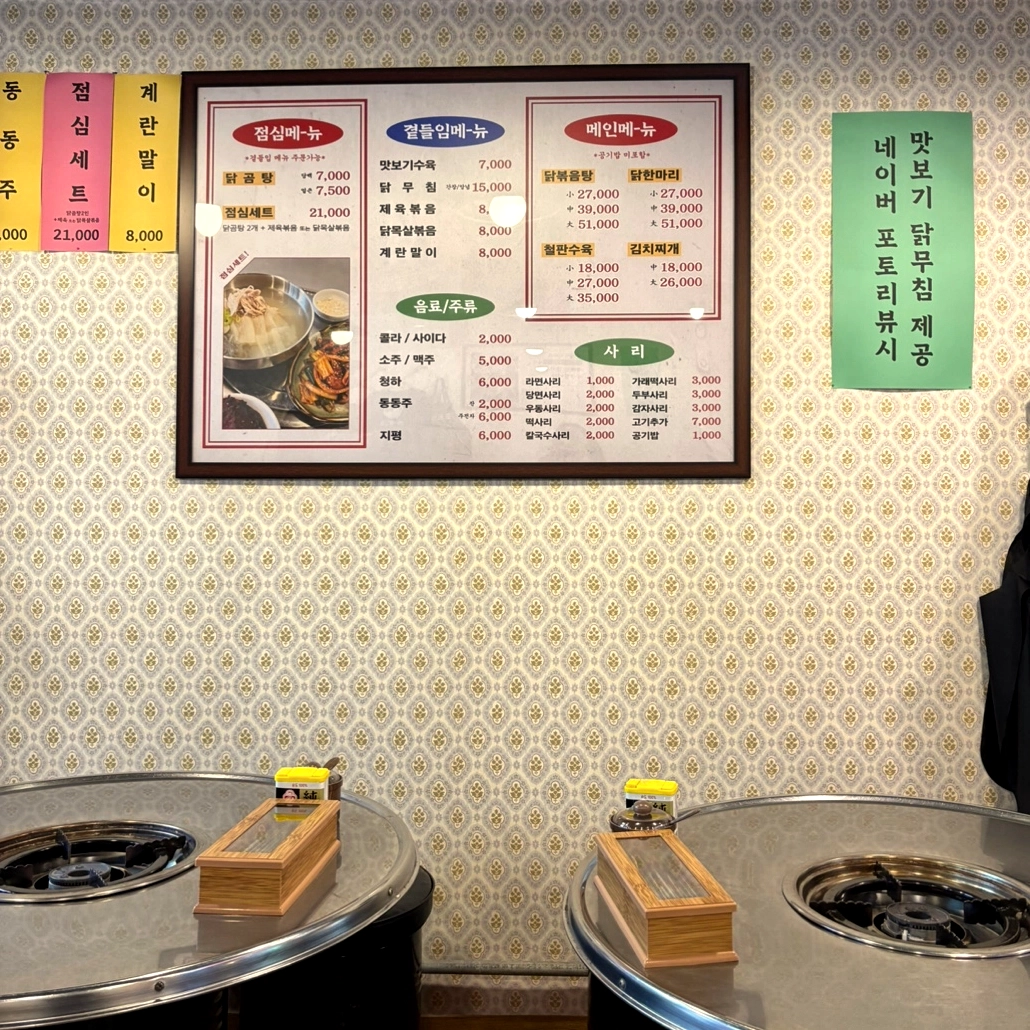
Drum-style tables and framed menus. Patterned wallpaper wraps the old eatery’s structure in warmth.
Question 08 · TrendHow do you see the ongoing retro mood in F&B spaces?
Retro has actually been a steady current in F&B for more than a decade. I have often thought, “This trend is lasting much longer than expected.” At this point, I see it as more than a short-lived trend. It has become a lasting cultural current, almost a genre of its own.
A place where people eat and gather should feel comfortable and familiar at its core. A space that is dazzling, cool, and overly polished may look impressive at first, but it can feel tense for everyday visits. By contrast, retro spaces that feel lived-in and evoke familiar feelings tend to put people at ease. As long as people keep looking to spaces for emotional comfort in a demanding world, I think this analog sensibility will continue in changing forms.
Question 09 · StoryWhat story does restored old wallpaper give to a space?
After the wallpaper went up, neighboring shop owners would pass by and say things like, “The new wallpaper looks nice! But why did you choose something that feels like the kitchen of a grandmother’s house from childhood?” The owner would smile and answer them every time.
Many of us carry a quiet nostalgia for the warm meals a grandmother or mother once set before us. Restored old wallpaper can call up that warmth and those memories without any long explanation. In a time when old-school Korean eateries are loved for their feeling as much as their food, it becomes one of the clearest and kindest answers a space can give its guests.
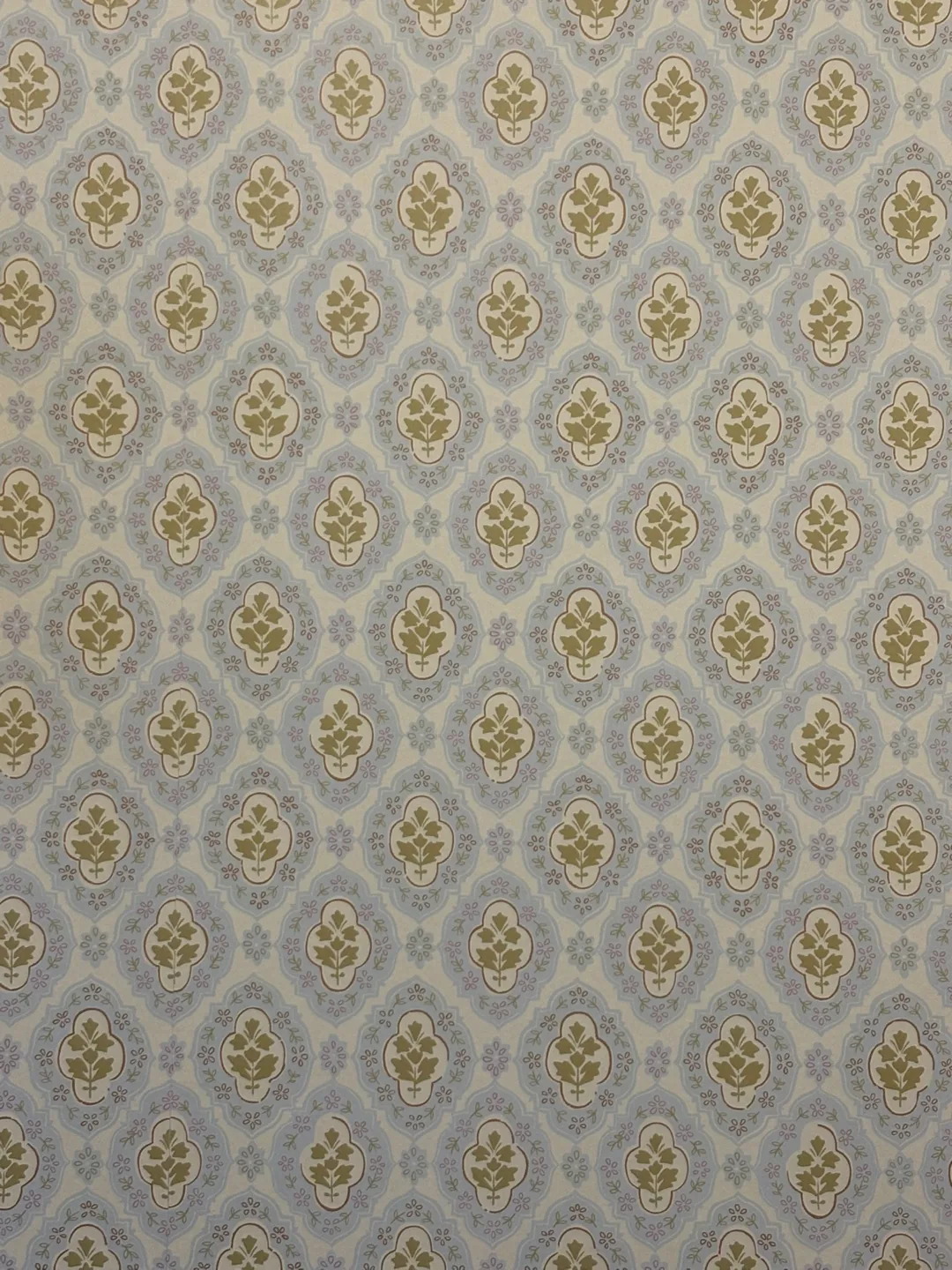
A closer look at Eunju. Pastel blue-gray ogee curves and olive-toned leaves create a quiet rhythm.
“This is the core concept of our restaurant.
The wallpaper, the interior, all of it. We chose this old feeling on purpose.”
Question 10 · NextWould you use restored materials again in future spaces?
There is a warmth and softness in paper as a material that paint or polished tile can never quite imitate. When restored patterns from the 1970s through 90s are added to that tactile quality, the space gains a clear story that can take people back to a particular time almost instantly.
What is interesting is that restored wallpaper is not limited to a purely folk or Korean visual language. If you look closely, a Korean feel from that period sits alongside Western vintage influences and other East Asian graphic elements in a curious way. Because the range of possible variations is wider than it first appears, I would love to explore it creatively again in a future project, in a different mood.
Eunju / OriginalEunju · 1970s · Original
A pattern GOSATÉ restored from wallpaper once used in Korean homes in the 1970s. Olive-toned leaves sit inside pastel blue-gray ogee curves, creating a calm, familiar rhythm. The Original colorway blends naturally with the timeworn walls of an old eatery. This is the wallpaper that returned Youngjae’s small Sillim dining room to the warmth of an 80s or 90s neighborhood hideaway.
- Era
- 1970s · Korean retro
- Roll
- 50cm × 10m
- Material
- Non-woven paper
- Origin
- Designed in Korea
Made in Latvia
Where the Warmth of Another Time
Finds a Place Again.
In a small old eatery on a side street in Sillim, Eunju wallpaper crossed half a century to recover the warmth of the 1980s and 90s. The nostalgia carried by the wallpaper puts guests at ease, and a comment like “It feels like a grandmother’s old kitchen” becomes an invitation to say, “Exactly. That is our concept.” As long as restored patterns can hold local memory and unexpected charm together in one wall, we hope this gentle sense of time will appear again in the next spaces Zero Branding creates.
Youngjae’sSillim, Seoul
Old-school Korean eatery · Chicken soup · Spicy pork
A small old-school Korean eatery that keeps its light on even along a rainy alley. Visit to feel, in person, the warmth that restored wallpaper brings back into the room. The spatial branding was led by Zero Branding, and the wallpaper is GOSATÉ Eunju · Original.