
Even a pattern
carries its own energy.
Woojooyeon Clinic in Gahoe-dong was built around a single wish: that patients would feel less like they’d walked into a hospital, and more like they’d come home to their mother’s house. Three restored wallpapers from the 1960s and 70s — Jihoon, Eunju, and Sangcheol — carry that feeling.
Not a hospital — a home.
Open the door and the first thing to greet you isn’t the smell of antiseptic, but a soft, quiet scent. In place of stark white walls, there’s old wallpaper. The treatment and consultation rooms aren’t clinical bays; they feel like rooms in a house. This is the first impression of Woojooyeon Clinic, tucked into a lane in Seoul’s Gahoe-dong.
“I kept asking myself — if my own mother were the doctor, how would she treat me? I wanted people to feel that answer in the space itself.”
While preparing the clinic, Dr. Woo Ju-yeon first came across GOSATÉ’s restored wallpapers through a longtime interior partner. That’s how three patterns from the 1960s and 70s — Jihoon, Eunju, and Sangcheol — found their places throughout the space. We sat down with her in front of those walls to ask why she chose each one.
- Studio
- Woojooyeon Clinic · Dr. Woo Ju-yeon
- Discipline
- Korean Medicine · Wellness
- Project
- Gahoe-dong Clinic · Seoul · 2026
- Wallpaper
- Jihoon · Eunju · Sangcheol
Question 01 · PhilosophyWhat mattered most to you when designing the clinic's space?
I didn't want people to feel that a clinic is some intimidating, hospital-like place. I wanted it to feel like a home — specifically, like coming home to your mother's house. If my own mother were the doctor, how would she treat me? I wanted people to feel that in the space.
So I wanted the treatment areas to feel like rooms, too. Like the inside of a grandmother's wardrobe, actually. Think of how, as children, we used to hide inside grandmother's wardrobe. I wanted that feeling — and it turned out the GOSATÉ wallpaper looked exactly like something you'd find lining the inside of one.
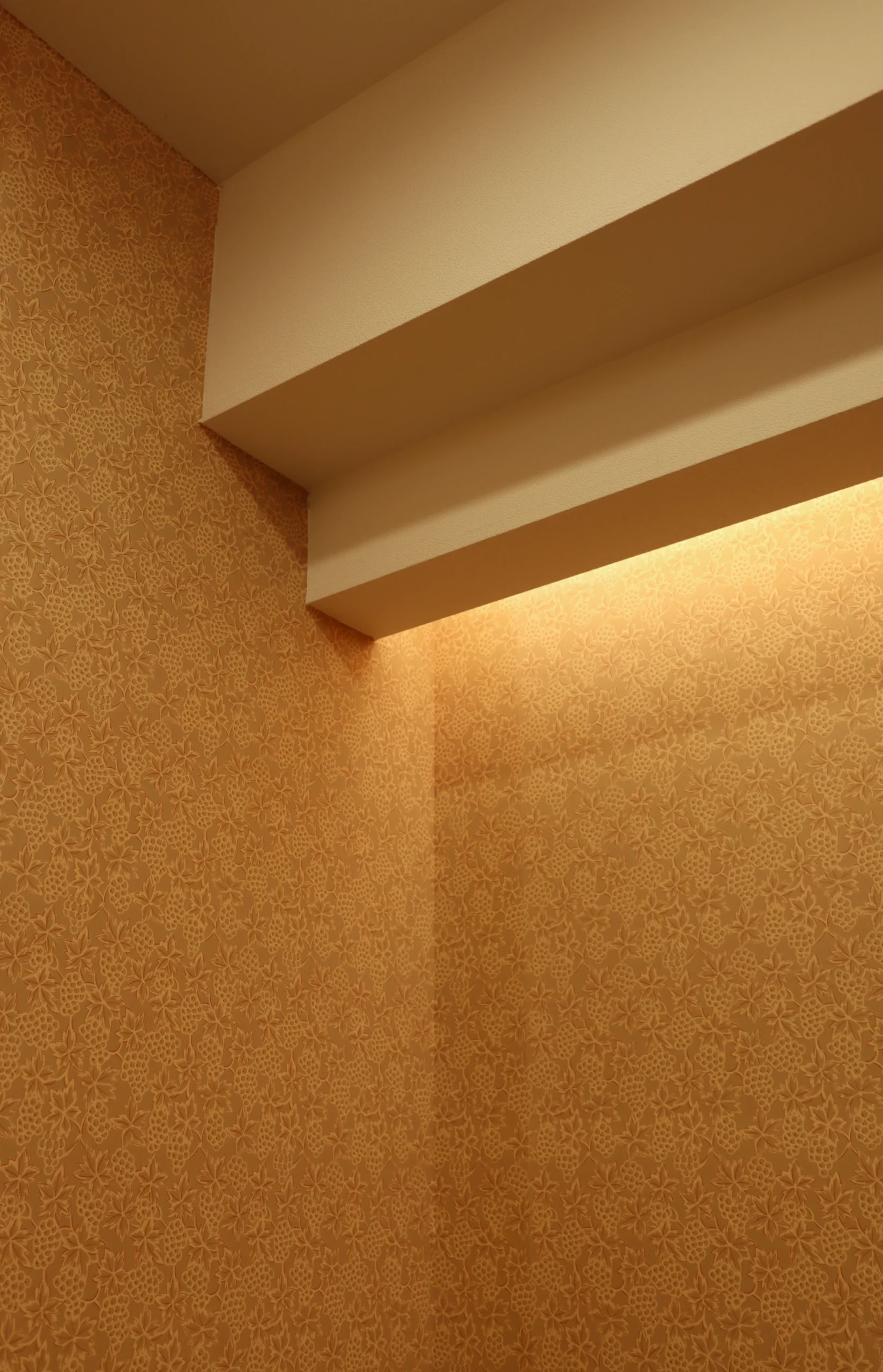
Question 02 · JihoonThe treatment-room wallpaper — the meaning behind its small grape clusters.
Grapes carry so many meanings, don't they? They symbolize fertility and abundance, and in Christianity they stand for life. I loved all of those associations. There's an unconscious sense of comfort we draw from tradition like this, and being able to bring that in through wallpaper felt like real good fortune to me. Being able to meet something like that in the form of wallpaper — it meant more to me than just “this is pretty.”
There are two treatment rooms. Each was papered with one of Jihoon's two colorways — Original in one, Blossom Dye in the other.

Question 03 · The EncounterHow did you first come across GOSATÉ's wallpaper?
I've always thought that looking at a pattern is a bit like getting a tattoo — you're pressing meaning into something, stitch by stitch. So at first I went alone to a shop in Nonhyeon-dong that sells imported wallpaper. But all they had were either ornate old European patterns, or these excessively classical “Eastern” ones packed with things like the Four Gracious Plants — the Chinoiserie sort. They're an Eastern look imagined by Europeans, so ironically they felt so overtly “Oriental” that they came off as gaudy to me. None of it sat right.
Then I told my longtime interior contractor, “I want something Korean in here — something that feels like the old days, like grandmother's house.” She searched around and showed me GOSATÉ. I loved it the moment I saw it. It really does feel different from European wallpaper. How should I put it — there's a kind of composure to it. A restraint.
Question 04 · EunjuWhat guided your choice for the consultation room?
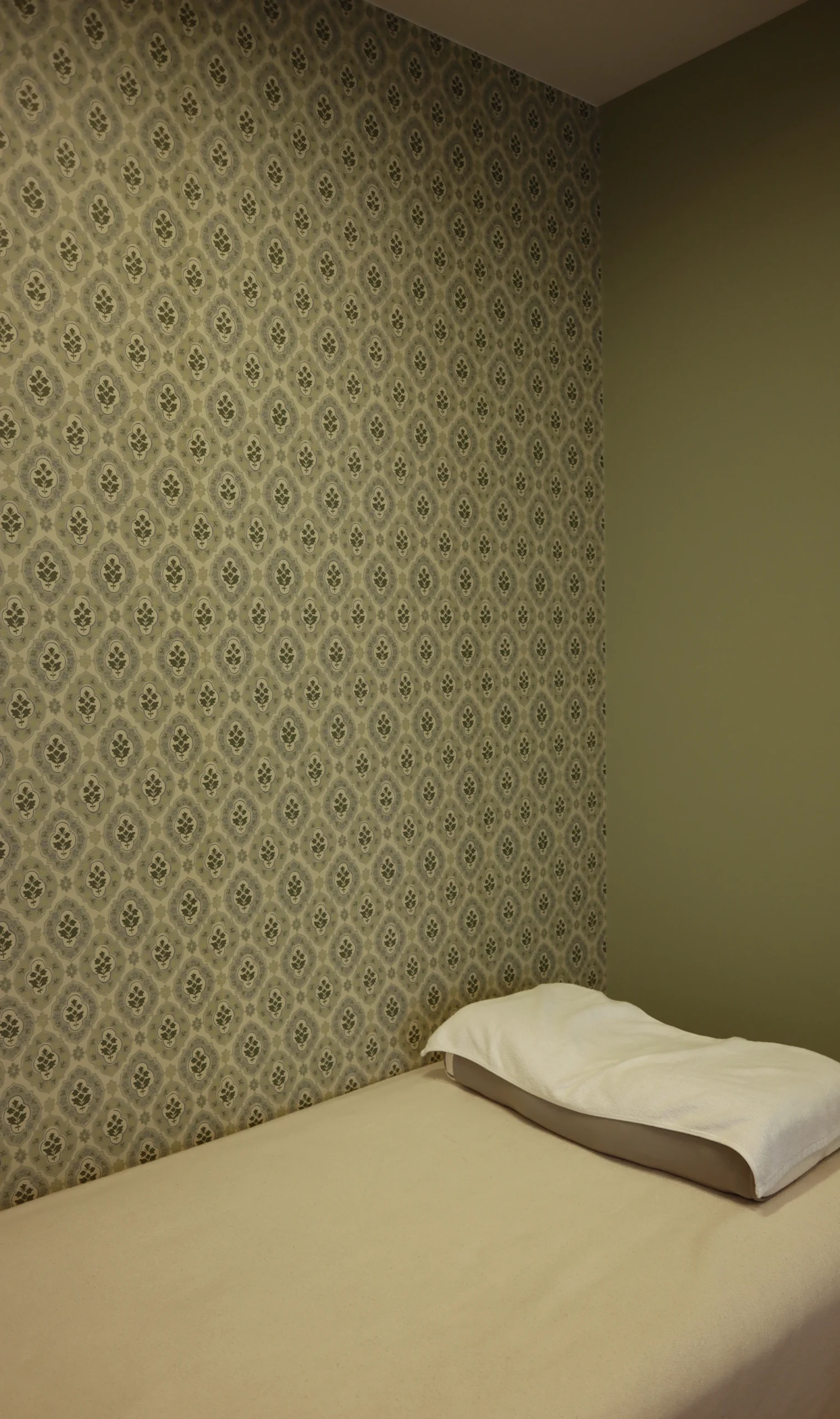
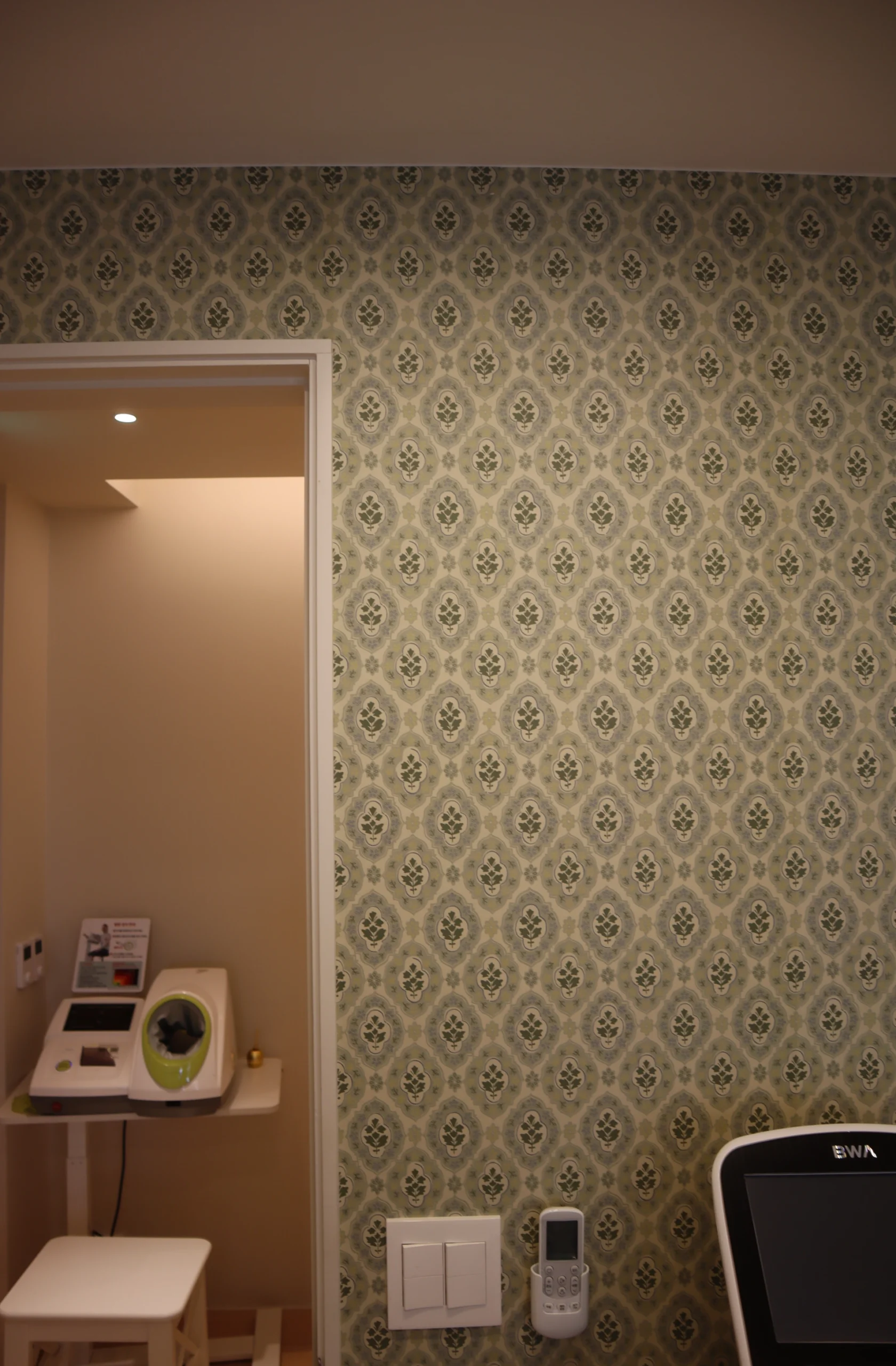
The consultation room is a space where patients have to open up and share what's on their minds. So I didn't want stark white walls, or that separated, hotel-dining kind of atmosphere. I wanted something warm — a wallpaper you might find near a kitchen table.
I thought of the kind of pattern you'd have found around the kitchen and dining table in a warm home, back in the day. This green is indoors, but it feels less closed-in, easy on the eyes, like nature. Those two things were exactly right for me.
Rather than papering every wall in the consultation room, I used Eunju as an accent on a single wall. Some patterns can feel intimidating to patients. But it is the first wall that catches your eye when you enter, and the quiet comfort of its repeating pattern seems to help patients open up remarkably easily.
As she spoke, the GOSATÉ team shared something. Another customer had recently chosen this very same pattern — and that person, too, had said they bought it because they wanted the room to feel like “eating a simple home-cooked meal at someone's house.” Told that someone had chosen the same paper for almost the same reason, Dr. Woo replied:
Isn't that something. I suppose people feel these things in surprisingly similar ways.
Question 05 · SangcheolWhy the larger motif — the cranes and pines?
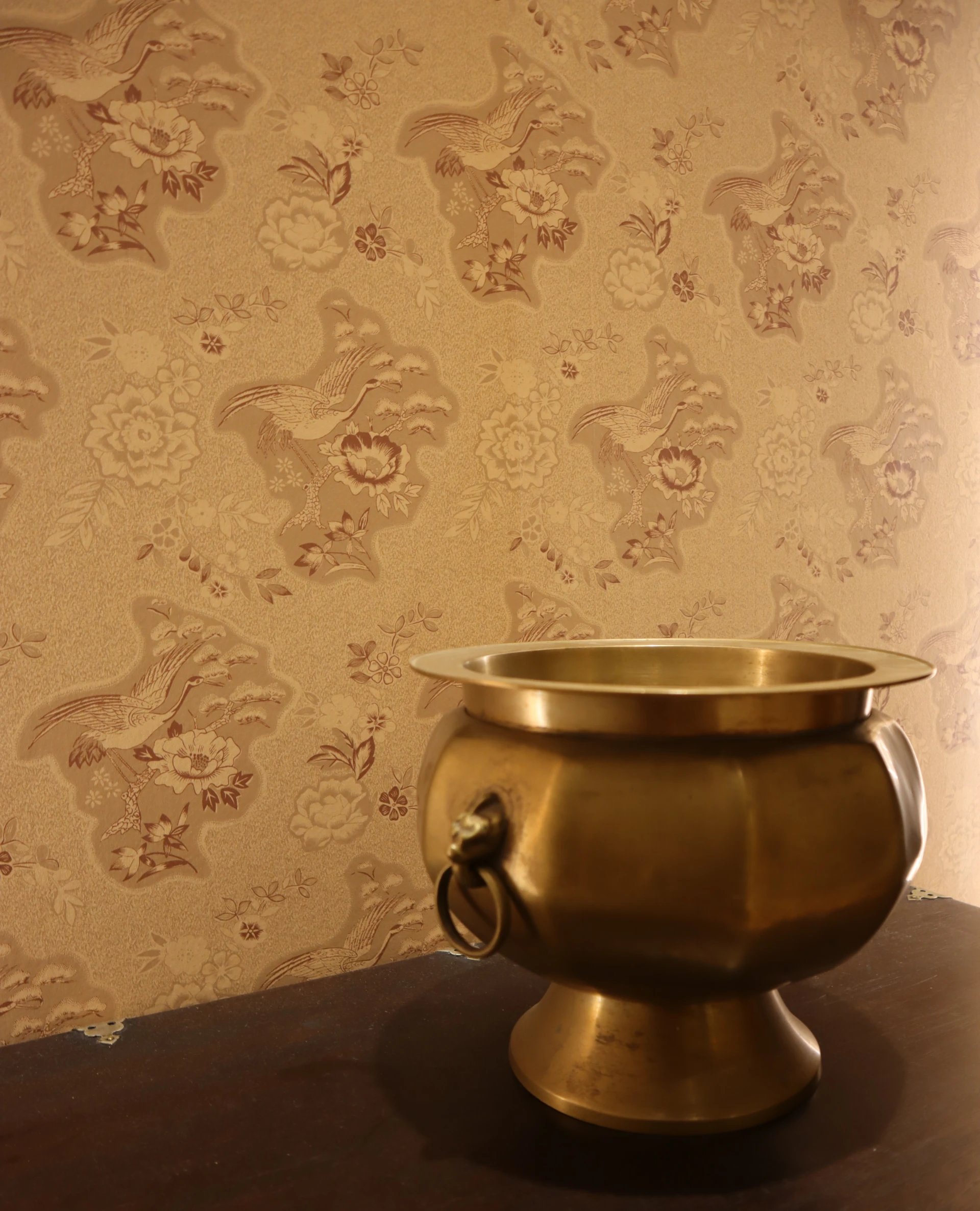
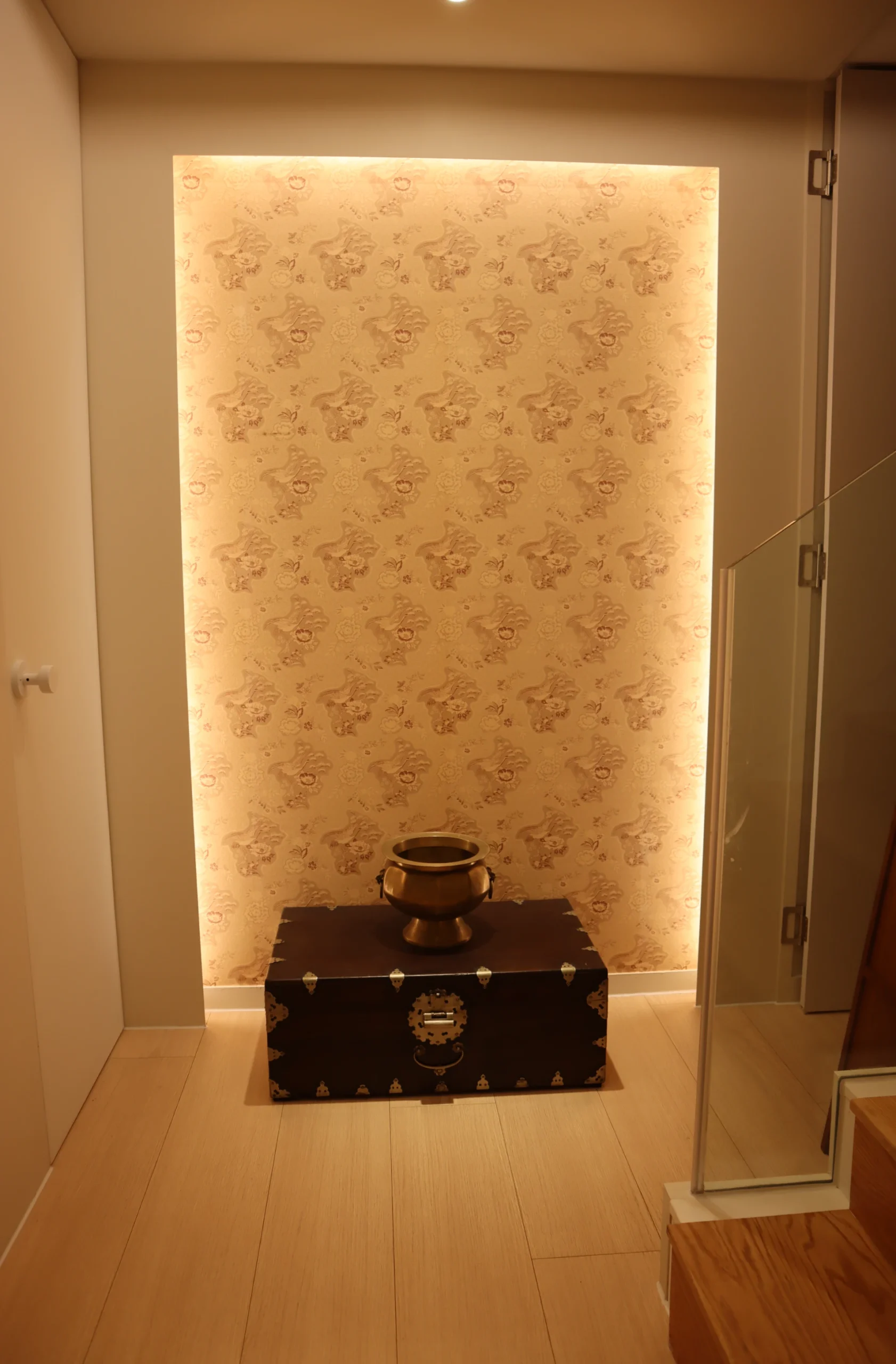
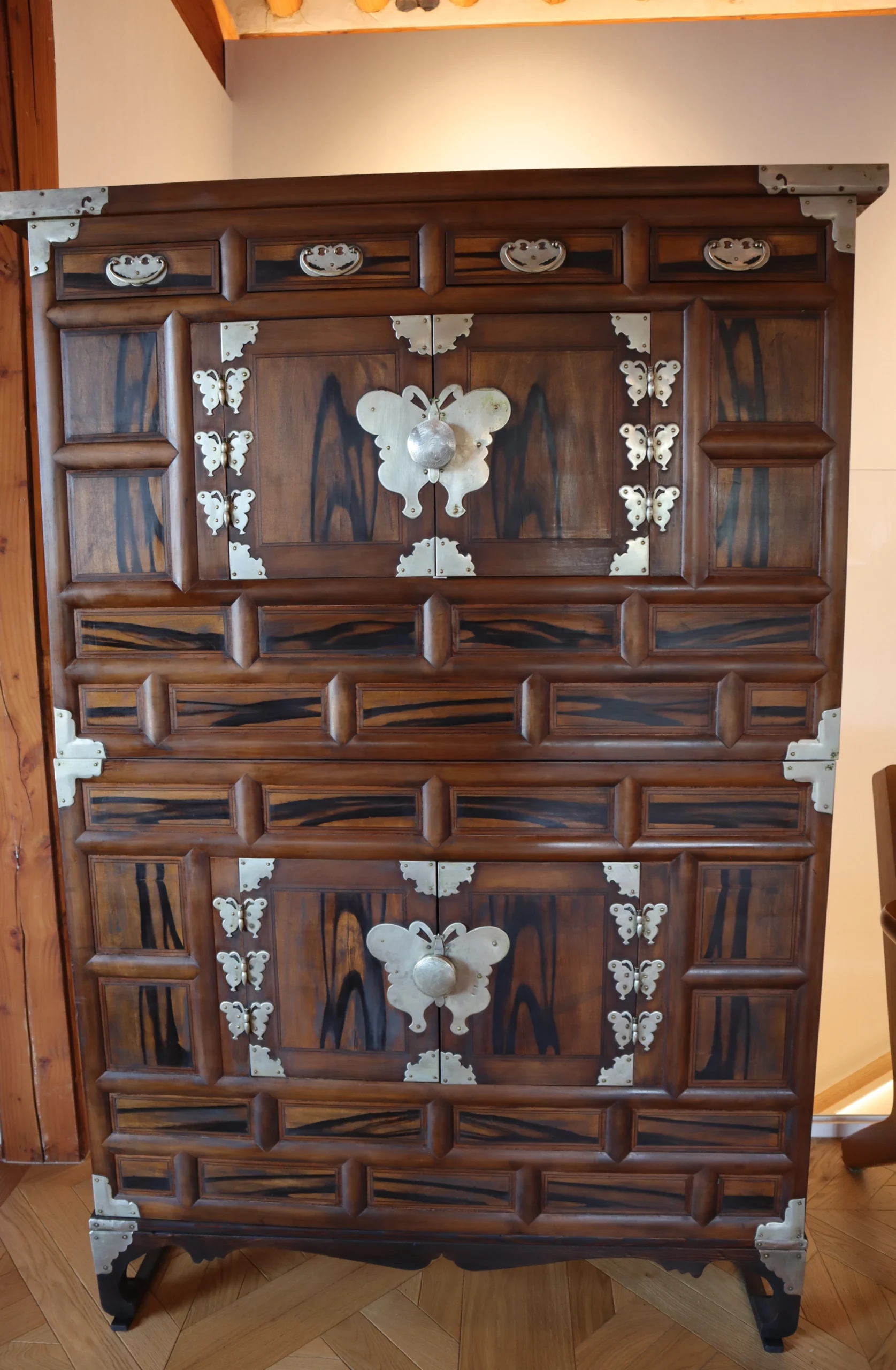
That one I chose with my grandmother's chest of drawers in mind. I wanted it to show off her keepsakes as beautifully as possible, while carrying something of a folding screen, or the feeling of an old painting — something that reads as refined.
So even just looking at the wall, there's a sense of viewing a painting in a gallery. That's why I chose a larger pattern than the others. Rather than fading into the background, it stands on its own as the centerpiece, while making all of my grandmother's furniture look its best. Everyone loves it — foreign visitors especially take so many photos of it.
This motif was originally used in place of folk paintings on folding screens and paper sliding doors. Papered as an accent wall at the end of a first-floor corridor, it stands beside a chest and an incense burner left behind by her grandmother.


Question 06 · EnergyA doctor’s uncommon way of reading a pattern.
Even a single pattern carries an energy, doesn't it? And when it repeats and layers over itself, there's a sense of energy accumulating — like a steady tick-tock, everything moving together. A diamond and a flower carry different energies. So does a circle versus something angular. Something angular feels sharper — better suited to moments when a person needs to be clear-headed and rational. And when you need to be held, to be soft and yielding, then it's the curved ones — coiling, like the small round clusters of grapes. That's a very feminine energy, one that embraces everything.
Others who've used this wallpaper say much the same thing — that sitting in a room with the pattern feels like meditating, that they find themselves drawn into the motif.
So to me, a pattern is more than just beautiful — it has a purpose. Every patient has their own disposition. It's like what we call the four constitutional types in Korean medicine. For people whose energy runs weak, it's good to recommend a pattern that supports and grounds them. For someone whose head spins easily, too many small, spiky patterns can be overwhelming — so for people whose minds are busy and tangled, a simpler pattern that opens up a path works better. And for those who need creativity, a maximal pattern with circles and squares all mixed together brings more color to life.
Dot patterns, I'd recommend for people whose confidence has waned. A wall packed with dots — some might find it a little unnerving, like so many eyes staring back. So for people who find self-expression daunting, papering just one wall or a dressing room with something like that — along with its boldness — seems to help them express themselves a little more freely.
Looking at this dot pattern, Dr. Woo said it reminded her of a carousel. But the motif, it turns out, has a story. The pattern GOSATÉ named “Mijung” is a guilloché design created during the years of war — from liberation through the Korean War. Where a cross would once have sat, there are now shapes resembling targets and gun muzzles; it's thought to have traveled from ancient Byzantium, through the Russian Orthodox tradition, and eventually into Korea. The carousel one doctor saw, and the wartime motifs pressed into the paper, met on a single sheet of wallpaper.
Question 07 · MemoryThe moment old wallpaper reaches someone's heart.
Dementia, really, is a disease that comes from loneliness. I think just seeing old wallpaper like this could do someone a world of good. Even if it's not the paper itself — the moment you step into a space like this, memories of the old days come back. All the things you did with your mother and father.
Question 08 · ConvictionOn reviving tradition in a contemporary way.
There are two more wellness centers — one in Jongno, one in Banpo — but I'm gradually winding those down to focus more here. I'm someone whose work has to touch people's senses; I'm not really suited to running a repetitive business the same way as everyone else.
It's a hard road, of course. But I believe it's the right one — so even if I only move a milliliter forward each year, I'm certain this is the direction to keep going until the day I die.
It isn't easy. Plenty of people around me call it inefficient, even foolish. In the age of AI, think how fast you can reproduce anything — cheaply, easily. I'm not deliberately avoiding that, but somehow I keep ending up on the road that isn't that. It takes enormous effort and investment, and the returns don't come quickly. The hard part is having to constantly steady myself so I don't lose my center. But I've turned it over ten times in my mind, and it still comes out the same. So I think the right thing is simply to keep going.
Question 09 · ExpansionWhy foreign patients seek her out — and what comes next.
For people from abroad, Eastern philosophy is an enormously appealing thing right now. In Korea we tend to emphasize things like in-ui-ye-ji — benevolence, righteousness, propriety, and wisdom — the ethics that hold people to one another. They grew up on technology and efficiency alone, without much of that, and now I think they're starting to feel a kind of emptiness. We have medicine rooted in philosophy — like Sasang constitutional medicine, built on the idea that how you use your mind actually changes your body. So there's a lot of interest, and when I share these stories, people find them fascinating.
There is one thing that frustrates me, though. Because the space is so beautiful, my actual philosophy of practice tends to get overshadowed. I'm still young, so sometimes people look at me and think, “Oh, a young woman with a wealthy family who's decked the place out and is running a wellness business.” That does sting. But to people who see it that way — well, they'll see what they want to see. I just have to live in a way that proves otherwise.
That tendency to measure ourselves against others, to find it hard to simply be happy for someone else's success — I think it's a sentiment our society inherited over a long history, almost against its will. That anxiety of, if they do well, will I fall behind? Rather than be shaken by that kind of gaze, I've chosen to just quietly keep doing what I believe is right.
So after developing this further, my goal is to take Korean medicine abroad. And for that, I need a space that can hold Korean medicine — which, to me, has to be a hanok. That's why I asked earlier about them. My dream is to buy up abandoned hanok — the ones built with good timber — dismantle them, keep them carefully in storage, and then rebuild them in symbolic cities like New York or Boston, and practice Korean medicine inside them.
As it happens, this July I'm launching an education program for people coming from overseas — teaching them Korean medicine. They'll stay for three or four days and experience firsthand what it actually is. And it really does come alive in a hanok: the very philosophy this kind of house was built on is the same as the foundation Korean medicine stands on, so the two resonate as one, and it can't help but come out right.
And this dream, it turns out, is already half-built. Climb the stairs, and the second floor is another world entirely.
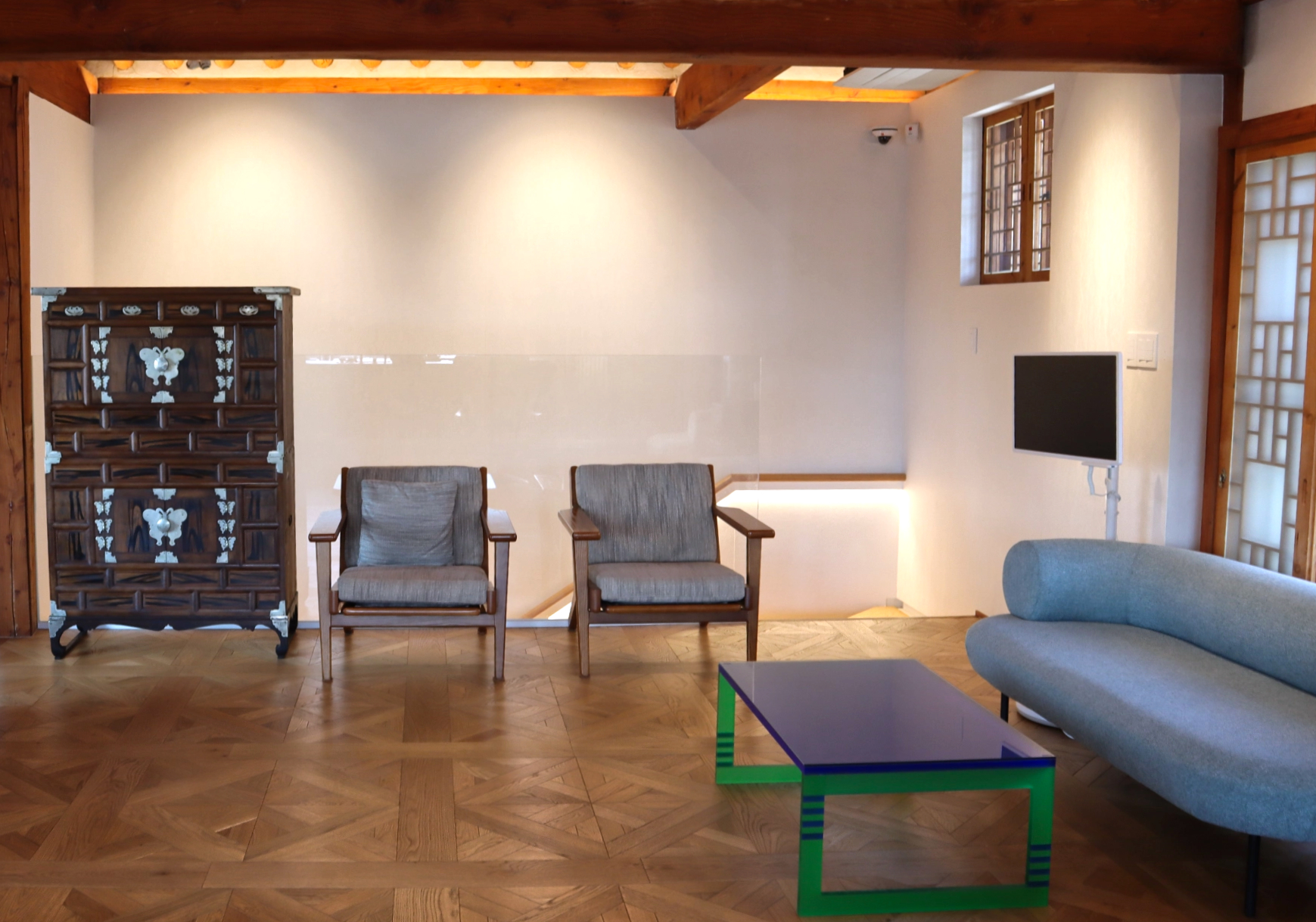
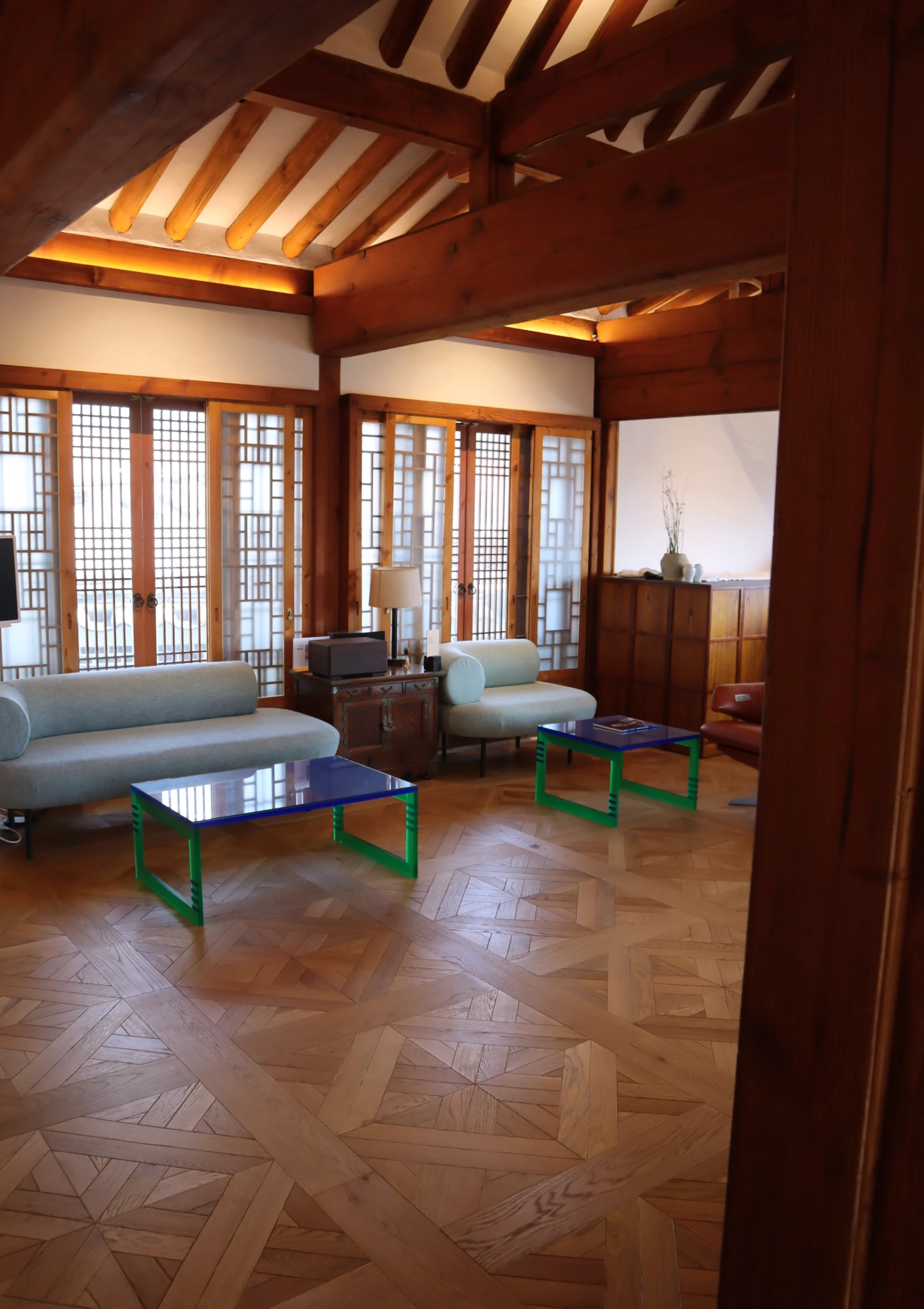
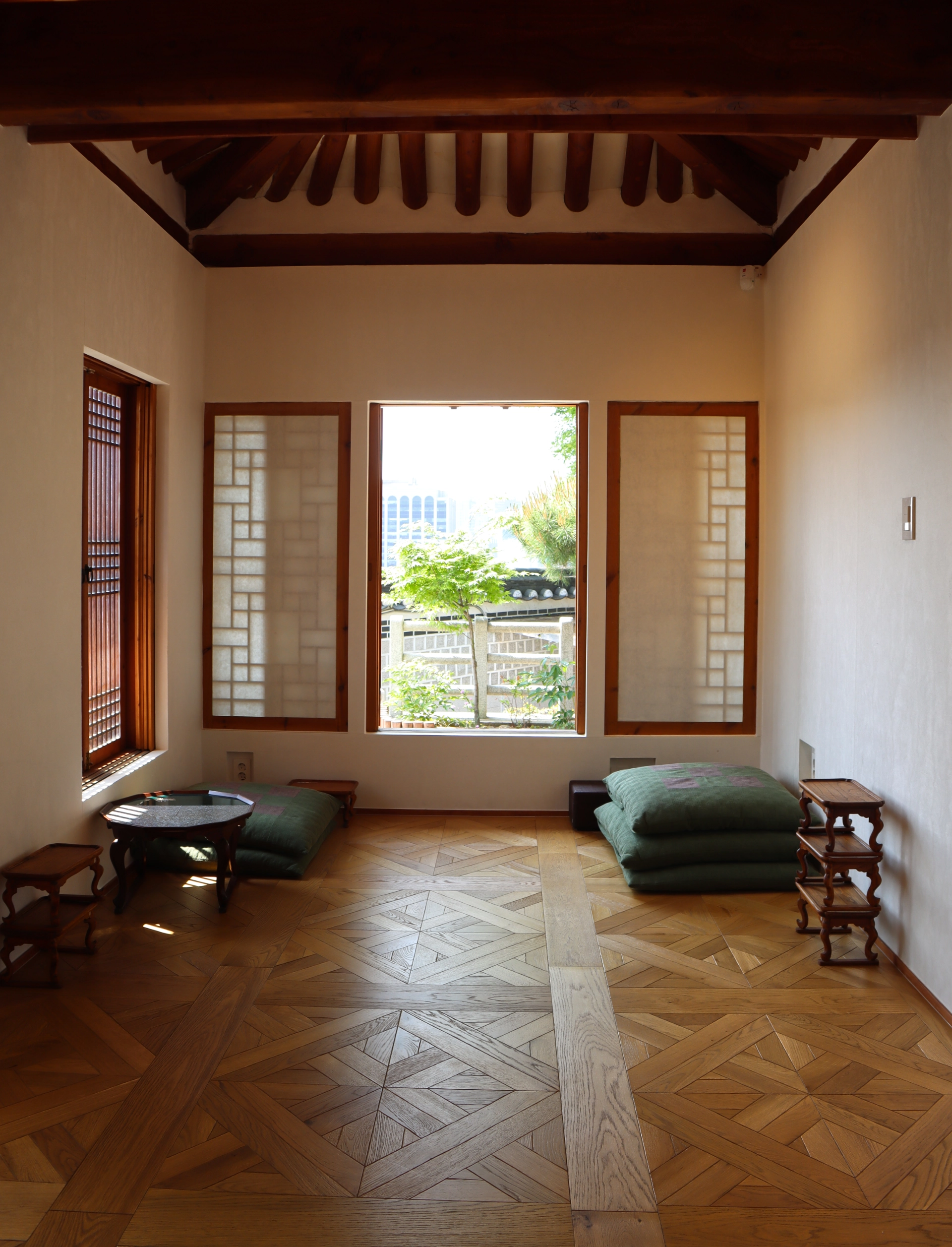

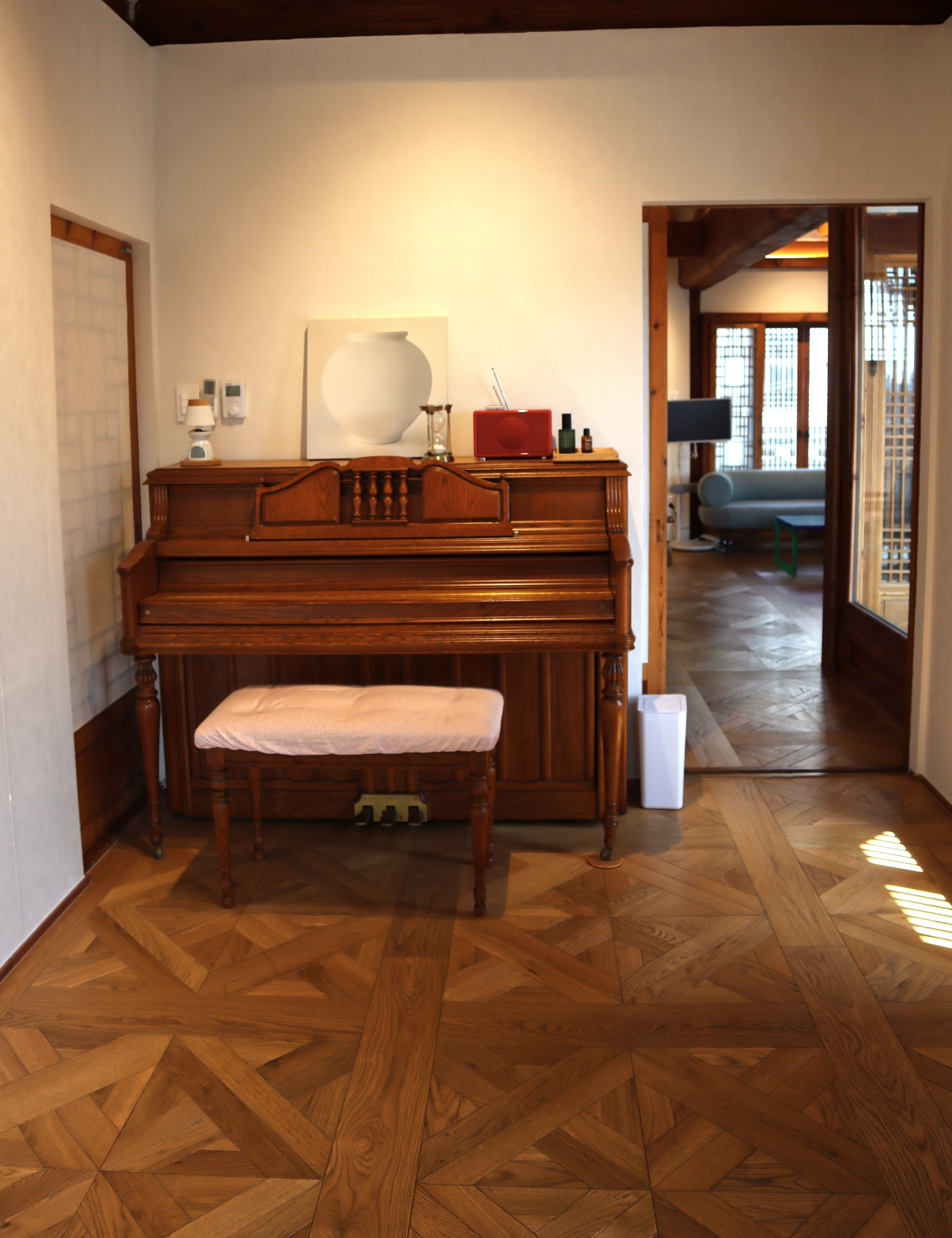
The hanok Dr. Woo pictures in New York and Boston, in a sense, was already here — on the second floor of this very building.
Question 10 · What’s NextWhat she still wants to fill this space with.
People who come here get their treatment and their experience, but in the end, they want to take something home with them. We have our own teas, and some genuinely good remedies and self-care tools for looking after your health — but since this is a clinic, I can't just leave products lying around. So I've been thinking about a space where I could present these things properly, with real sincerity.
That table pushed off to one side used to be the front concierge desk, right in the center. It was so large, with two staff seated there, that it felt a little imposing as you walked in — and it got in the way during events — so I moved it aside and opened up the middle. I'd love to turn that wall area into a space to present those things.
A garden is part of the next picture, too. Within about two years, I'd like to make it a place with flowing water. I'd love to float a few lotus flowers, even in a small way. Sitting here, there's nothing much to look at but Namsan Tower — so I'd love a little water right about there. When it rains, the water would run from one side to the other on its own. I'd rather have that than an artificial pump. Just rainwater, flowing the way it flows.
Jihoon / Original · Blossom DyeJihoon · 1960s · Original & Blossom Dye
A dense 1960s pattern of small grape clusters, carrying wishes for fertility and life. In Woojooyeon Clinic, the two treatment rooms are dressed in its two colorways — Original and Blossom Dye — creating the gentle familiarity of a grandmother’s wardrobe.
- Era
- 1960s
- Roll
- 50cm × 10m
- Material
- Non-woven paper
- Origin
- Designed in Korea
Made in Latvia
Eunju / Antique MossEunju · 1970s · Antique Moss
A 1970s pattern built on the quiet rhythm of ogee curves, softened by the mossy green of Antique Moss. It fills the consultation room with the warmth of a place near the kitchen table, where a patient can speak with ease.
- Era
- 1970s
- Roll
- 50cm × 10m
- Material
- Non-woven paper
- Origin
- Designed in Korea
Made in Latvia
Sangcheol / OriginalSangcheol · 1960s · Original
A pictorial 1960s pattern where cranes and pines unfold on the wall. Once used in place of folk paintings on folding screens or paper doors, Sangcheol now stands at the end of the first-floor corridor, framing her grandmother’s antique chest and incense burner.
- Era
- 1960s
- Roll
- 50cm × 10m
- Material
- Non-woven paper
- Origin
- Designed in Korea
Made in Latvia
Where memory becomes a remedy.
Three patterns live on the walls of Woojooyeon Clinic: Jihoon’s grapes, a prayer for fertility and life; Eunju’s green, holding the warmth of a place beside the kitchen table; and Sangcheol’s cranes and pines, chosen to honor a grandmother’s furniture. A wish — that this be not a hospital but a home — is what chose them. Two people who, in their separate corners, have each been carrying tradition into the present, found themselves a little less alone in front of that wall.
Woojooyeon ClinicWoojooyeon Clinic · Gahoe-dong
Korean Medicine · Wellness · Chuna Manual Therapy
A space built on the wish that it feel not like a hospital, but like coming home. You can experience the treatment and consultation rooms — dressed in the three restored wallpapers Jihoon, Eunju, and Sangcheol — along with the second-floor hanok space, in person in Gahoe-dong.