
Where the Painting Rests,
Where the Wallpaper Stays.Rooms shaped by
quiet thought.
At Sayuhwasil, a studio led by a Korean traditional color painter, we encountered Sookja Ivory, a restored wallpaper from the 1940s. This is a record of a warm room where paintings and wallpaper quietly reflect one another.
Taking Up the Brush,
Turning Inward.
Korean traditional color painting is a slow process of building color through layer upon layer of pigment. One layer dries, another is placed over it, then dries again. Only where time has accumulated does the work begin to feel complete. The artist thinks of that process as a kind of practice.
Here, painting is not treated simply as expression, but as a practice: a time to turn fully inward and pay attention to oneself.
The word sayu, written 思惟, carries a Buddhist sense of deep contemplation. True to its name, Sayuhwasil invites those who enter to take one more step inward. Following the presence of Sookja Ivory, a restored 1940s wallpaper placed in one corner of the studio, we visited to hear the artist’s story.
Question 01 · NameWhat does the name Sayuhwasil mean?
The name Sayuhwasil, written 思惟畫室, comes from the Buddhist idea of sayu, or deep contemplation.
I see painting as more than a form of expression. It is a practice, and I value the time it gives us to focus entirely on ourselves. I chose the name Sayuhwasil because I wanted it to mean a studio for looking inward and thinking deeply.
Question 02 · BeginningHow did you begin working in Korean traditional color painting?
My father is a Korean painting artist, so I grew up close to painting quite naturally, and eventually chose Korean painting as my major.
In particular, Korean traditional color painting depends on building color slowly, layer by layer. Through that process, not only does the painting become more complete, but I often feel more grounded as well. That way of working suits me, so I have continued to focus on traditional color painting.
Rather than a painting that demands attention,
a painting that settles into a room like wallpaper.
Question 03 · IntentionWhat do you care about most deeply when you work?
Rather than making paintings that are forceful or immediately eye-catching, I aim for works that settle naturally into a room, almost like wallpaper.
I work with the hope that a painting can live quietly within everyday life, staying with people for a long time rather than constantly demanding their attention.
Question 04 · SharingWhat led you to begin sharing outline drawings?
I began sharing outline drawings — the preparatory templates artists use as a base for their compositions — because I wanted to help people who were interested in Korean traditional color painting but felt unsure or lacked materials. Many templates sold today are based on old paintings, but as an extension of my own work, I wanted to share drawings that are not easy to come across.
I also wanted more people to work alongside one another as equals, beyond the usual student-and-teacher relationship.
Question 05 · AtmosphereWhen you first imagined Sayuhwasil, what kind of atmosphere did you want to create?
When I first imagined Sayuhwasil, the most important thing was warmth.
I wanted people to feel at ease even on their first visit, as if the room were welcoming them like a place they had known for a long time. Rather than making an overly decorated space, I wanted an atmosphere where plants and objects could sit naturally together and people could stay comfortably.
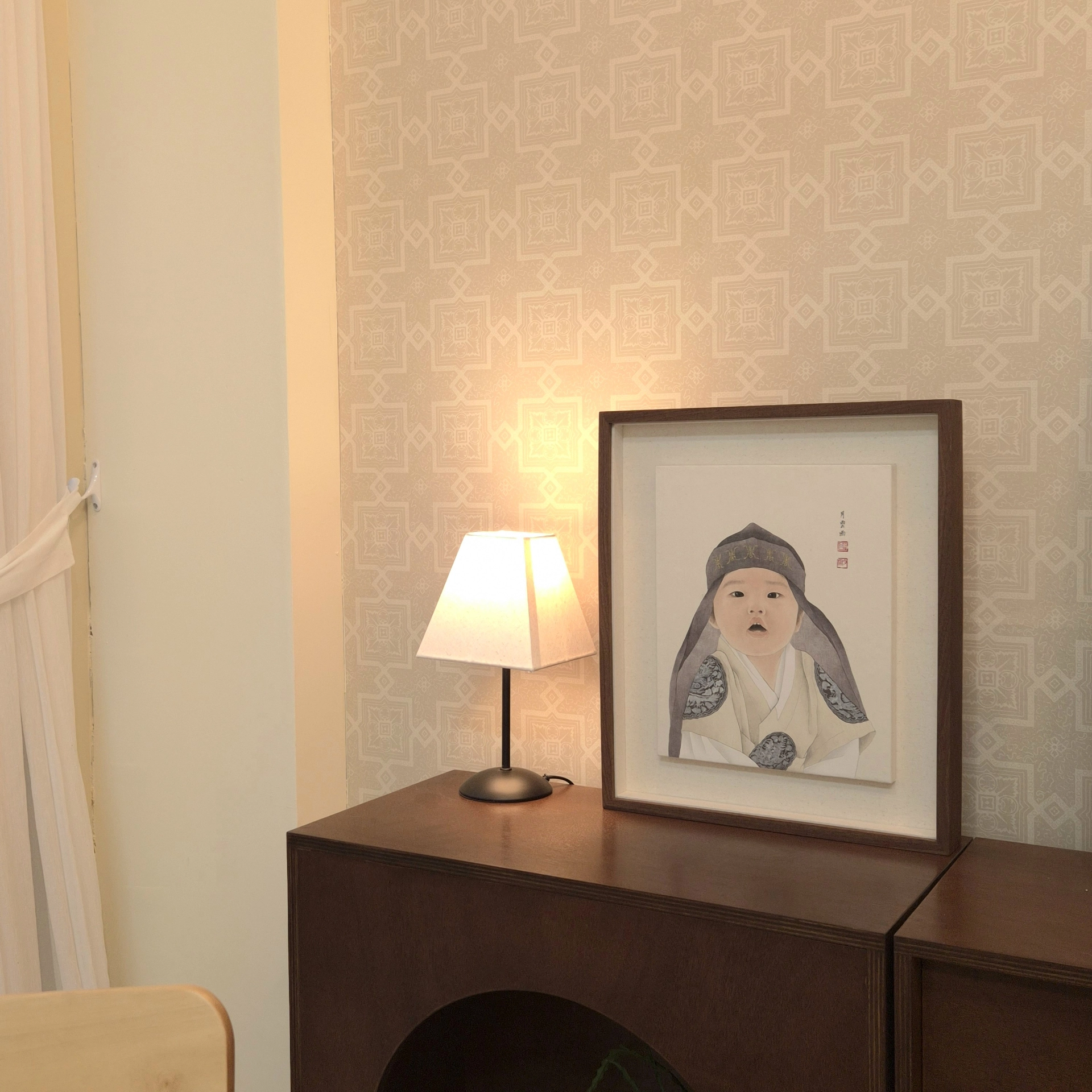
Question 06 · EncounterHow did you first come across GOSATÉ wallpaper?
Before I moved the studio, one of my students was working on restoring and producing old wallpaper. I remember it was still in the early stages as a business, but through our conversations I got to hear firsthand why the wallpaper was being restored and how it was being made.
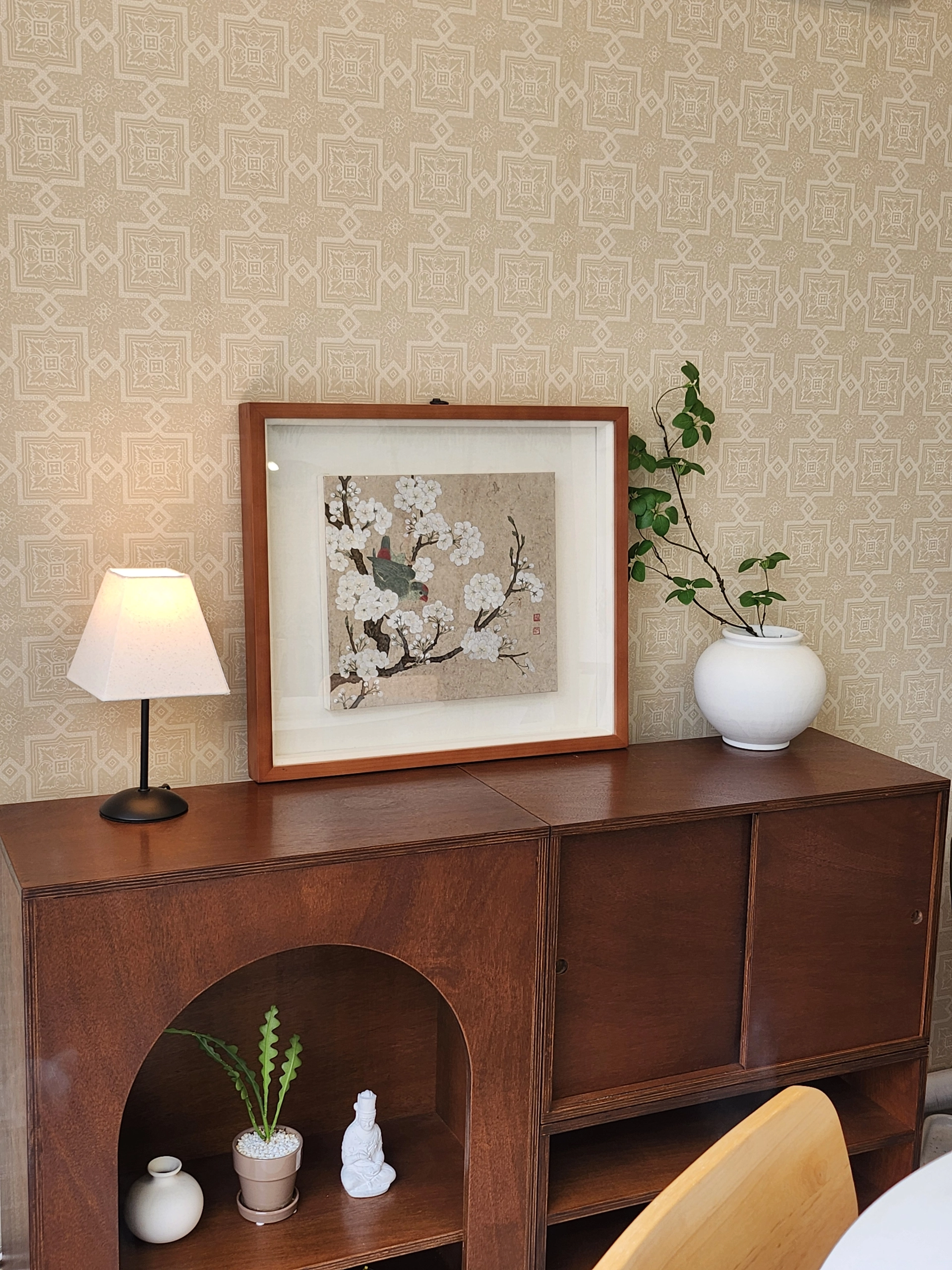
Once I understood the process and the meaning behind the work, I saw the wallpaper differently. It felt like one of the elements my studio truly needed. I wanted visitors to feel the space was familiar rather than strange, and the wallpaper fit that intention so naturally that I decided to use it.
After the wallpaper was installed,
the comment I heard most was, “It suits the studio so well.”
Question 07 · ResponseHow did people respond after seeing the space?
After the wallpaper was installed, the response I heard most often was that it suited the studio beautifully.
Many people also said the space felt more refined. Since warmth was what I had hoped for from the beginning, I felt that the overall harmony of the room matched the direction I had intended.
Question 08 · Work and SpaceHow does the background of the space affect the artworks?
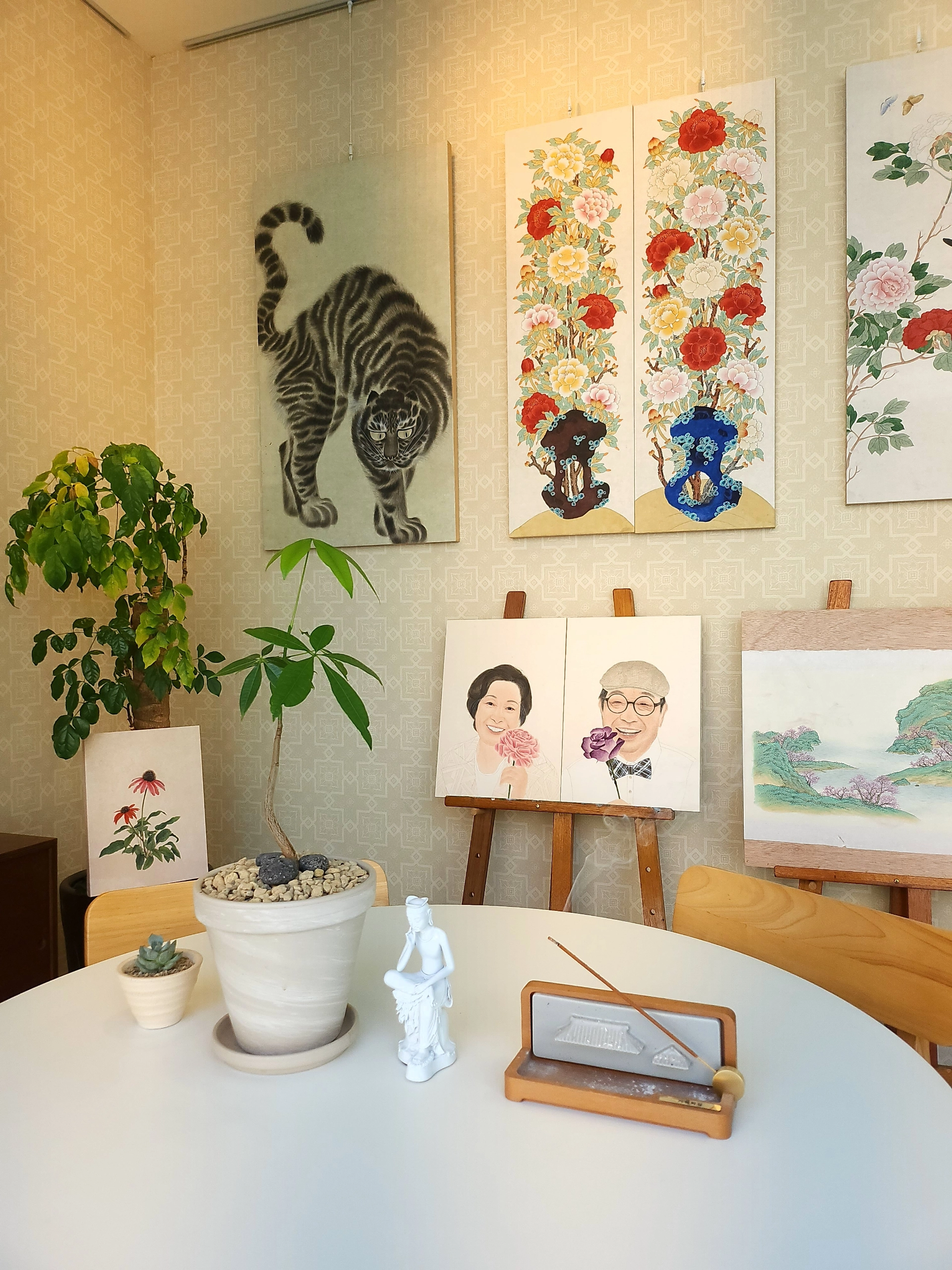
I did not install wallpaper in the area where I paint. Instead, I used it in the space where works are hung and arranged. I call that room Sodamsil, meaning a small room made for quiet conversation.
A patterned wallpaper could easily feel too decorative, but this one adds a sense of an earlier time in a natural way and sits well with the artworks. As a result, it helps the paintings stand out more clearly within the space.
Question 09 · VisitorsWho tends to love this space most?
Perhaps because the people who visit the studio often share a similar sensibility, people of all ages tend to enjoy the space.
Many people especially say that choosing restored wallpaper feels thoughtful and tasteful, and I often hear that the paintings and the mood of the room come together in an elegant way.
Question 10 · NextWhat is next for Sayuhwasil?
Sayuhwasil is planning to move into a larger space.
When we move, I plan to extend the wallpaper beyond the current Sodamsil area and use it in both Sodamsil and the studio’s retail corner.
For both artwork and space, atmosphere matters most to me. Wallpaper deepens that atmosphere and increases the synergy with the paintings. I hope to expand the studio further in that direction.
Sookja / IvorySookja · 1940s · Ivory
A pattern GOSATÉ restored from wallpaper once used in Korean homes in the 1940s. Its small repeating motif creates a quiet, warm rhythm and naturally complements the sense of an earlier time in Korean traditional color painting. This is the wallpaper that became the backdrop of Sayuhwasil’s Sodamsil.
- Era
- 1940s · Late colonial-era Korea
- Roll
- 50cm × 10m
- Material
- Non-woven paper
- Origin
- Designed in Korea
Made in Latvia
Paintings Made to Stay,
Wallpaper That Feels as if It Always Has.
The paintings of Sayuhwasil are made not to seize attention, but to settle into a room. Beside them, Sookja Ivory brings the texture of the 1940s into the present. Together, these two layers of time shape the studio’s atmosphere and make the visitor pause for a moment. As Sayuhwasil prepares to expand into a larger space, we hope this quiet harmony will continue naturally into its next rooms.
Sayuhwasil思惟畫室 · Studio of Contemplation
Korean color painting · Minhwa · Portraiture
On the artist’s channels, you can see more of the works that quietly settle into daily life, along with the rooms where those works live. New paintings, shared outline drawings, and studio updates are posted there.