
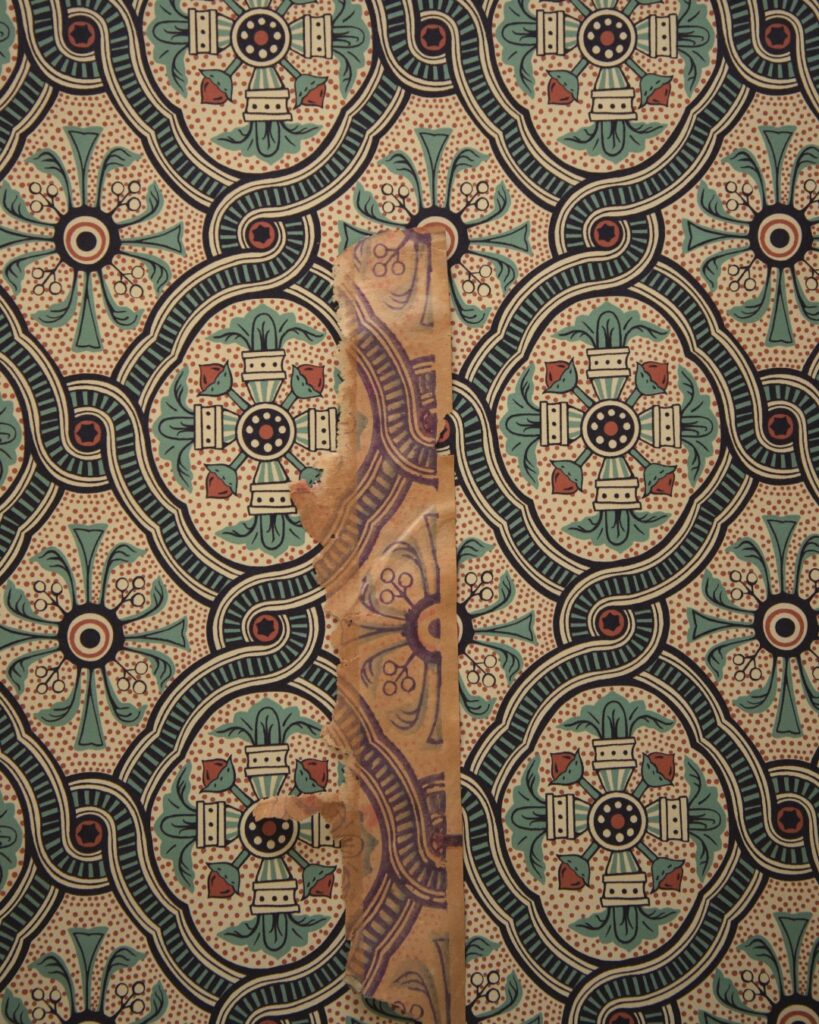
(Photo by Gosate 2025)
1. The Design’s Origin: Roman Mosaic, Woven in Waves
A Lineage from Rome to Russia
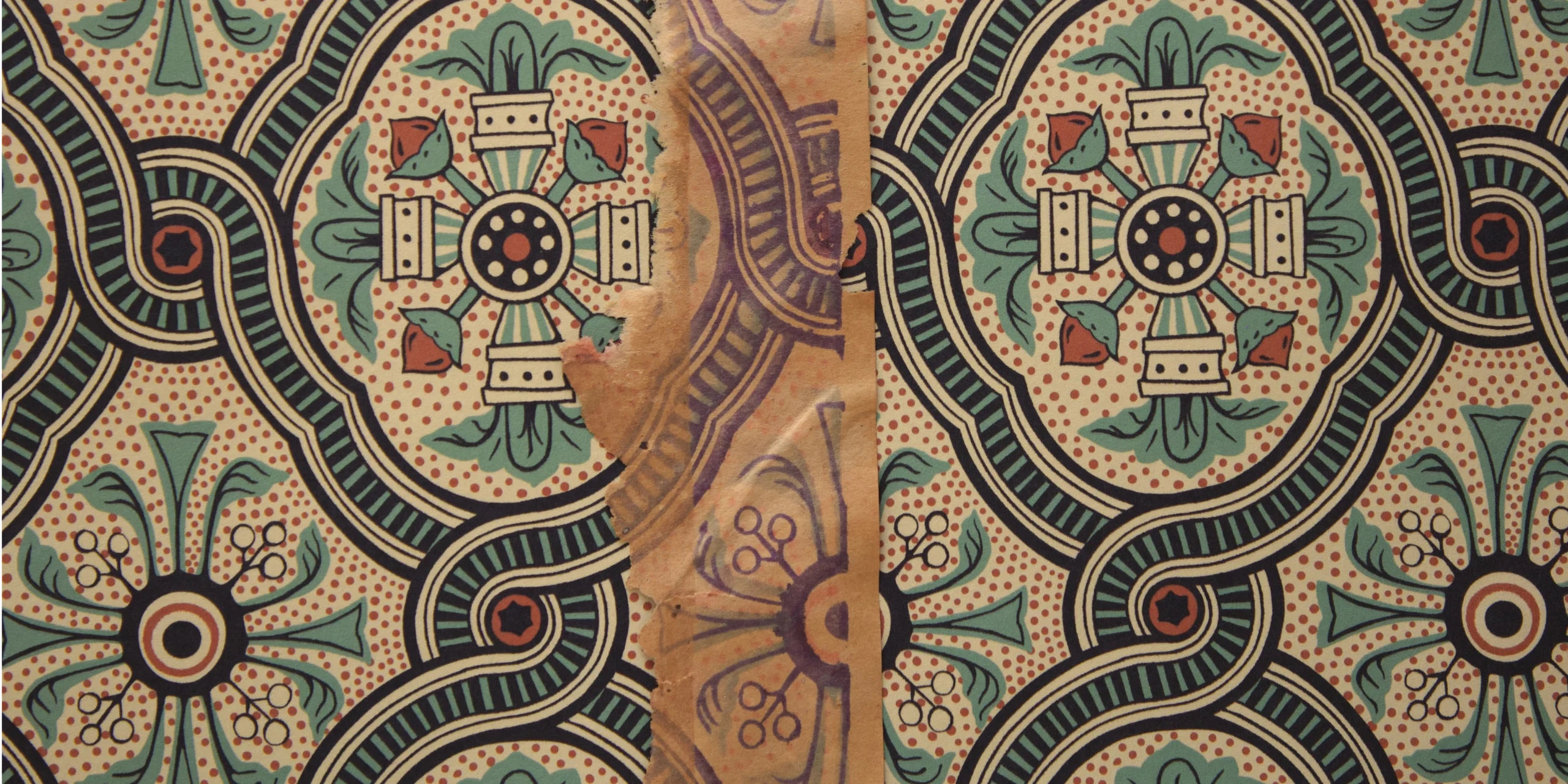
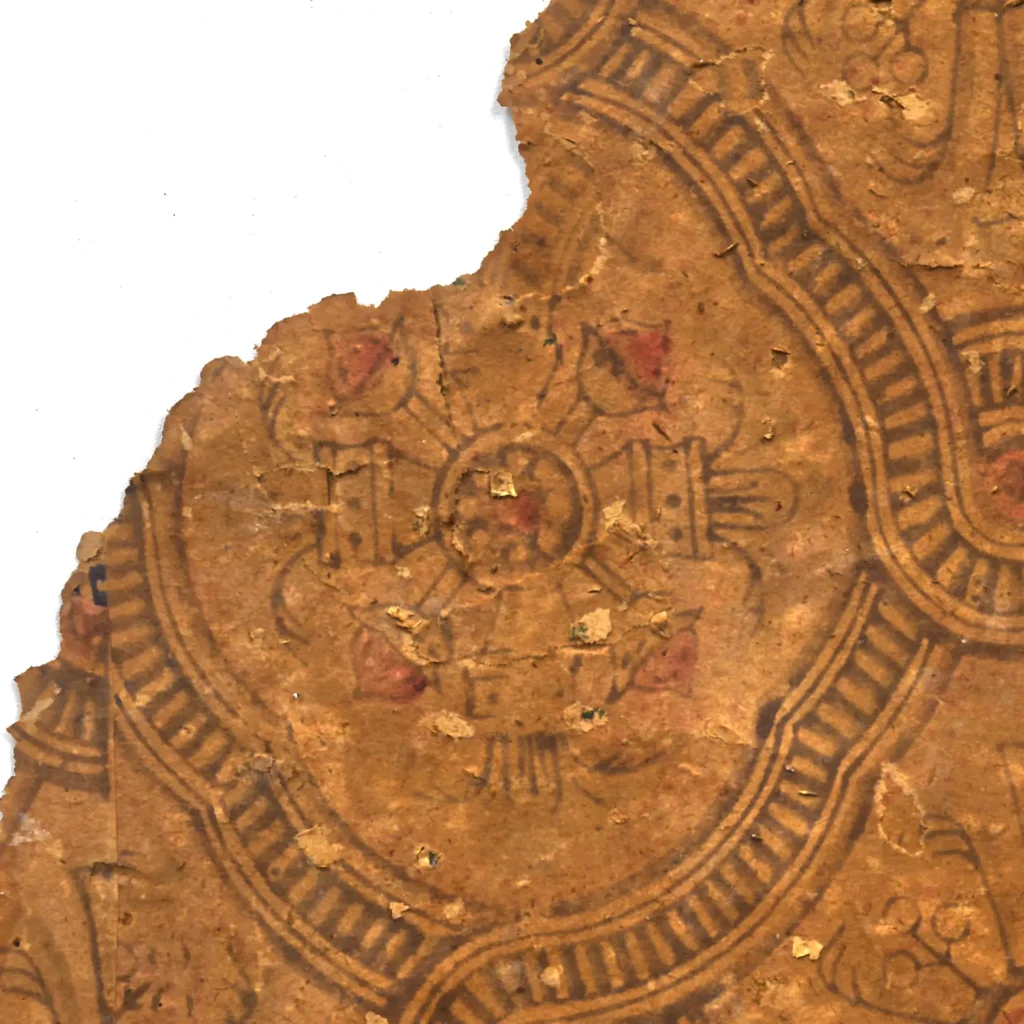
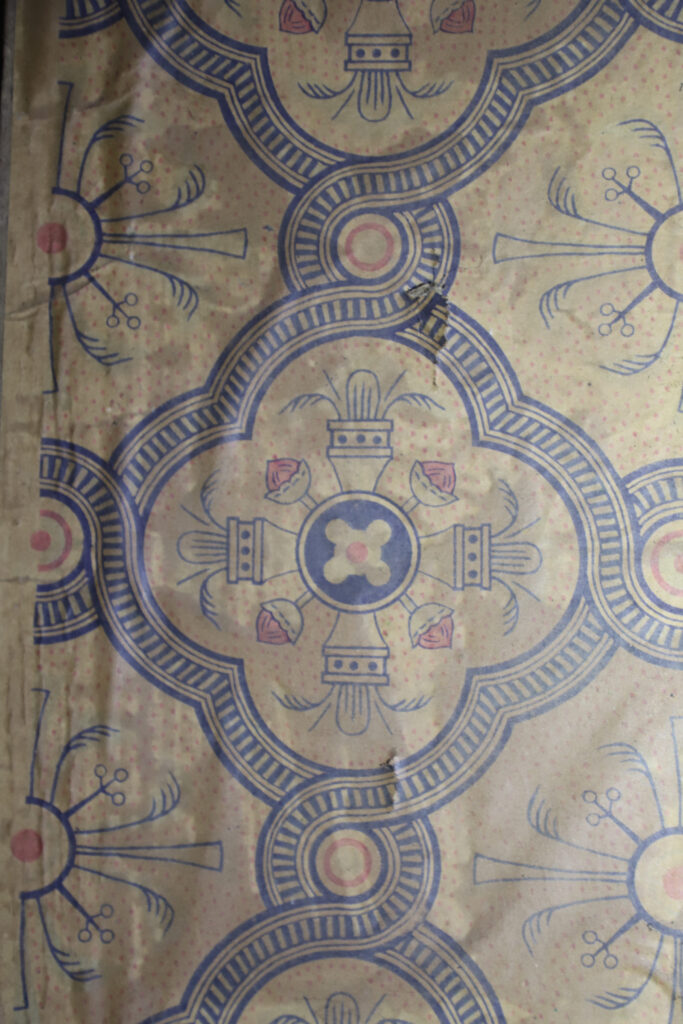
The first thing that overwhelms the eye in this wallpaper is the black waves flowing across the entire surface. These boldly drawn undulating lines are not mere decoration — they function like the grout lines of a Roman or Byzantine floor mosaic, linking oval and octagonal medallions into a vast interlocking grid. The triple structure of outer band, middle band, and inner disc is a classic grammar found throughout ancient Mediterranean mosaic work.
The Journey of the Guilloche
This twisted wave pattern is known as the guilloche. In Roman mosaics, it served two purposes: as a frame enclosing the central scene (mythological figures or geometric ornament), and as a border connecting separate panels. After the fall of Rome, this decorative grammar passed to the Byzantine Empire, where it continued to adorn the floors and walls of churches.
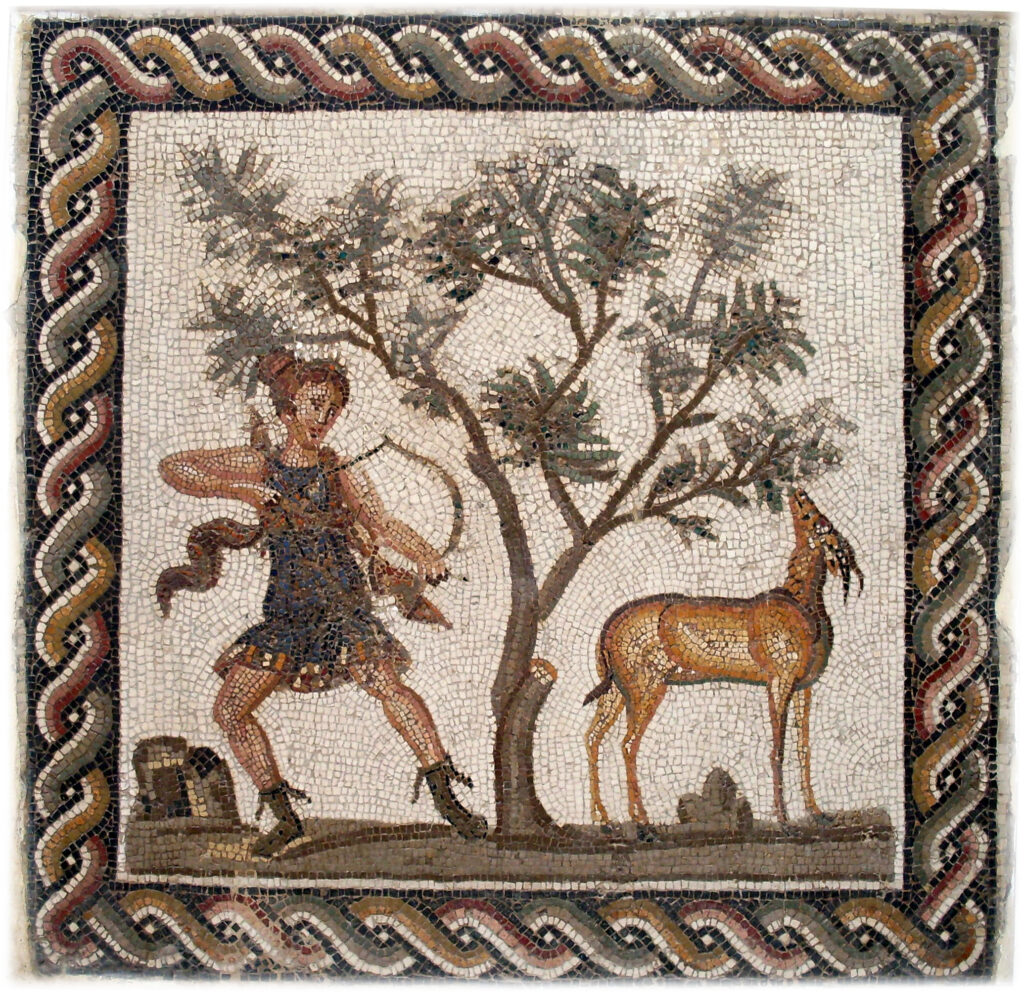
Even after Byzantium’s decline, the tradition did not disappear. As the Russian Orthodox Church inherited the religious and cultural legacy of Byzantium, the guilloche continued in Russian Orthodox church frescoes, icons, and decorative textiles. The pattern also appears in 17th-century Ottoman textiles — evidence that Byzantine influence spread across the Eastern world.
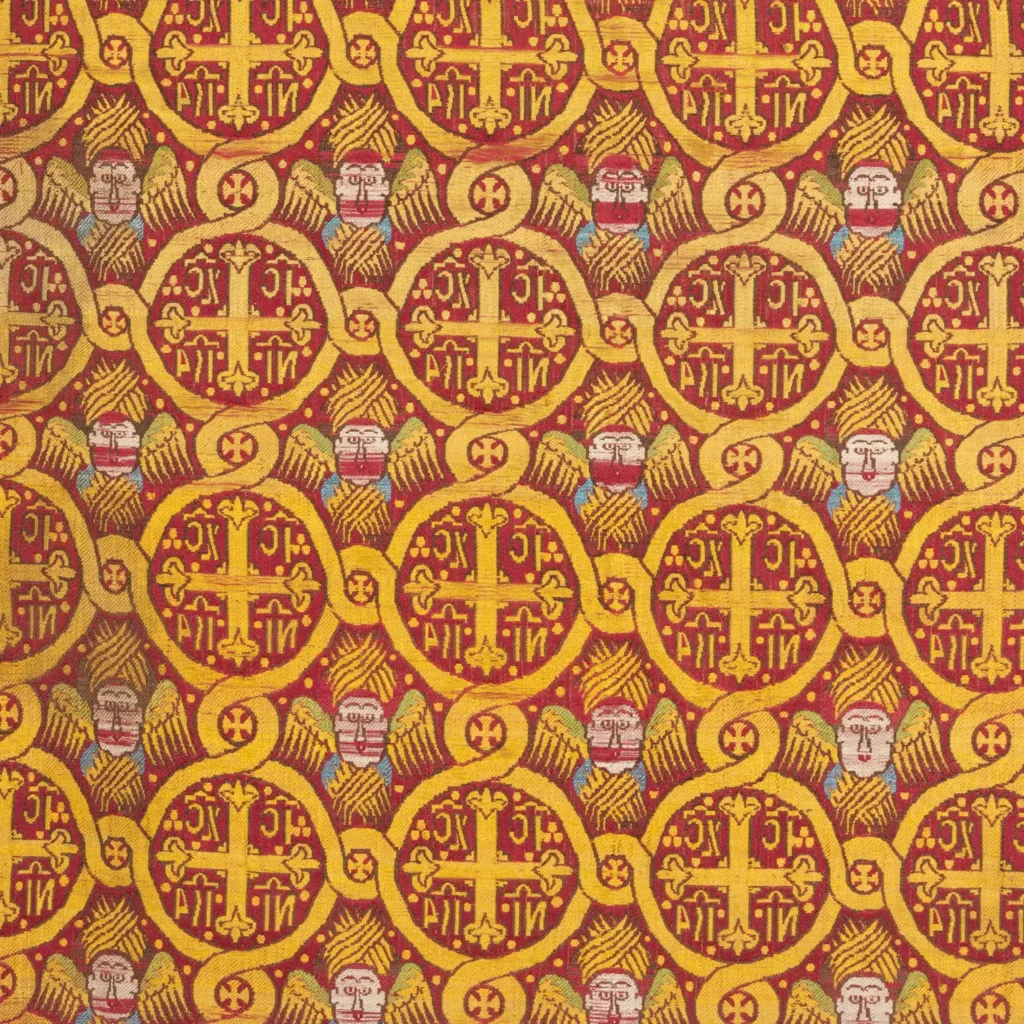
The Metropolitan Museum of Art, New York
The Illusion of Texture
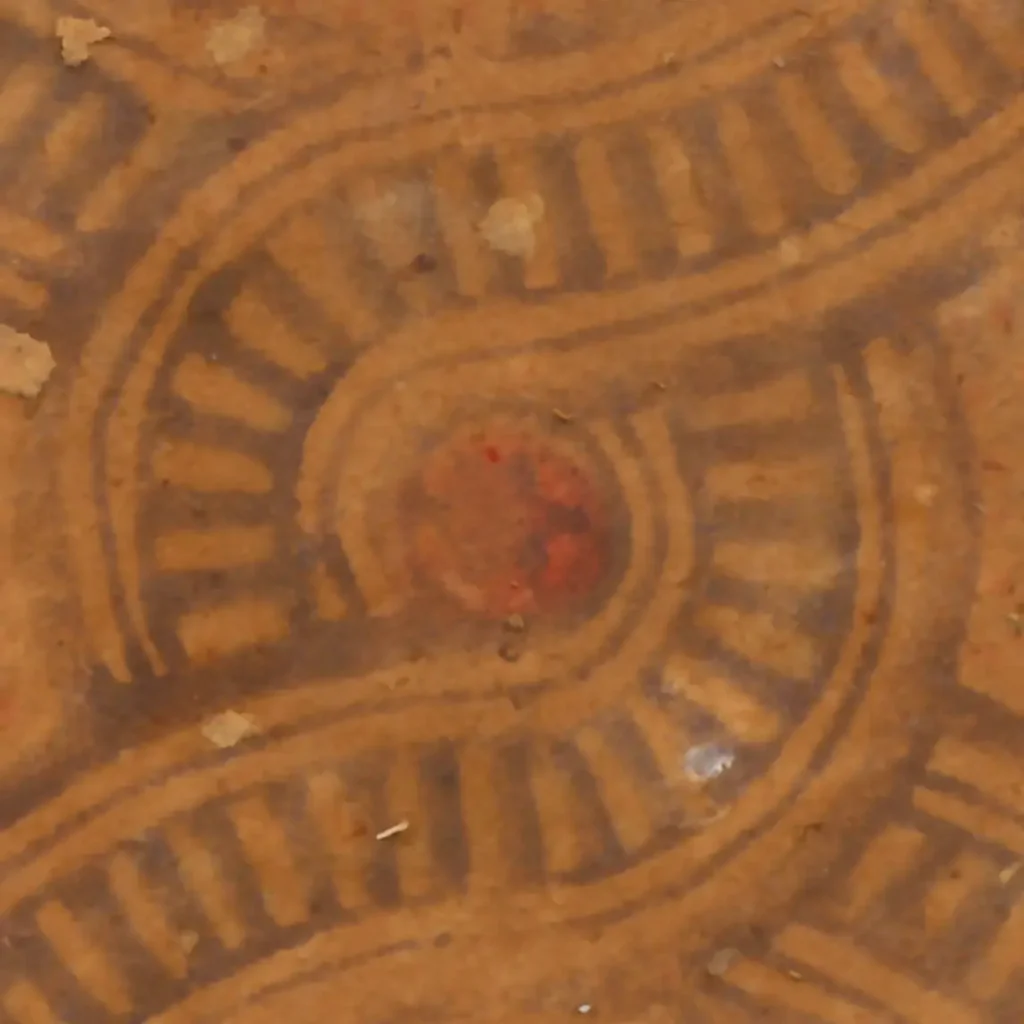
The interior details follow this same mosaic illusion faithfully. The fine red dots filling the spaces between medallions are a device imitating the granular texture of stone mosaic or embroidered cloth through print. From a distance this wallpaper reads like a woven carpet or solid tile; up close it dissolves into scattered points of ink — a visual duality that is the mark of the finest printing craft.
2. A Geographical Hypothesis: The Shadows of Manchuria and Russia
A Pattern Rare in the Western Canon
What is striking is that this type of guilloche medallion pattern is almost never found in Western wallpaper. Despite the Roman-Byzantine mosaic being a European heritage, this pattern was not part of the mainstream in 19th–20th century British, French, or American wallpaper design. The West favored damask, floral, stripe, and Neo-Gothic patterns; the guilloche was used primarily in architectural moldings and cornices, rarely as a wallpaper motif in its own right.
Why, then, did this pattern appear as wallpaper in Korea around 1945?
The Manchurian Connection
One hypothesis is the infiltration of Russian aesthetic sensibility via Manchuria. The Manchukuo state, which existed from 1932 to 1945 as a Japanese puppet state, shared a long border with Russia and the Soviet Union. Its cities — Harbin above all — housed large Russian emigrant communities, and Russian Orthodox churches were built there. In this region, Russian aesthetic sensibility and Japanese production technology coexisted.
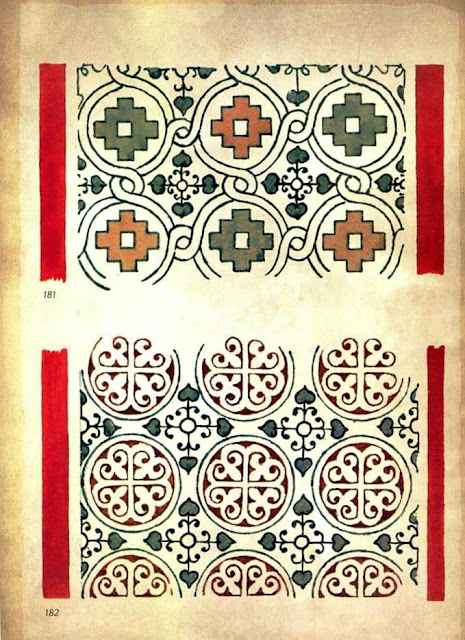
Japan supplied wallpaper simultaneously to Manchukuo and Joseon. If Japanese wallpaper manufacturers were designing with the Manchurian market in mind, they may well have incorporated Byzantine-style medallion patterns familiar to Russian Orthodox cultural circles — and the same designs could have circulated into Joseon through the same distribution networks.
This remains a hypothesis. There is no direct documentary evidence. But several circumstantial facts support it:
1. Rarity in Western wallpaper — suggesting this pattern came from somewhere other than the West
2. The certainty of the Byzantine-Russian connection — the guilloche medallion is a hallmark of Russian Orthodox decoration
3. The geographic proximity of Manchuria and Russia — significant Russian-speaking populations in Harbin and surrounding cities
4. Japan’s simultaneous supply to Manchuria and Joseon — shared production facilities, shared distribution networks
(Source: Collection of Gosate)
3. The Semiotics of War: Medals, Gears, and Targets
Military Motifs Within the Medallion
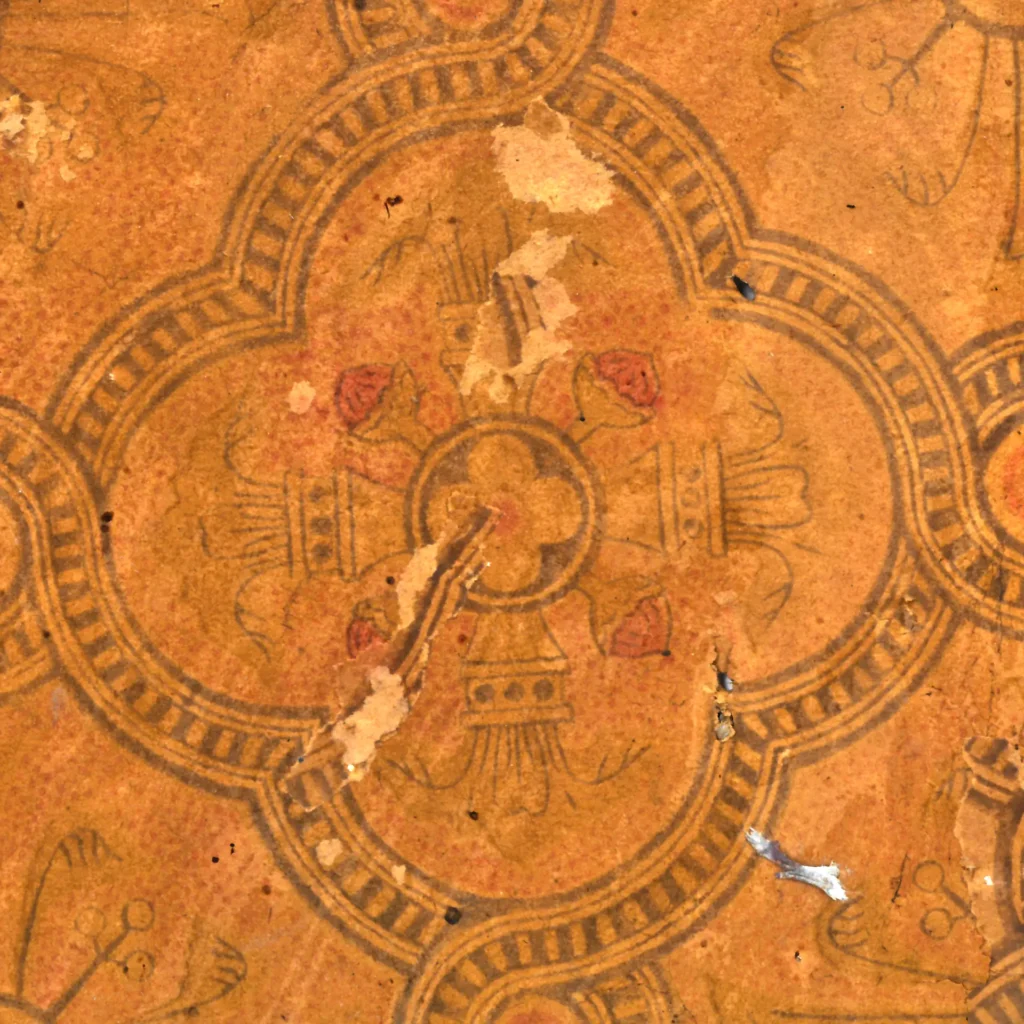
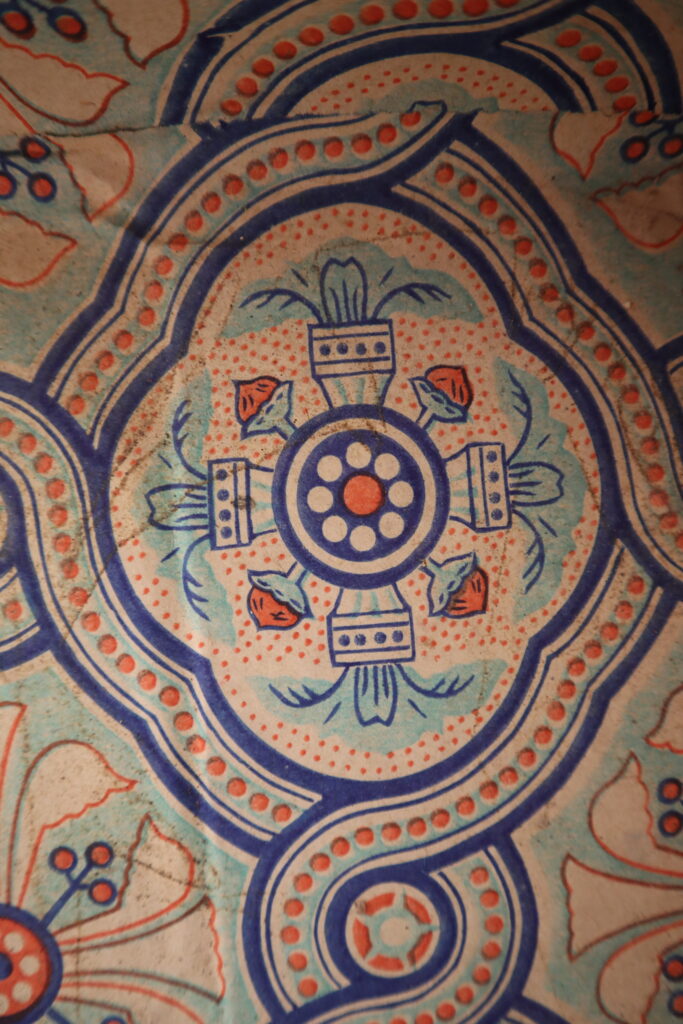
Look closely at the center of each medallion and elements emerge that differ from the conventional flowers or fruits of decorative tradition. Most prominent is the five-pointed star. From the 19th century onward, the five-pointed star was widely used in military insignia and national symbols — both the Soviet Union and the U.S. military used it at the time.
The four forms surrounding the central rosette appear to be simplified buds or torches, but their mechanical treatment evokes gears or cogs. The circular structures at the ends of the cross arms suggest a target or gunsight.
(Source: Collection of Gosate)
3. The Semiotics of War: Medals, Gears, and Targets
Military Motifs Within the Medallion
These motifs are not unique to this wallpaper. Similar patterns appear in multiple Korean wallpapers produced around 1945, identified through GOSATE’s comparative analysis of its collection:
- Repeated use of five-pointed and six-pointed stars
- Mechanical rosettes evoking gears or cogs
- Concentric circular target-like compositions
- Medallion structures resembling military medals or decorations
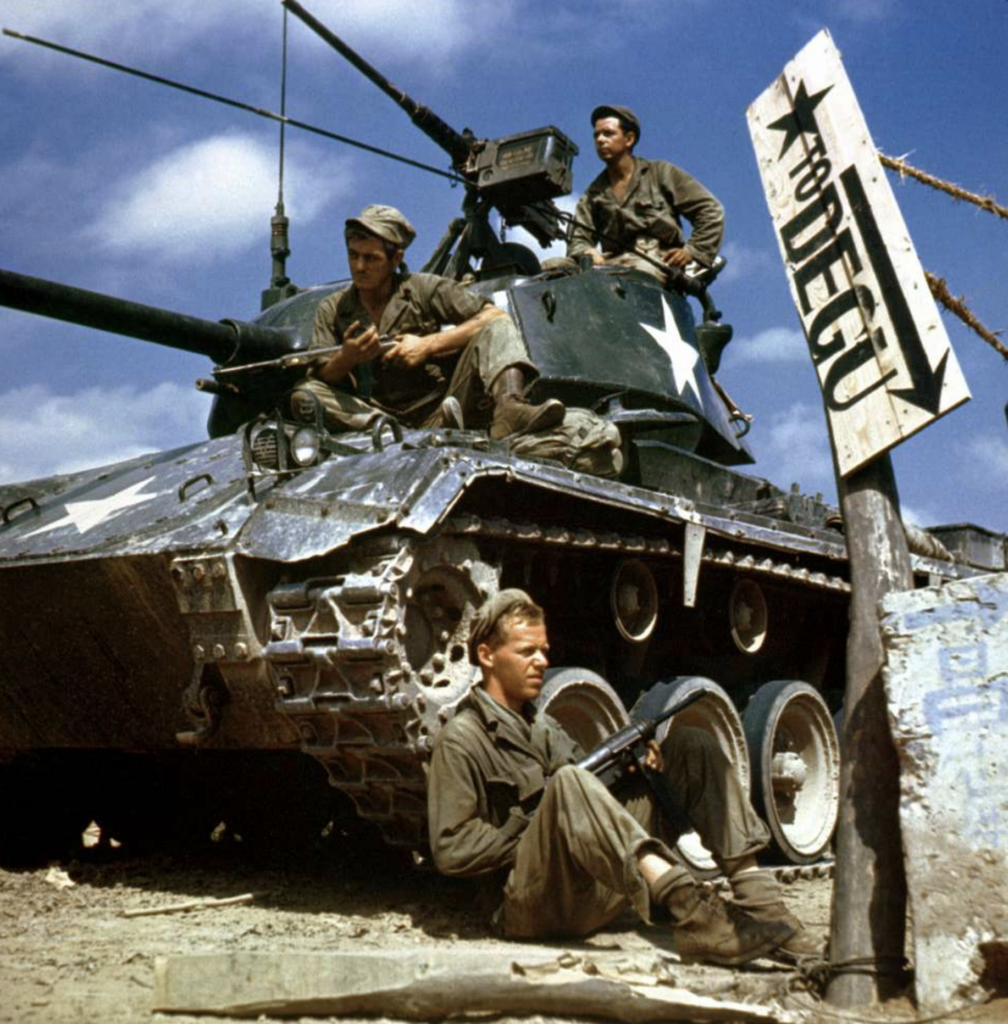
Based on comparative analysis across wallpapers from the same period in GOSATE’s collection, it is reasonable to interpret these as motifs drawing on the visual language of war. The early-to-mid 1940s saw the Second World War and the Pacific War in full progression, with Japan in a state of total mobilization. War was not only fought at the front — it militarized and industrialized the whole of society. The imagery of factories, machines, and armed forces permeated everyday life.
(Source: Collection of Gosate)
(Photo by Gosate 2026)
(Photo by Gosate 2023)
The Militarization of Ornament
It is unlikely that any designer explicitly set out to “draw war.” But the most powerfully and repeatedly encountered visual language for people living through that era was the iconography of military and industrial life: medals, insignia, gears, targets, stars.
In the process of simplifying traditional floral ornament, designers almost certainly drew naturally on the forms they knew best — mechanical, geometric, martial. The result: the flower within the medallion became a cogwheel; the decorative star became a soldier’s star; the circle became a target.
(Source : wikimedia common, public domain)
4. From Byzantium to the Korean War: The Long Journey of a Design
This wallpaper holds multiple layers of history. The long trajectory of the guilloche pattern from Rome through Byzantium to Russia. The possible infiltration of Russian aesthetic sensibility via Manchuria. And the military and mechanical traces left on decoration by the wartime 1940s.
All of these elements converged in the specific time and place of Korea around 1945, crystallized into a single sheet of wallpaper. The precise route by which it arrived remains unclear. But what is certain is that this pattern is almost never found in the Western decorative canon — and that it stands at the intersection of Eastern Orthodox cultural tradition and the visual language of a world at war.
From the Mediterranean through the Black Sea to Manchuria and Joseon, through the signs of war — the waves and medallions pressed onto this sheet of paper are the traces of a cultural and historical journey that no single person fully intended.
Copyright © 2026 Gosate Archive.
All Rights Reserved.
- All text and scholarly analysis are the intellectual property of the author.
- All photographs marked “Gosate Collection” or “Photo by Gosate” are the copyright of GOSATE. Reproduction, copying, or distribution without prior consent is strictly prohibited.
- Historical images cited from external sources are subject to their respective copyright holders or public domain provisions.
Inquiries: contact@gosate.kr