Printed in Gold and Relief: The Embossed Damask of the Early 1970s
1. Anatomy of a Design: A 'Paper Brocade' Embroidered in Gold Before the eye has fully registered this wallpaper, the impression arrives first: this looks like fabric. What covers the ground is a classic…
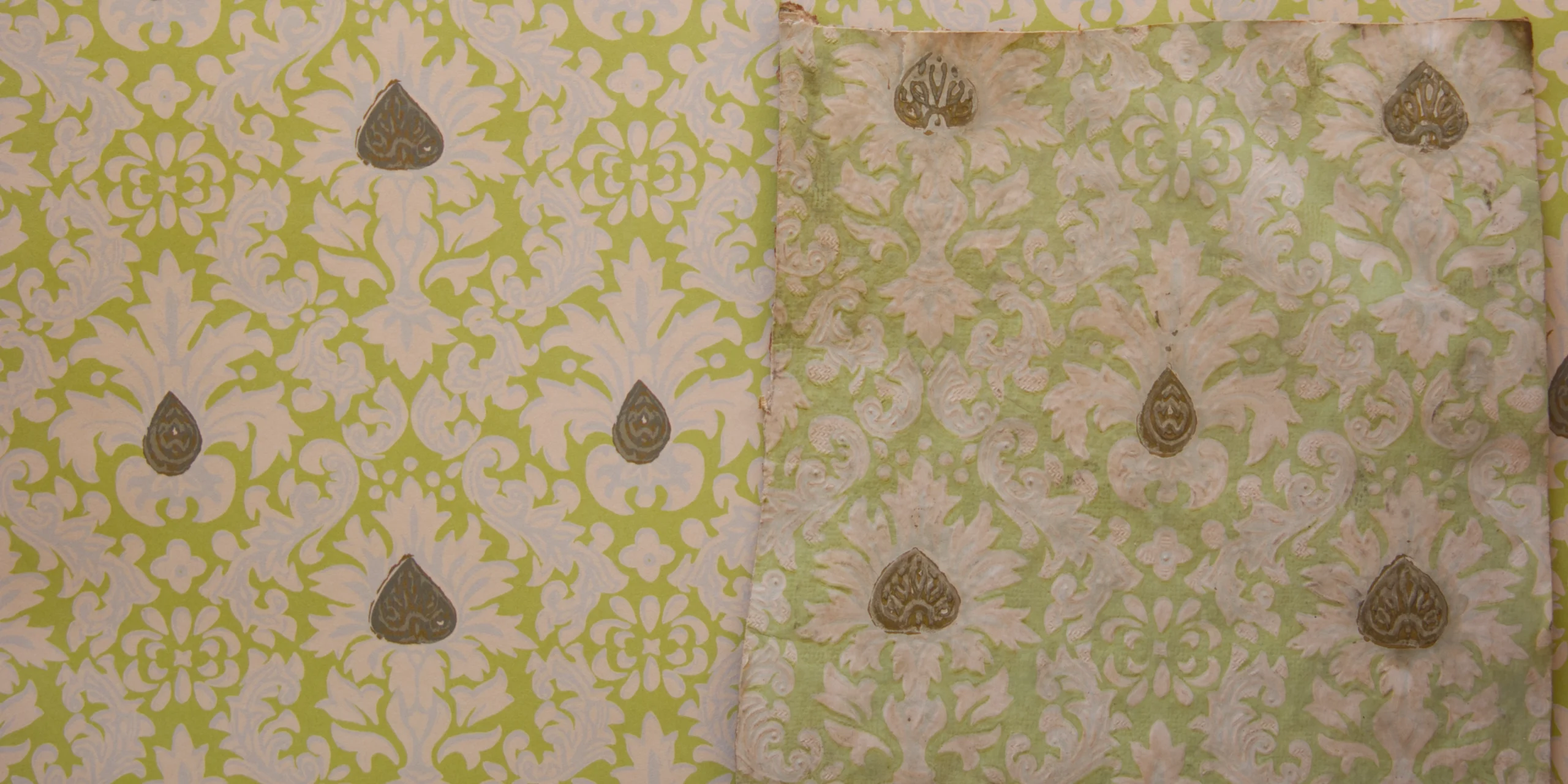
1. Anatomy of a Design: A 'Paper Brocade' Embroidered in Gold
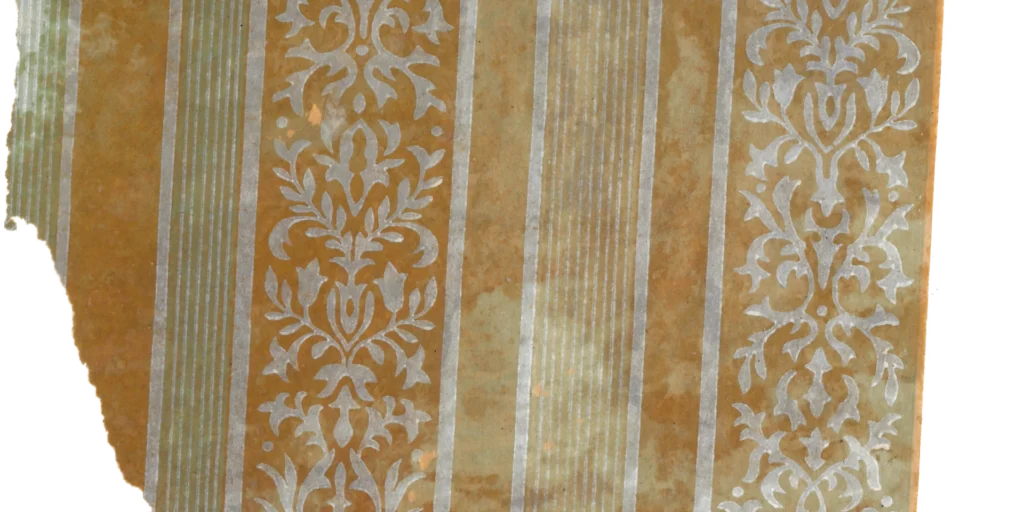
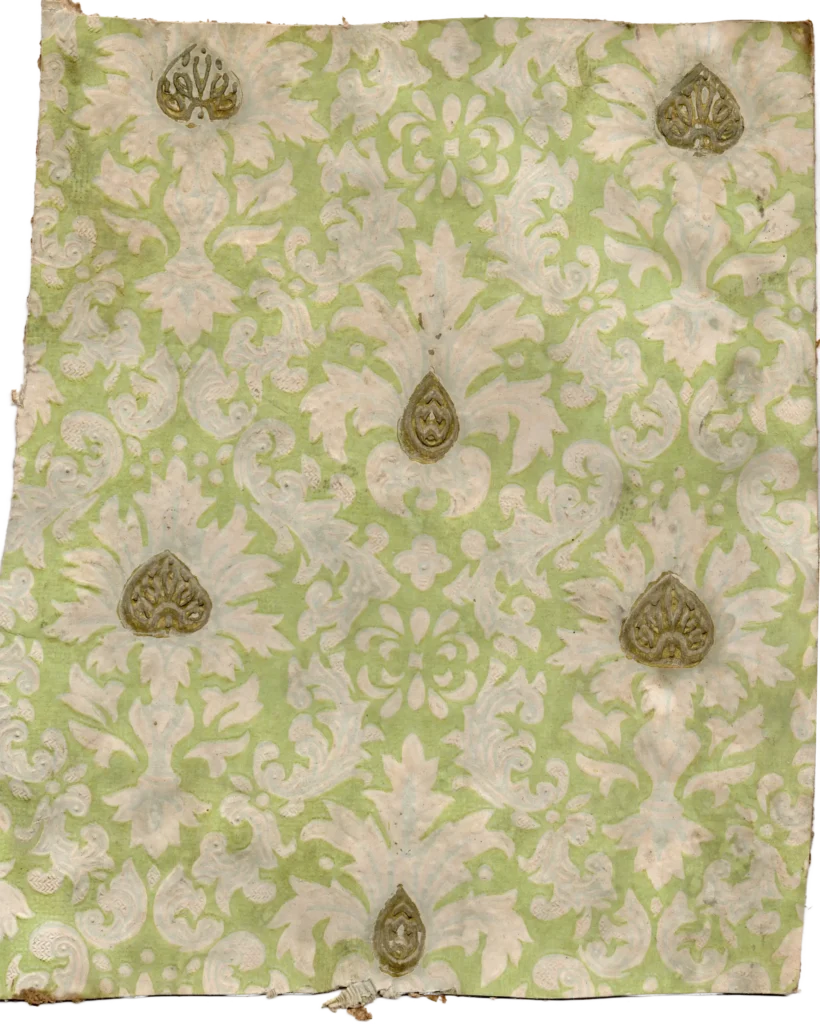
Before the eye has fully registered this wallpaper, the impression arrives first: this looks like fabric. What covers the ground is a classic European damask-lineage vine motif. A central floral and leaf cluster is embraced by S-curved acanthus leaves in bilateral symmetry, with small fruits connecting above and below to form an unbroken botanical ribbon.
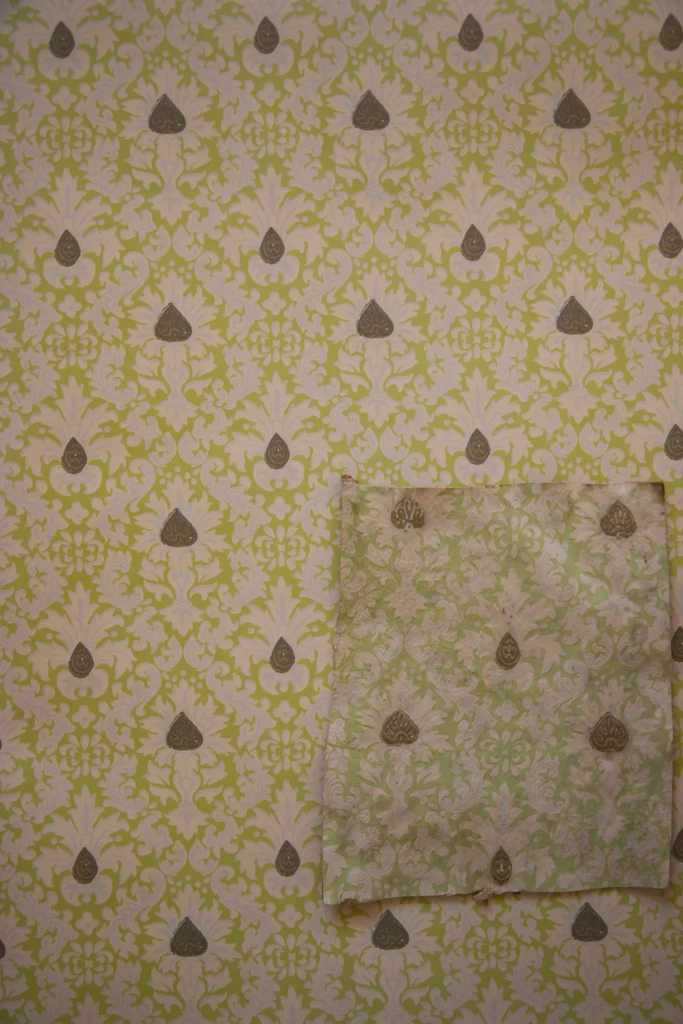
Before the eye has fully registered this wallpaper, the impression arrives first: this looks like fabric. What covers the ground is a classic European damask-lineage vine motif. A central floral and leaf cluster is embraced by S-curved acanthus leaves in bilateral symmetry, with small fruits connecting above and below to form an unbroken botanical ribbon.
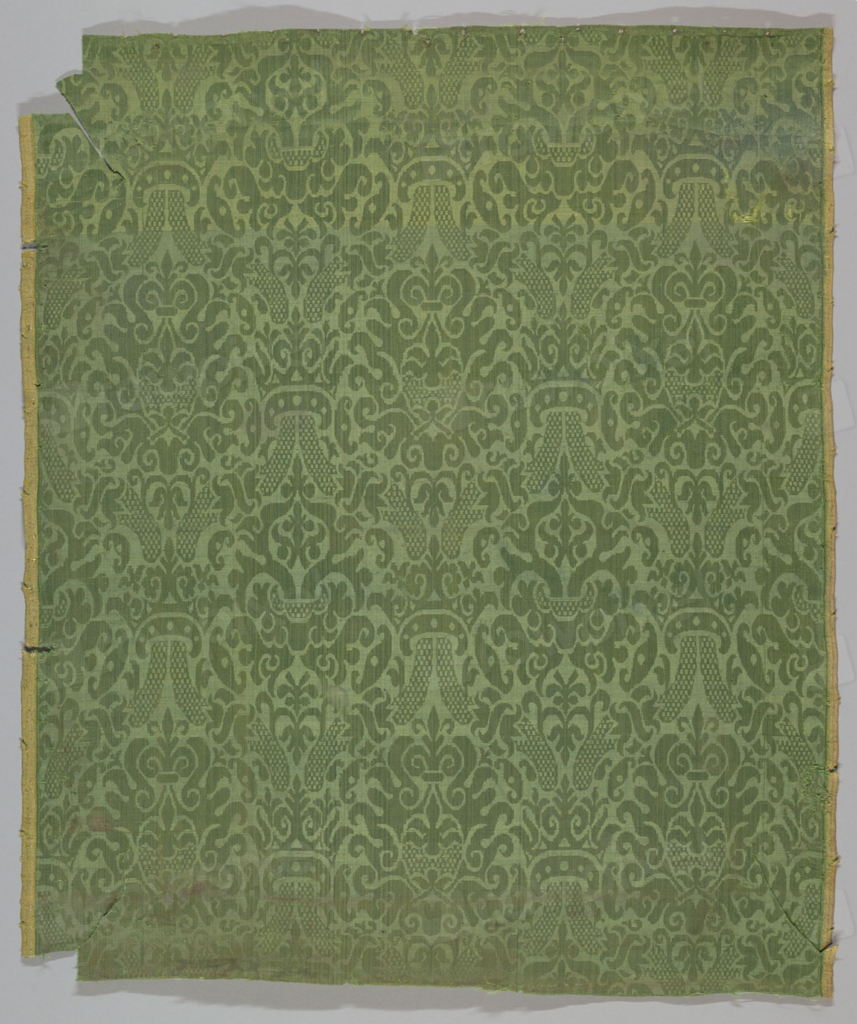
(Source : Rawpixel, “Fragment”, public domain image, https://www.rawpixel.com/image/8848765/fragment)
2. A Technology Evolves: From Drawn Texture to Felt Texture
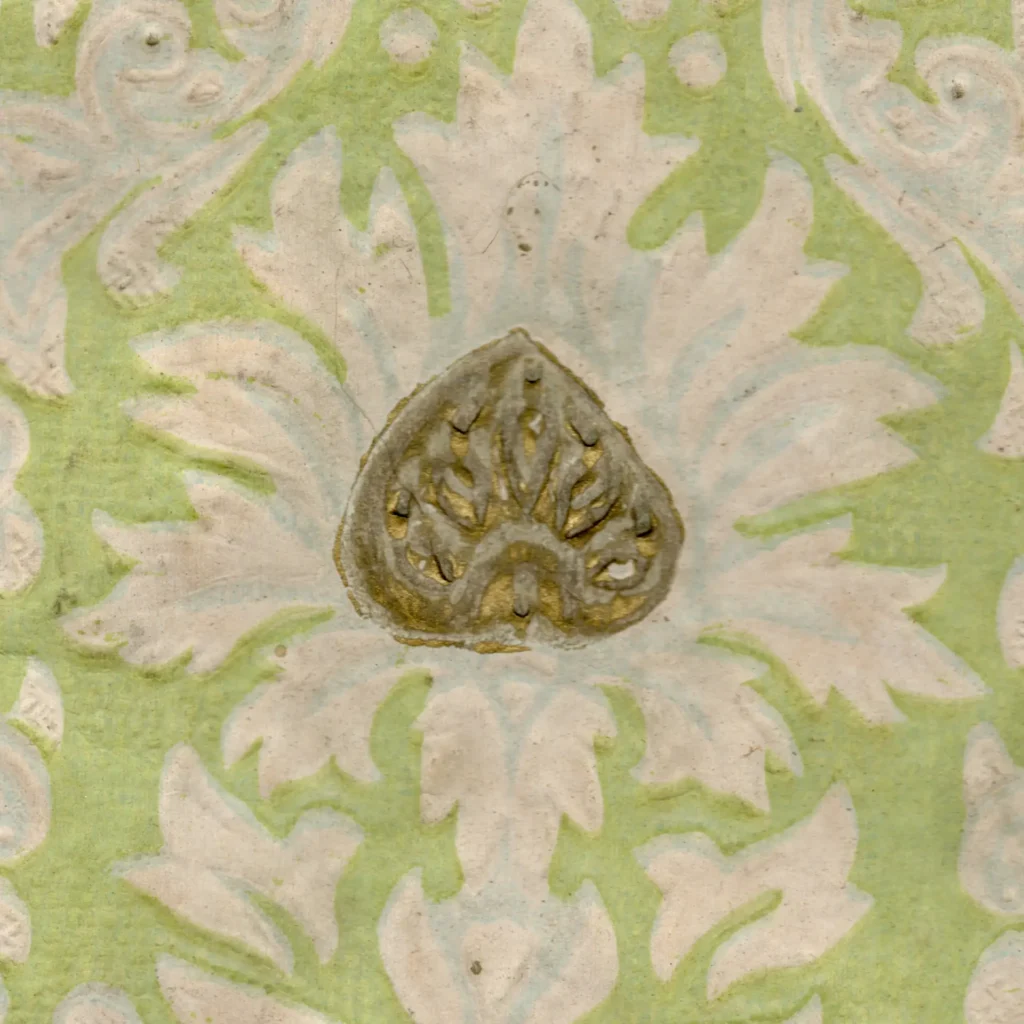
The decisive technology completing this visual achievement is embossing. Where Korean wallpapers through the 1960s drew the illusion of textile texture onto a flat surface — through stippling, hatching, tonal layering — this wallpaper actually raises the paper surface, producing a texture that can be felt.
Fine ridges and valleys running along the vines, flowers, and leaf veins leave a distinct tactile impression on the fingertip. Under light, these raised contours cast subtle shadows, lending the flat paper the three-dimensional presence of thick cloth or plaster molding. The iconography follows the traditional damask vocabulary — but the means of realization belongs to a new technological sensibility: the 1970s, when the surface was no longer merely printed but sculpted.
3. Context of an Era: The 1970s, Elevating the Inner Room
The early 1970s, when this wallpaper was produced, was a period of new technical flowering in the Korean wallpaper industry — the moment when mechanized embossing via heated rollers, adopted from European manufacturing, first came into widespread use. This wallpaper is a primary document of that early period of experimentation.
From its pattern structure and scale, this wallpaper was almost certainly conceived as a premium finish for the home's most important spaces: the master bedroom (anbang), the reception room, or a high-end hotel suite. The damask motif provides visual stability across a broad wall surface, while the gold accents elevate the dignity of the space under artificial light. It carries the weight of something intended for the rooms where guests were received and the household's standing was on display — not a ceiling paper, but a statement wall.
Flat printing technique refined through the 1960s, now augmented with the new technologies of embossing and gold pigment — this wallpaper raised the visual and tactile density of the Korean interior to a new register. It is an early signal that Korean domestic space had begun to desire not merely decoration, but texture and light.
Copyright © 2026 Gosate Archive. All Rights Reserved.
All Rights Reserved.
- All text and scholarly analysis are the intellectual property of the author.
- All photographs marked "Gosate Collection" or "Photo by Gosate" are the copyright of GOSATE. Reproduction, copying, or distribution without prior consent is strictly prohibited.
- Historical images cited from external sources are subject to their respective copyright holders or public domain provisions.
Inquiries: contact@gosate.kr
More from this era