Pearl, Lily, and Lattice: A Wallpaper of Convergent Cultures
1. The Grammar of the Beaded Lattice and the Diaper Pattern The first impression this wallpaper gives is of an intricacy concealed within simplicity. A diamond grid running diagonally across the entire surface is…
1. The Grammar of the Beaded Lattice and the Diaper Pattern
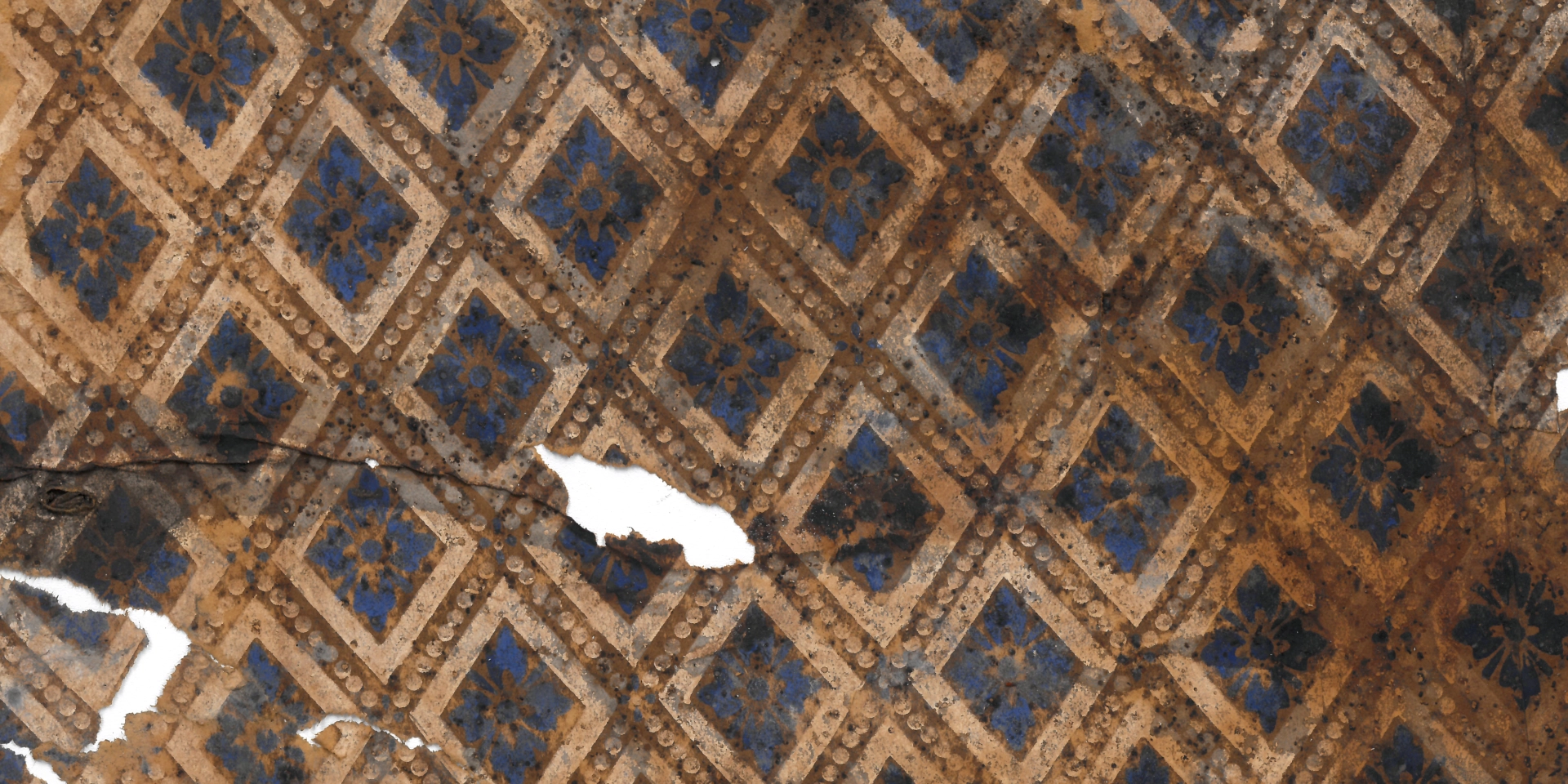
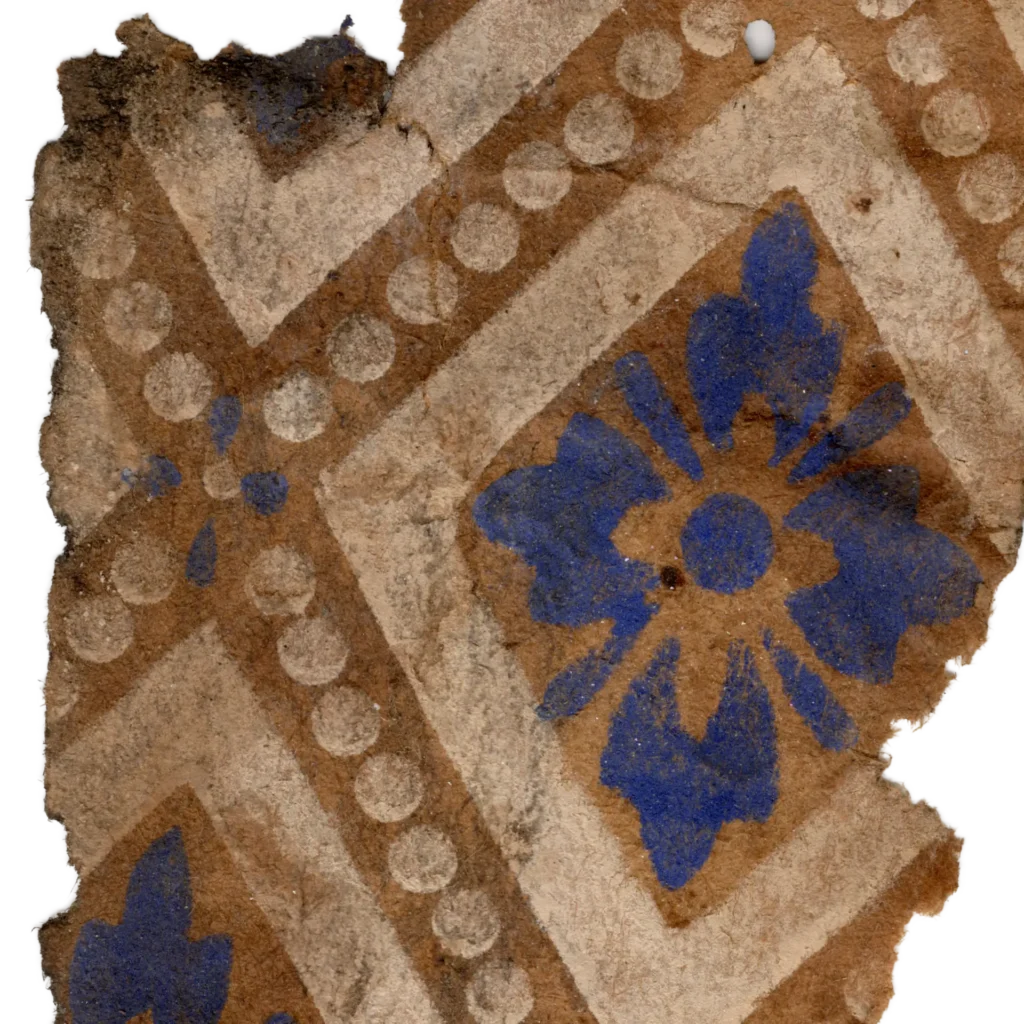
The first impression this wallpaper gives is of an intricacy concealed within simplicity. A diamond grid running diagonally across the entire surface is finished with an elaborate beading ornament — small pearl-like beads threaded along every line and intersection. From a distance it reads as a premium fabric with a subtle raised texture; only up close does the detail reveal itself: blue flower clusters set like jewels within the grid, and the individual pearl beads surrounding them.
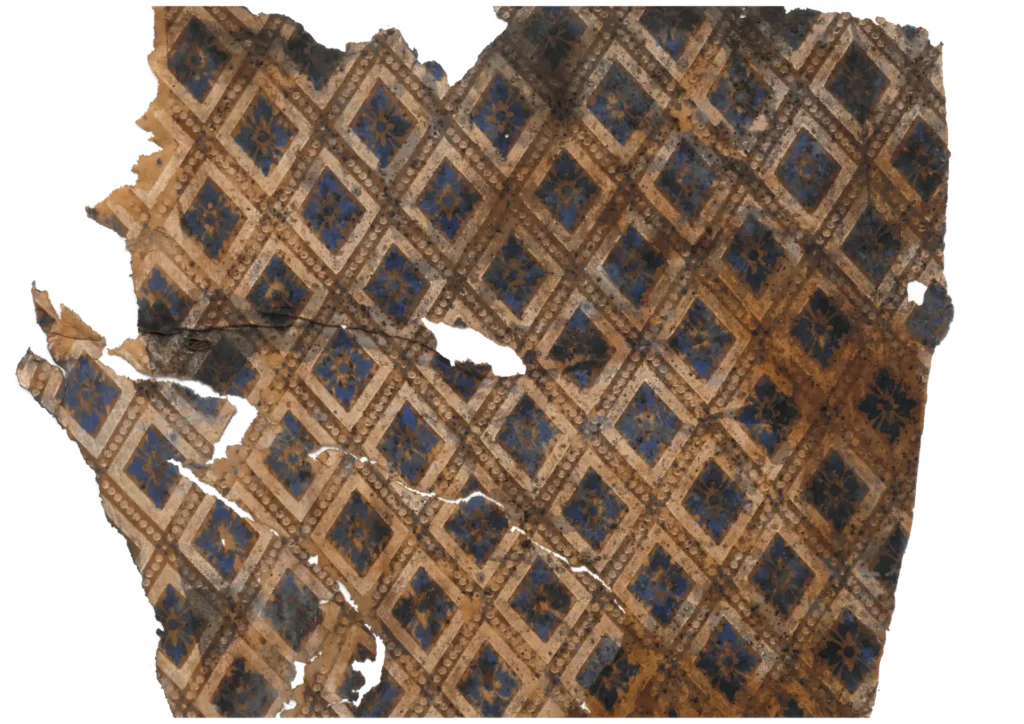
(Source: Collection of Gosate)
This structure follows the classic form of the diaper pattern, fashionable in Britain and France in the late 19th century. Originally used as the background field of medieval stained glass and aristocratic dress, this repeating diamond motif was also the preferred standard template of industrial-era wallpaper factories — easy to design, and forgiving of printing errors, since any misalignment simply reads as part of the overall texture. Above all, its neutrality made it an ideal background paper that could dissolve seamlessly into any setting: living room, bedroom, hallway.
The color palette, too, speaks the language of the era's aspirational modernity — cobalt blue and white, evoking Western Delftware ceramics and painted timber moldings, while simultaneously offering Korean eyes the familiar coolness of jokbit (indigo). The Western diaper structure is adopted; the color sensibility is translated into an Eastern emotional register.
2. One Flower, Three Cultural Spheres: The Universal Lineage of the Diamond Bloom
The small floral motif filling each diamond of this wallpaper resists easy attribution to any single culture — and that resistance is precisely what makes it interesting. At first glance it resembles the elegant curves of the fleur-de-lis, the lily emblem of European royalty. It also bears a resemblance to the Japanese family crest pattern hanabishi (花菱, diamond flower). But in truth, the structure of placing a flower within a diamond frame is no single culture's invention.
(Source: Collection of Gosate)
Japanese wallpaper designers of the 1910s–20s adopted a strategy not of direct copying but of localizing Western motifs into forms familiar to their own eyes. The flower in this wallpaper imitates the Western lily, yet is structurally rebuilt as a thoroughly Japanese four-part geometric pattern — a textbook example of wayō-setchū (和洋折衷): Western clothes over an Eastern skeleton.
Yet the structure of placing a flower within a diamond frame is, in truth, no single culture's invention. Similar motifs appear scattered throughout Western wallpaper and textile patterns, and the same compositional grammar runs through the Joseon neunghwa-pan (菱花板) and folk painting designs — evidence that this diamond-bloom structure is a universal geometric language that arose independently and resonated across Eurasia. For Korean eyes already intimately familiar with this grammar through centuries of neunghwa-pan tradition, the flower in this wallpaper would have read less as a foreign import than as a modern reappearance of a long-familiar form.
This layered design finds, paradoxically, a natural harmony within the Korean hanok interior. The diamond repeat unit is small enough not to overwhelm the low ceilings and divided wall surfaces of a traditional room. In daylight, the pearl beading catches the light and generates a three-dimensional texture; by night, the blue flowers surface softly through the lattice of the changhoji paper screens. A Western beaded lattice enclosing a flower refined through Japanese industrial printing, redeployed across the inner rooms of Joseon — this wallpaper stands as evidence of how many layered strata of culture were folded into the modern East Asian domestic interior.
Copyright © 2026 Gosate Archive.
All Rights Reserved.
- All text and scholarly analysis are the intellectual property of the author.
- All photographs marked "Gosate Collection" or "Photo by Gosate" are the copyright of GOSATE. Reproduction, copying, or distribution without prior consent is strictly prohibited.
- Historical images cited from external sources are subject to their respective copyright holders or public domain provisions.
Inquiries: contact@gosate.kr
More from this era