
1970s Korean Vintage Wallpaper — Minsu (original / Loofah)
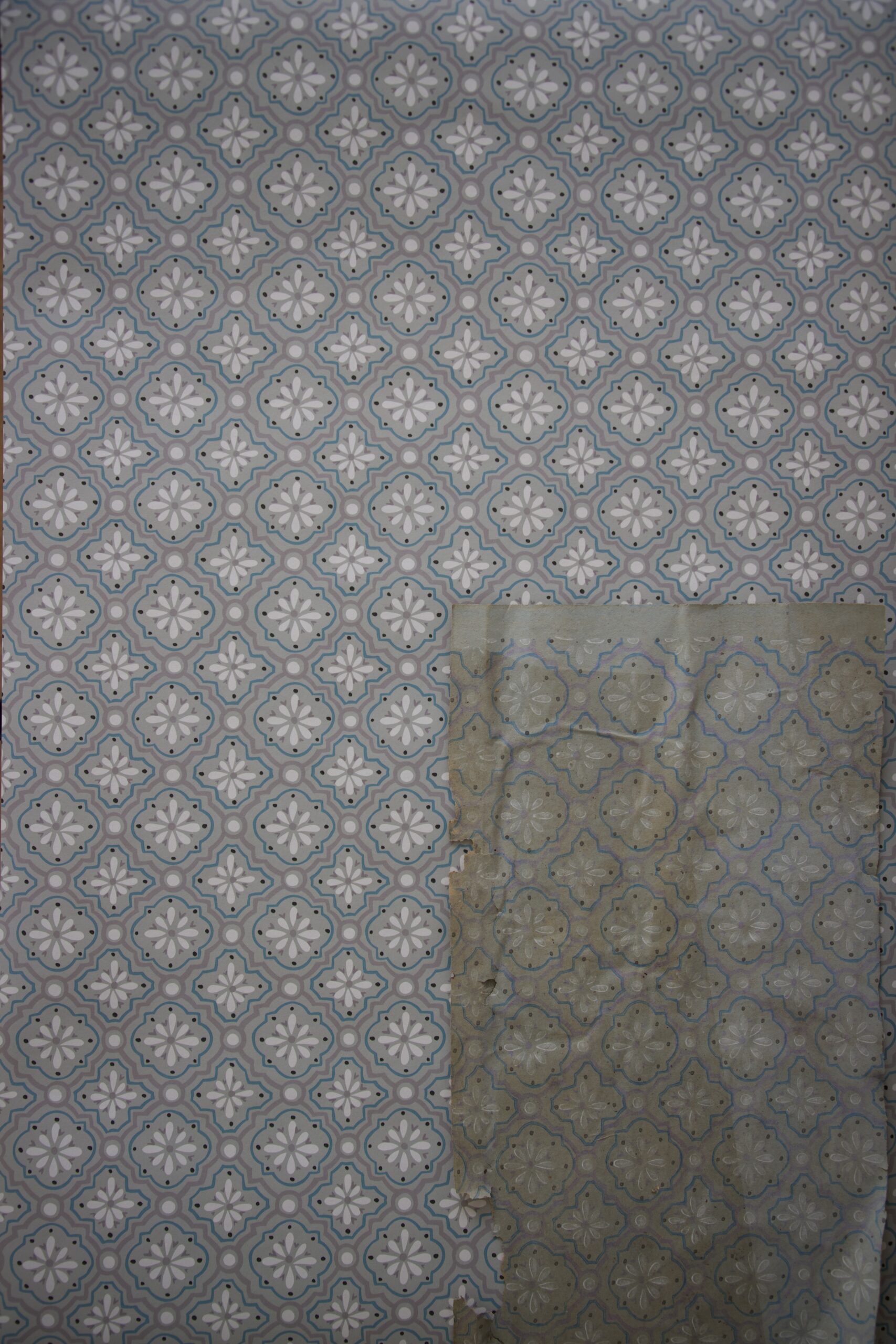
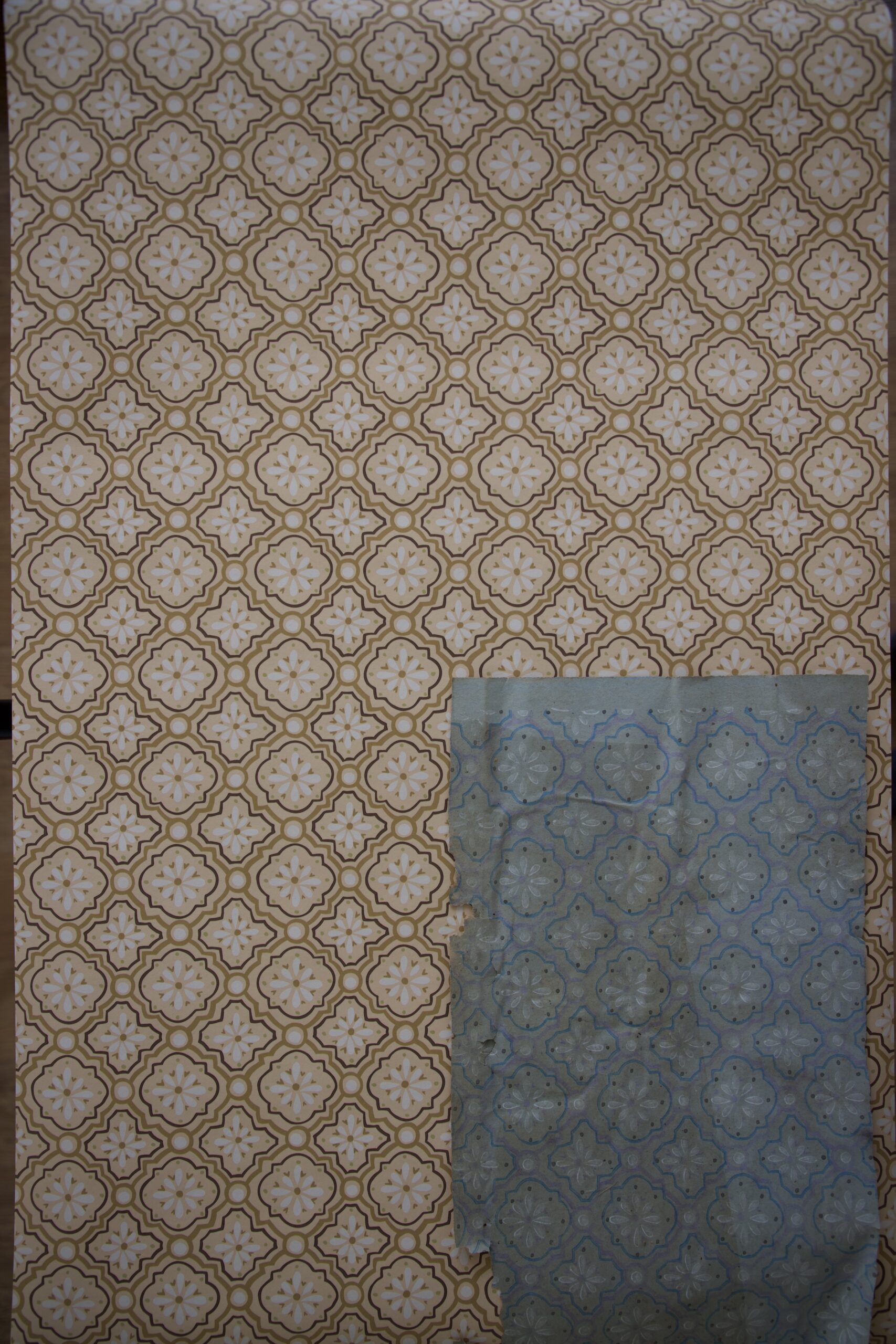
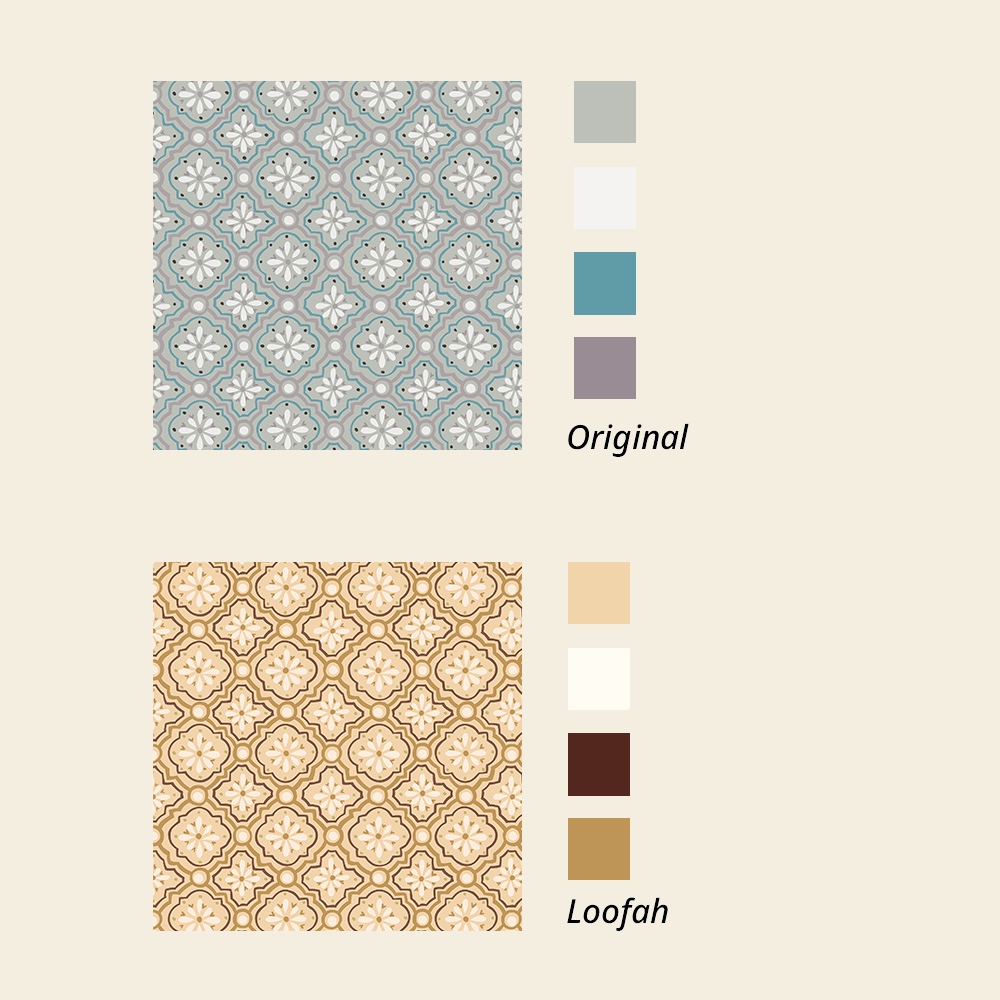
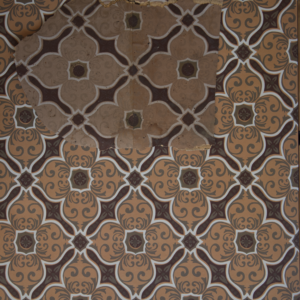
Minsu dates to the late 1960s–early 1970s. Its repeating unit is a quatrefoil — a rounded four-leaf clover frame enclosing eight radially spread petals, surrounded by small dot-and-line ornaments — arranged in a diagonal grid that covers the entire surface with even rhythm. The geometry originates in the tracery windows and floor tiles of medieval European Gothic cathedrals, where it carried sacred geometric symbolism. Through the Victorian Gothic Revival it descended to middle-class encaustic floor tiles, and from there was translated into wallpaper — a tile effect on paper at a fraction of the tile cost. GOSATE’s research identified an exact match for this pattern in a roll wallpaper produced by Barnes W.P. Co. in the United States in the 1940s — identical quatrefoil form, identical petal arrangement, identical surrounding ornament, different color only. The same design that represented mass-produced domestic modernity in 1940s America reached Korea approximately twenty years later, likely via design sheets or Japanese intermediaries, its route interrupted and then resumed across the Korean War years. In 1960s–70s Korea, where actual tile installation remained expensive, a tile-pattern wallpaper offered the visual signature of the clean, modern, internationally connected home at accessible cost. The same Gothic clover that began in a medieval cathedral had crossed the Atlantic, crossed the Pacific, and arrived on the walls of Korean urban housing — carrying a different meaning at each stop, but the same four-leaf form throughout. GOSATE’s reproduction digitally restores the original pattern, printed on premium non-woven base paper manufactured in Sweden. Available in two colorways: Original and Loofah. Roll size : 50cm by 10M Material : Non-woven paper Made in Sweden, Designed in Korea
Reviews